


India Finish Asian Para Games with Record 114 Medals, Surpass Previous Best in Japan
A 30 gold campaign led by para-athletics, shooting, archery and badminton gives India its strongest ever medal haul at the continental event.
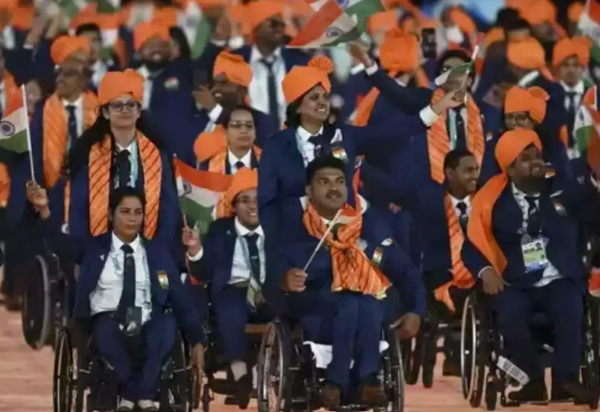
AICHI-NAGOYA, October 24: India concluded its campaign at the 2026 Asian Para Games with a record 114 medals, marking a significant milestone for the country’s para sport movement and surpassing its previous best performance at the continental competition.
The Indian contingent finished with 30 gold, 35 silver and 49 bronze medals, exceeding the nation’s previous benchmark of 108 medals achieved at the 2022 Asian Para Games in Hangzhou, held in 2023 after postponement. The result reflected the consistency of India’s athletes across a range of disciplines and the growing competitiveness of its para-sport programme. Source: Akashvani News.
The campaign was particularly notable because India fielded 168 athletes, comprising 112 men and 56 women, across 11 sports. The contingent delivered a stronger overall return than the larger team that represented the country at the previous edition.
India’s achievements extended beyond a single discipline, with athletes contributing medals in para-athletics, para-badminton, shooting, archery and other events. The breadth of the results highlighted the value of sustained preparation, specialised coaching and opportunities for athletes to compete at international level.
Para-athletics delivers a major share of medals
Track and field remained one of India’s strongest areas during the Games, producing 65 medals, including 22 gold. Performances across sprinting, middle-distance running, jumping and throwing events provided a substantial foundation for the country’s overall tally.
One of the leading performers was Sumit Antil, who successfully defended his javelin title in the men’s combined F42-F44/F61-F64 event. His throw of 72.46 metres secured gold and helped India complete a podium sweep, with Mahendra Gurjar taking silver and Sandip Sanjay Sargar claiming bronze.
The result demonstrated India’s strength in the javelin disciplines, where athletes have established themselves as serious contenders in major para-sport competitions.
Sandeep also delivered a remarkable performance in the men’s 400-metre T64 final, winning gold in a world-record time of 52.28 seconds. His achievement was among the standout results of the closing stages of India’s campaign.
In the men’s club throw F51 event, Pranav Soorma defended his title with a Games-record performance of 32.87 metres. His victory underlined the importance of consistency in a discipline where technical execution and strength are crucial.
India also secured multiple medals in events featuring closely contested fields, including the men’s javelin competitions. These results contributed to a strong final-day showing, when Indian athletes won nine gold medals, the country’s best single-day gold tally of the Games.
Nishad Kumar and Mona Agarwal named flag-bearers
Double gold medallists Nishad Kumar and Mona Agarwal were selected to lead the Indian contingent as flag-bearers at the closing ceremony.
Nishad achieved gold in both the men’s high jump and long jump in the T47 category, adding another significant chapter to his career. Winning across two different disciplines demonstrated his versatility and ability to maintain a high level of performance throughout a demanding competition schedule.
Mona produced an equally impressive campaign in shooting. She won the women’s 10-metre air rifle standing SH1 event with a Games-record score before securing another gold in the women’s 50-metre rifle three positions SH1 event, where she set a world record.
Her achievements illustrated India’s growing strength in para-shooting, a discipline requiring concentration, precise technique and the ability to perform under sustained pressure.
The selection of both athletes as flag-bearers recognised their individual performances as well as their contribution to India’s wider campaign. Their success offered an example to emerging athletes and highlighted the opportunities available through competitive para-sport.
Archery and badminton strengthen India’s medal tally
India’s medal-winning performances were not limited to athletics and shooting. Para-badminton and archery also made substantial contributions to the overall result.
Para-badminton produced 16 medals, making it the second-largest contributor to India’s haul after para-athletics. The results reflected the country’s depth in a sport that demands speed, tactical awareness, physical conditioning and precision.
Archery also delivered important results, with Indian athletes reaching the podium in individual and team competitions. Sheetal Devi was among the prominent performers, continuing to attract attention for her achievements in compound archery.
India’s performances across these disciplines helped ensure that the medal tally did not depend entirely on track and field. The wider distribution of medals is an encouraging indicator for a sporting programme seeking to develop talent across multiple events.
The results also highlighted the importance of providing athletes with access to specialist facilities, international exposure and appropriate equipment. Para-sports often require tailored training arrangements, and consistent investment can help athletes compete more effectively against established international opponents.
A smaller contingent delivers a larger return
India’s record tally carries additional significance because it was achieved with a smaller team than the one sent to the previous edition.
The contingent of 168 athletes outperformed the 303-member Indian team that competed at Hangzhou. India’s earlier campaign yielded 108 medals, including 27 gold, 32 silver and 49 bronze.
The latest performance therefore improved the overall medal count and added three gold medals to the previous total. It also demonstrated that a carefully prepared contingent can produce a strong return when athletes receive appropriate support and compete in events suited to their abilities.
India’s results in Japan provide a foundation for further development ahead of future international competitions, including world championships and Paralympic events. Maintaining progress will require attention to talent identification, grassroots participation, coaching standards and access to competition.
The challenge for administrators will be to convert the success into sustained improvement rather than treating the medal tally as an isolated achievement. Developing a broader pool of athletes, improving support systems and ensuring that promising competitors receive opportunities to advance will be essential.
A landmark result for Indian para-sport
The Asian Para Games campaign represents a major achievement for Indian sport. A record 114 medals, including 30 gold, reflects the determination of athletes who competed across disciplines and the growing depth of India’s para-sport programme.
The performances of Sumit Antil, Nishad Kumar, Mona Agarwal and numerous other medallists provided individual highlights, while the contributions from badminton, archery and other sports reinforced the strength of the overall team.
India’s final tally surpassed its previous best and offered renewed confidence in the country’s ability to compete at the highest continental level. The next priority will be to build on these performances through sustained investment, wider participation and continued preparation for future championships.
As the Games conclude, the achievements in Aichi-Nagoya stand as an important benchmark for Indian para-sport and a source of encouragement for athletes working towards international success.

