


India Seeks to Strengthen Its Global Sports Influence Ahead of Upcoming Major International Events
From infrastructure expansion to rising medal tallies, India accelerates its bid to become a leading force in world sport
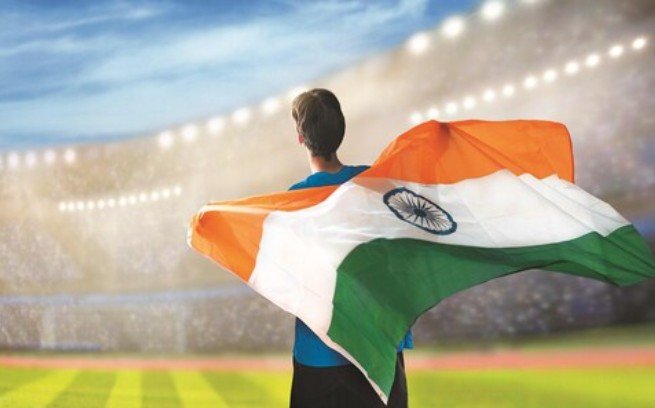
NEW DELHI — Backed by a large population, a fast-growing economy, and its dominant position in global cricket, India is steadily working to strengthen its presence in international sport, with major global events firmly in its long-term vision.
The country has already secured hosting rights for the 2030 Commonwealth Games in Ahmedabad, while a strong push is underway for a potential bid to host the 2036 Olympic Games. These ambitions align with Prime Minister Narendra Modi’s broader vision of a “developed India” by 2047, supported by improvements in infrastructure, transport, education, and technology.
According to India’s Union Minister for Youth Affairs and Sports, Dr. Mansukh Mandaviya, the country is increasingly seen as capable of staging world-class sporting events.
“India today reflects a confident and aspirational mindset, ready to lead and shape the future of global sport,” Mandaviya told The Associated Press. “Our growing capability to host major international sporting events is a testament to how far we’ve progressed.”
He added that India’s sporting performance is also improving, strengthening its case as a rising global sports power.
Growing focus on global sporting presence
Mandaviya is set to chair a national sports conclave in New Delhi, where preparations for upcoming international competitions—including the 2026 Asian Games, Commonwealth Games, and the 2028 Los Angeles Olympics—are expected to be reviewed.
Key discussions also include implementation of the National Sports Governance Act, introduced last year to improve transparency and accountability in national sports federations, along with strategies for hosting and participating in global tournaments.
India has already hosted several major sporting events in 2026, including the men’s T20 World Cup, the Women’s Premier League, and the ongoing Indian Premier League, one of the most commercially successful leagues in world sport.
Other international competitions are also being staged across the country, such as the badminton world championships in New Delhi, a World Athletics Continental Tour event in Bhubaneswar, and the Asian weightlifting championships in Ahmedabad.
Officials are also exploring the possibility of bringing Formula One racing back to India, more than a decade after it last featured in 2013.
Infrastructure push and Olympic ambitions
India’s bid for larger sporting influence is being supported by major infrastructure development, particularly in Ahmedabad, which is expected to play a central role in the 2030 Commonwealth Games.
The city’s Sardar Patel Sports Enclave—home to the Narendra Modi Stadium, the world’s largest cricket venue—is being developed as a multi-sport hub capable of hosting large-scale international events.
India previously hosted the Asian Games in 1951 and 1982, and the 2010 Commonwealth Games in New Delhi, which faced criticism over delays and organizational challenges. Officials now say lessons from that experience are being used to ensure smoother execution in future events.
The Commonwealth Games will bring together thousands of athletes from 74 nations and territories, offering India a major opportunity to demonstrate its organizational capabilities on the global stage.
Expanding sports ecosystem and rising results
Beyond infrastructure, India is also focusing on long-term athlete development. Over the past decade, more than 15 professional leagues across different sports have emerged, helping to create structured pathways for talent.
The Sports Authority of India has also set up specialized centers of excellence across the country, aimed at providing scientific training and high-performance facilities for athletes targeting Olympic success.
Recent results indicate progress. India achieved its best-ever performance at the 2023 Asian Games with 107 medals. It also won the Thomas Cup in badminton in 2022, secured its first squash World Cup title, and earned 29 medals at the 2024 Paralympics in Paris, including seven golds. In boxing, Indian athletes claimed 20 medals at the World Boxing Cup finals.
Star javelin thrower and Olympic champion Neeraj Chopra remains one of the country’s most prominent sporting figures, symbolizing India’s growing competitiveness at the highest level.
Grassroots development and future vision
Officials believe that elite success must be supported by mass participation. According to Sports Secretary Hari Ranjan Rao, the government is also focusing on increasing awareness and engagement in sport at the grassroots level.
Through initiatives like Khelo India, launched in 2018, the country has expanded youth competitions across multiple disciplines, including winter sports, para games, beach sports, water sports, and tribal games.
“The aim is to draw out the masses into an active lifestyle, as well as into participation,” Rao said.
Looking ahead
With preparations underway for major global events and a structured push to improve athlete performance, India is positioning itself as both a host and competitor on the world sporting stage.
“As we prepare to host the 2030 Commonwealth Games and advance our bid for the 2036 Olympic Games, India stands ready to take center stage,” Mandaviya said. “We are determined to emerge as a global sporting powerhouse, both in producing champions and in hosting world-class events.”

