


Indian Army Steps Up Winter Operations in Kishtwar, Doda Against Terrorists
Security forces adopt proactive winter posture during Chillai Kalan to deny terrorists seasonal cover
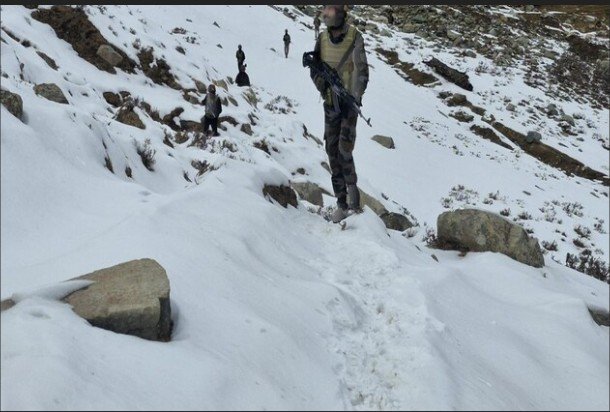
J&K, Dec 28 : As the harsh winter season sets in across Jammu and Kashmir and the 40-day period of Chillai Kalan grips the region, the Indian Army has intensified counter terrorism operations in the Kishtwar and Doda districts, defence sources said.
Despite sub-zero temperatures, heavy snowfall and treacherous terrain, Army units have expanded their operational reach into higher and snowbound areas to track and neutralise Pakistani terrorists attempting to exploit winter conditions for concealment. Traditionally, Chillai Kalan which runs from December 21 to January 31 witnesses a slowdown in militant activity due to restricted mobility and closed communication routes. However, this winter has seen a marked shift in operational strategy.
Instead of scaling back, the Army has adopted a proactive posture, establishing temporary bases and surveillance posts deep inside snow-covered zones to maintain uninterrupted pressure on terrorist hideouts. Regular patrols are being conducted along high-altitude ridgelines, forest belts and remote valleys to deny militants any safe haven.
Security experts said the intensified winter operations reflect an evolution in counter-terror tactics, highlighting the Army’s resolve to sustain momentum regardless of weather or terrain.
A key feature of the ongoing operations is a coordinated, multi-agency approach. The Indian Army is leading synchronised efforts involving the Jammu and Kashmir Police (JKP), Central Reserve Police Force (CRPF), Special Operations Group (SOG), civil administration, Forest Guards and Village Defence Guards (VDGs). This integration has strengthened intelligence-sharing mechanisms and improved operational precision.
Intelligence assessments indicate the presence of around 30 to 35 Pakistani terrorists in the Jammu region. Sources said continuous pressure by security forces has forced these groups to retreat into higher and middle mountain ranges, now largely uninhabited, in search of temporary winter shelters. Their local support network has significantly eroded, further limiting their ability to regroup or plan attacks.
The primary objectives of the winter campaign are to eliminate remaining terrorist pockets and prevent their movement into populated areas. To achieve this, security forces are conducting simultaneous operations across valleys, mid-altitude regions and high ridges, followed by sustained surveillance to ensure cleared zones remain secure.
Specially trained winter warfare units have been deployed, equipped to operate in snowbound terrain and extreme weather. Advanced technology, including drones, thermal imaging devices, ground sensors and surveillance radars, is being extensively used to monitor movement and detect hideouts, particularly during night operations and in hazardous terrain.
Commanders are following a flexible, intelligence-driven planning model, regularly adjusting deployments based on real-time inputs, weather patterns and terrain assessments. Community participation also remains vital, with Village Defence Guards assisting in perimeter security and providing early warnings.
Defence sources said the Army’s winter doctrine is guided by a continuous cycle of surveillance, swift operations and sustained monitoring, ensuring terrorists are kept under constant pressure. The approach aims to carry operational gains into the summer months, denying militant groups any opportunity to regroup.
As snowfall intensifies in Kishtwar and Doda, the Indian Army’s expanded presence underscores a clear message: adverse weather will no longer provide cover for Pakistan-sponsored terrorism, and security forces will remain vigilant across every valley and ridge, even in the harshest conditions.

