


India’s Semiconductor Push Gains Momentum as AI Chip Demand Surges
Rising demand for specialised chips used in artificial intelligence is creating new opportunities for India to expand chip manufacturing, design, research and supply chain capabilities.
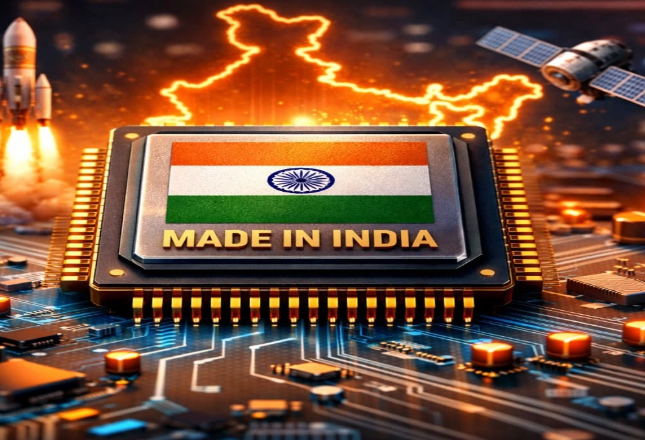
NEW DELHI, Sept 21: India’s semiconductor ambitions are gaining momentum as the rapid expansion of artificial intelligence increases global demand for advanced chips and strengthens the case for building a larger domestic electronics manufacturing ecosystem.
The development comes after the recently concluded SEMICON India 2026, where semiconductor companies, technology firms, investors, researchers and policymakers discussed the growing demand for chips required to power AI systems. Nearly 600 companies from 52 countries participated in the event, highlighting the scale of interest in the semiconductor sector. The Indian Express
Artificial intelligence has become one of the biggest drivers of semiconductor demand. Modern AI applications require large amounts of computing power, which in turn depends on specialised processors, high-speed memory and advanced packaging technologies. As companies expand data centres and deploy AI services, demand for these components has increased rapidly.
The trend is creating opportunities for countries seeking to strengthen their position in the global semiconductor supply chain. India is attempting to use this changing market environment to attract investment while developing its own capabilities in chip design, manufacturing, equipment, materials and skilled manpower.
The Centre has expanded its semiconductor strategy through Semicon 2.0, a Rs 1.27 lakh crore programme that places greater emphasis on domestic chip design and intellectual property alongside manufacturing. The programme includes support for semiconductor equipment, raw materials, fabrication facilities, advanced packaging, research and development and supply-chain development. The Indian Express
At SEMICON India, Electronics and IT Minister Ashwini Vaishnaw said the government had received investment proposals worth between $11 billion and $12 billion under the second phase of the semiconductor programme. The proposed investments cover several parts of the supply chain, including equipment, materials, gases, chemicals and substrates, with projects expected to be implemented over the next two to three years. The Indian Express
The semiconductor equipment segment is also attracting major international investment. US-based Applied Materials announced plans to invest $5 billion in India over the next decade. The company’s proposed expansion is expected to focus on areas including research, supply-chain development and workforce growth. Reuters
The investment push comes as global technology companies seek to expand semiconductor production and diversify supply chains. Geopolitical tensions, export restrictions and the concentration of chip manufacturing in a relatively small number of locations have encouraged companies and governments to explore additional manufacturing bases.
India has already approved 12 semiconductor projects under the first phase of its national semiconductor programme, covering fabrication, packaging and other parts of the chip ecosystem. Three of those projects have begun commercial production, according to government statements reported during SEMICON India. The Indian Express
The government is now attempting to move beyond the initial stage of establishing manufacturing facilities. The expanded strategy places significant importance on Indian owned chip designs, because semiconductor value is generated not only through fabrication but also through intellectual property, architecture, design tools, packaging and applications.
This focus is particularly relevant to AI. Advanced artificial intelligence systems require processors designed for specific workloads, while supporting infrastructure needs high-performance memory and specialised networking components. Developing domestic design capabilities could allow Indian companies to participate in these segments rather than concentrating only on assembly and manufacturing.
The surge in AI-related chip demand is also affecting global markets. Asian semiconductor stocks gained on September 21 as investors responded to strong demand for AI-related chips. South Korean and Taiwanese markets recorded gains, while the MSCI Asia-Pacific index excluding Japan rose 0.9%. Reuters
China is simultaneously expanding its domestic semiconductor capabilities. Chinese memory-chip maker CXMT said on September 20 that its fifth-generation memory-chip platform had entered mass production. The company said its new technology can produce more advanced memory chips while improving production efficiency and reducing power consumption. Reuters
CXMT has also introduced new LPDDR5X memory products aimed at smartphones and other portable electronics. The development reflects the broader international race to build domestic semiconductor capabilities as AI and other computing-intensive technologies increase demand for memory and processing capacity. Reuters
For India, the challenge will be converting investment announcements and policy support into commercially successful semiconductor businesses. Chip manufacturing requires substantial capital, reliable electricity and water supplies, highly skilled workers, specialised equipment and close coordination across multiple suppliers.
Building a complete ecosystem is therefore likely to take time. Semiconductor production depends on an extensive network of equipment manufacturers, chemical suppliers, material providers, packaging companies, design firms and research institutions. A strong domestic ecosystem could reduce dependence on imported components while helping Indian companies become part of international supply chains.
The country is also seeking to expand its talent base. Semiconductor manufacturing and AI-chip development require engineers trained in chip architecture, electronic design automation, fabrication processes, materials science and advanced packaging.
The growing relationship between AI and semiconductors means developments in one sector are increasingly influencing the other. The expansion of AI services is increasing demand for computing infrastructure, while improvements in semiconductor technology are making more powerful AI systems possible.
Experts cited by The Indian Express have described the current increase in AI-chip demand as a semiconductor “supercycle”, driven by advances in artificial intelligence and the wider deployment of AI applications. The Indian Express
India’s semiconductor programme is consequently entering a new phase in which the emphasis is not limited to building factories. The focus is expanding toward creating an ecosystem capable of designing chips, producing components, developing supporting technologies and supplying global markets.
The coming years will determine how effectively India can translate the current investment interest into sustained production and innovation. With AI continuing to drive demand for specialised computing hardware, semiconductors are emerging as a central component of the country’s broader technology strategy.

