


Inflation In Pakistan At 48-yr High ; IMF Officials Visit For Talk
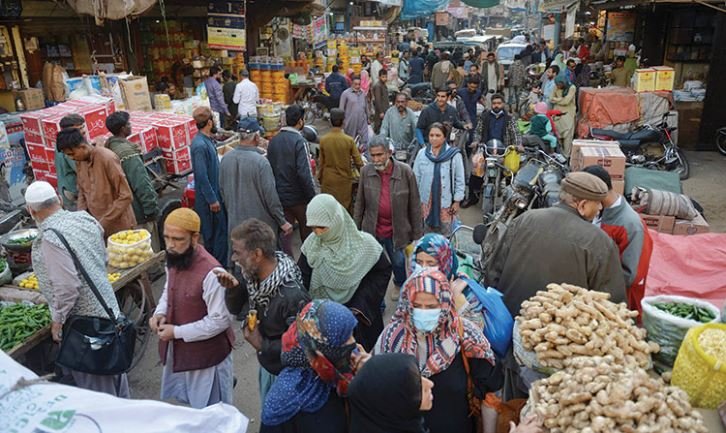 Image Credit : Gulf today
02-02-2023 : Data issued on February 1 by the nation’s statistics agency show that inflation has reached a 48-year high in crisis-stricken Pakistan, where the International Monetary Fund (IMF) is travelling for urgent discussions. With thousands of import containers being held up at Karachi port, January 2023 saw year-over-year inflation recorded at 27.55 percent, the highest level since May 1975. Due to a balance-of-payments crisis and the need to pay off a sizable amount of external debt, Pakistan’s economy is in a terrible condition.
In January, there was a startling 43 percent year-over-year increase in food prices. Between 1957 and 2023, Pakistan’s inflation rate averaged 8.05 percent, with record highs of 37.8 percent in December 1973 and minus 10.32 percent in February 1959.
In its monthly projection, Pakistan’s finance ministry stated that supply-side variables as well as political and economic unpredictability were to blame for the inflation forecast for January, which ranged from 24% to 28%.
An IMF delegation arrived in Islamabad to revive negotiations over a stalled bailout package with the government, which has so far held out from meeting the global lender’s tough conditions. But in recent days, with the prospect of national bankruptcy looming and no friendly countries willing to offer less painful bailouts, Islamabad has started to bow to pressure.
Former Prime Minister Imran Khan, who was ousted last year in a no-confidence motion, negotiated a multi-billion-dollar loan package from the IMF in 2019. But he reneged on promises to cut subsidies and market interventions that had cushioned the cost-of-living crisis, causing the programme to stall. It is a common pattern in Pakistan, where most people live in rural poverty, with more than two dozen IMF deals brokered and then broken over the decades.
The government loosened controls on the rupee to rein in a rampant black market in US dollars, a step that caused the currency to plunge to a record low. Artificially cheap petrol prices have also been hiked. The state bank is no longer issuing letters of credit, except for essential food and medicines, causing a backlog of thousands of shipping containers at Karachi port stuffed with stock the country can no longer afford. The world’s fifth most populous country has less than $3.7 billion in its central bank – enough to cover just three weeks of imports.
To help stabilise the economy, the central bank increased the policy rate by 100 basis points on January 23 to 17%, the highest level since 1998. A nightmare of high inflation has emerged in the midst of the financial crisis and a shortage of commodities. It is reducing the 13-party coalition government led by the PML-political N’s capital. Due to expensive bank financing, it is not just harming common people but also industries and corporations.

