


Iranian Missile Attack on UAE Tankers in Strait of Hormuz Claims Life of Indian Crew Member
Deadly attack in the Strait of Hormuz intensifies regional tensions as the UAE blames Iran and vows to safeguard maritime security following damage to two oil tankers.
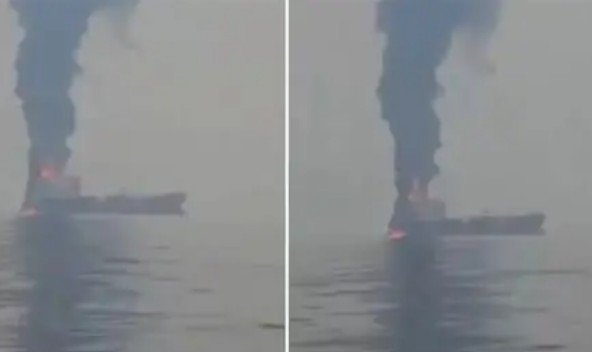
Iran, July 14, 2026 : The security situation in the Gulf region took a dangerous turn after two UAE-flagged oil tankers came under missile attack while navigating the Strait of Hormuz. The strike claimed the life of an Indian crew member and left eight others injured, further escalating tensions in one of the world’s most strategically important maritime corridors.
According to the United Arab Emirates Ministry of Defence, the vessels were targeted by cruise missiles while passing through the southern shipping lane of the Strait of Hormuz in Omani territorial waters. The UAE has directly accused Iran of carrying out the attack, describing it as a grave violation of international law and an assault on maritime security.
The incident has drawn widespread international attention because the Strait of Hormuz serves as a crucial route for global oil exports, with nearly one-fifth of the world’s crude oil shipments passing through the narrow waterway every day. Any disruption in the region has the potential to affect global energy markets, shipping operations, and geopolitical stability.
Fatality and Injuries Reported Among Crew Members
The missile strike resulted in the death of one Indian national serving as a crew member aboard one of the affected tankers. Eight additional crew members sustained injuries during the attack.
Officials stated that six of the injured are Indian nationals, while the remaining two are Ukrainian citizens. Medical teams rushed the injured personnel for treatment, with authorities confirming that four victims suffered serious injuries requiring intensive medical care.
Emergency response units successfully extinguished fires that erupted on both vessels following the explosions. Although the tankers sustained damage, officials confirmed that the fires were contained before they could spread further or trigger a larger maritime disaster.
The identity of the deceased Indian crew member has not yet been officially released pending notification of family members.
UAE Holds Iran Responsible
The UAE government issued a strongly worded statement condemning the attack and holding Iran directly responsible for the missile strike.
The Ministry of Defence described the incident as a dangerous escalation that threatens freedom of navigation and international shipping. Officials stressed that targeting commercial vessels violates internationally accepted maritime laws and undermines regional stability.
The UAE further declared that it reserves the right to take all necessary measures to defend its sovereignty, protect maritime routes, and ensure the safety of commercial shipping operating under its flag.
Authorities have begun coordinating with international partners to investigate the incident and strengthen maritime security across the Gulf region.
Iran Claims Military Operations Against US-Linked Targets
Iranian state broadcaster IRIB reported that Iranian naval forces had launched cruise missiles against what it described as a hostile vessel linked to American interests.
The report, citing unnamed military officials, claimed that the military operation formed part of Iran’s broader response to growing regional tensions.
Iranian authorities have not officially acknowledged targeting UAE commercial vessels. However, state media suggested that military operations were continuing across several areas of the Gulf.
These claims have significantly increased uncertainty regarding the exact circumstances surrounding the attack.
Drone Operations Reported Against US Facilities
Iranian military statements carried by state media also claimed that drone operations had been launched against American military installations in Kuwait.
According to those reports, the alleged targets included:
Patriot air defence systems
Fuel storage facilities
Observation towers
Ammunition depots
Military communication infrastructure
Iran further claimed that operations extended to US military assets located in Jordan, Bahrain, Kuwait, and Oman.
However, these assertions have not been independently verified by international agencies or the governments of the countries mentioned.
No official confirmation has yet been issued regarding the reported damage to these military facilities.
Strait of Hormuz Remains a Strategic Flashpoint
The Strait of Hormuz continues to occupy a central position in global energy security.
The narrow waterway connects the Persian Gulf with the Gulf of Oman and the Arabian Sea, making it one of the busiest maritime passages for crude oil exports and liquefied natural gas shipments.
Every day, millions of barrels of oil travel through the strait toward Asian, European, and international markets. Even isolated military incidents in the area often trigger concerns among shipping companies, insurers, and financial markets.
Security analysts warn that repeated attacks on commercial vessels could increase freight costs, insurance premiums, and fuel prices worldwide.
Shipping Industry Faces Renewed Risks
The latest missile strike has once again highlighted the vulnerability of commercial shipping operating in conflict-prone waters.
Shipping companies may now review navigation routes and enhance onboard security protocols to reduce operational risks.
Maritime security experts suggest that commercial vessels may require additional naval escorts if regional hostilities continue to intensify.
Insurance providers are also expected to reassess war-risk premiums for ships travelling through the Gulf region.
International Community Monitoring Developments
Several governments are closely monitoring developments following the attack.
Diplomatic observers believe that further military escalation could threaten regional peace and disrupt international trade flows.
Global organizations continue to call for restraint while urging all parties to avoid actions that could endanger civilian shipping and maritime personnel.
The incident has also renewed discussions regarding stronger international cooperation to safeguard one of the world’s busiest sea lanes.
Impact on India
The death of the Indian crew member has brought renewed focus to the thousands of Indian seafarers employed on international merchant vessels.
India has one of the world’s largest maritime workforces, with Indian sailors serving on cargo ships, oil tankers, and commercial vessels operating across global shipping routes.
The government is expected to remain in close contact with UAE authorities regarding assistance to the injured crew members and support for the deceased sailor’s family.
Officials may also review advisory measures for Indian seafarers working in conflict-sensitive maritime regions.
Outlook
The missile attack on the UAE-flagged oil tankers marks another significant escalation in Gulf tensions at a time of heightened military activity across the region.
With competing claims emerging from both sides and investigations continuing, the incident underscores the fragile security environment surrounding the Strait of Hormuz. As diplomatic efforts continue, the international community will closely watch developments that could influence regional stability, global energy supplies, and the safety of commercial maritime operations.

