


ISS Mission Nears Historic Close, Marking End of Global Space Collaboration Chapter
After three decades of continuous human presence, the ISS will make a controlled return to Earth as space exploration shifts toward commercial platforms.
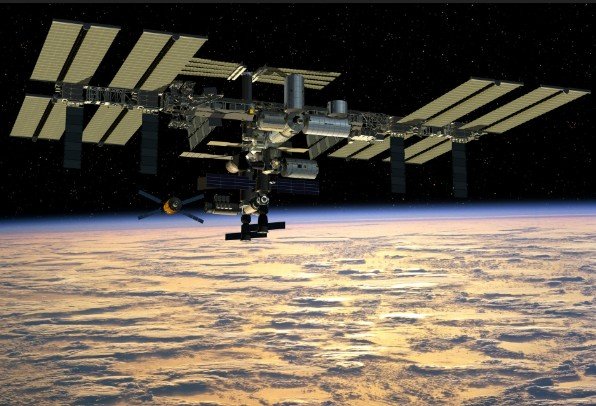
Paris: The planned deorbit of the International Space Station (ISS) in 2030 will close a defining chapter in space history one shaped by decades of uninterrupted human habitation and rare geopolitical collaboration.
Operational since November 2000, the orbiting laboratory roughly the size of a football field has hosted astronauts around the clock while circling Earth at nearly eight kilometres per second. As a fresh crew prepares for launch in the coming days, many who contributed to the project are reflecting on its legacy.
Former NASA Science and Mission Systems Office manager John Horack described the station as a powerful symbol of unity. He noted that the ISS demonstrated how nations could work collectively across cultural and political boundaries, proving cooperation was possible even in complex global environments.
Conceived in the post Cold War period, the project brought together longtime rivals the United States and Russia in a shared scientific mission. Despite strained relations following the Ukraine conflict, joint operations aboard the station have continued, underscoring its role as a bridge between nations.
Yet ageing infrastructure and outdated technology have prompted plans for its retirement. NASA has tasked SpaceX with developing a spacecraft capable of guiding the structure into Earth’s atmosphere, where it is expected to disintegrate during a controlled re-entry over a remote region of the Pacific Ocean—far from populated areas.
The strategy mirrors earlier missions such as Russia’s Mir station, which was deliberately brought down in 2001 near Point Nemo, often referred to as the ocean’s spacecraft graveyard.
Once the ISS is retired, China’s Tiangong will remain the only operational space station in low-Earth orbit. Meanwhile, the United States is pivoting toward privately built orbital habitats, signalling a transition to a more commercial phase of space activity. Companies including Blue Origin and Axiom Space are already advancing proposals for next-generation stations, though government agencies are still expected to play a major role as anchor customers.
Experts believe scientific research and exploration will continue to unite countries, supported by international agreements that regulate conduct beyond Earth. However, the durability of such frameworks may be tested as major powers pursue ambitions on the Moon, including plans for permanent bases.
For many observers, the station’s retirement evokes both nostalgia and anticipation. Horack called the moment bittersweet, recalling how families worldwide could step outside and watch the bright structure glide across the night sky. Still, he emphasised that the transition represents progress in humanity’s expanding presence in space.
The end of the ISS, he suggested, is less a conclusion than the beginning of a new frontier—one that could broaden technological, economic and educational opportunities while reinforcing the value of collective effort in exploration.

