


J&K’s Patriotic Spirit
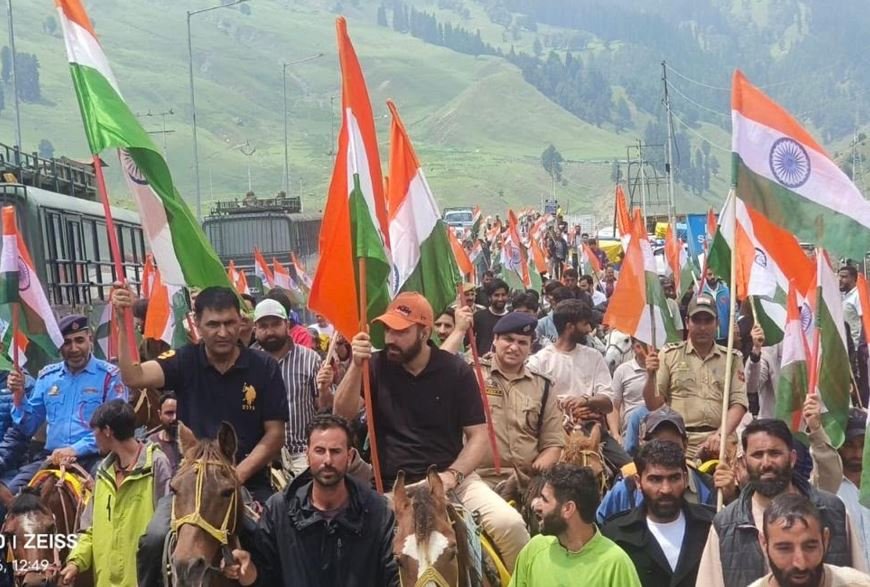
A flag acquires its deepest meaning not when it is merely displayed, but when the values it represents begin to shape public conduct. The Tiranga Yatra in Srinagar, held alongside the Har Ghar Tiranga movement and the 150th anniversary of Vande Mataram, carried precisely that larger message. In Jammu and Kashmir, where questions of identity, belonging and national confidence have long carried exceptional weight, the sight of citizens joining a public celebration of the Tricolour has significance beyond symbolism.
The Lieutenant Governor’s description of the Tiranga as a living symbol of India’s consciousness and pride is important because the national flag stands for much more than sovereignty. It represents sacrifice, shared citizenship, constitutional equality and the idea that every Indian, irrespective of region, religion, language or background, belongs equally to the nation. The Har Ghar Tiranga campaign has taken the flag from official spaces into homes, neighbourhoods and public life. Its convergence with the 150th anniversary of Vande Mataram adds another layer of meaning by linking present-day patriotism with the memory of India’s freedom struggle. The participation seen across Jammu and Kashmir deserves appreciation. It shows that national symbols can still bring people together in a direct and emotional way. But patriotism should not be judged only by turnout, visibility or ceremony. It becomes meaningful when it influences conduct. That is why the Lieutenant Governor’s emphasis on honesty, hard work, unity, character and service is particularly relevant. A person who performs public duties sincerely, respects the law, rejects corruption, helps preserve social harmony and contributes to the welfare of others is serving the nation in a very real sense. For Jammu and Kashmir, this distinction matters. National integration cannot rest only on emotional symbolism. It must also be supported by fair governance, employment opportunities, quality education, reliable public services and confidence in institutions. People feel connected to the larger national story when they experience dignity and fairness in everyday life. The honouring of Veer Naris and War Heroes was another meaningful part of the occasion. Their sacrifices should remain alive in public memory, especially for younger generations. Remembering them should not be restricted to formal events. Their stories can help build a deeper understanding of duty, courage and the cost at which national security has often been protected. At the same time, the message of the Tiranga should remain inclusive. The national flag draws its strength from the fact that it belongs to everyone. It should create a sense of common purpose, not become a test of who is more patriotic. India’s strength has always rested in its ability to hold diversity within a shared constitutional identity. There is also a need to ensure that campaigns such as Har Ghar Tiranga do not become seasonal rituals. Their spirit can be carried forward through schools, colleges, universities, local bodies and community institutions. Young people should be encouraged to connect national pride with practical service through environmental work, blood donation, disaster relief, heritage preservation, literacy programmes and neighbourhood initiatives. Such engagement would give patriotism a lived meaning. It would allow national pride to move from symbolism into responsibility.
Jammu and Kashmir has shown that public participation in national campaigns can be both visible and enthusiastic. The next step should be to deepen that spirit through everyday citizenship. The Tiranga should fly high, but the values associated with it should rise even higher in public life. When honesty shapes governance, when opportunity is shared fairly, when social harmony is protected and when citizens contribute beyond themselves, the national flag becomes more than a symbol. It becomes a standard by which the strength of the Republic is measured. Finally, the enthusiastic participation in the Tiranga Yatra deserves appreciation for strengthening collective pride and national unity across Jammu and Kashmir. This spirit should now be deepened through year-round civic education, youth service programmes, constitutional literacy, remembrance of national heroes and community initiatives. Patriotism will gain lasting meaning when public institutions reflect honesty, fairness, responsibility and equal opportunity in everyday governance.

