


Manoj Bajpayee Criticises Bollywood’s Typecasting Culture, Says Only 25% of His Acting Potential Has Been Used
The National Award-winning actor says the Hindi film industry has failed to recognise many talented performers, while crediting streaming platforms with creating more opportunities for diverse storytelling.
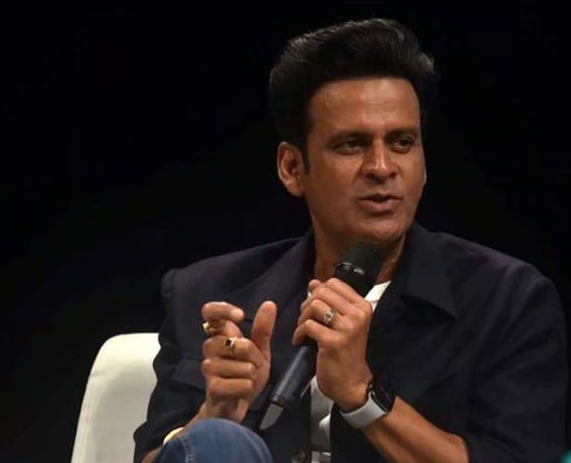
MUMBAI, Oct 24: Actor Manoj Bajpayee has criticised Bollywood’s longstanding practice of typecasting performers, arguing that the industry has failed to make full use of the abilities of numerous talented actors, including himself.
Speaking during promotional interactions for his latest Netflix thriller Gajab Raat, Bajpayee said that repeatedly assigning performers similar roles had restricted their opportunities to demonstrate their range. He also reflected on his own career, saying that he believed only around 25 per cent of his acting potential had been utilised.
The actor’s remarks have renewed discussion about the treatment of performers in the Hindi film industry, particularly those who have established themselves through strong performances but have not always received opportunities to lead projects or explore different characters.
Bajpayee suggested that the problem extended beyond individual casting decisions. In his view, the industry’s approach to roles and the treatment of actors had contributed to talented performers being overlooked, leaving some without the recognition their abilities deserved.
His comments were made as he promoted Gajab Raat, a thriller that began streaming on Netflix on October 23. The film gives him another opportunity to portray a morally complicated character in a story built around a tense sequence of events unfolding over a single night.
‘Only 25 per cent’ of his potential explored
Reflecting on his career, Bajpayee said that much of his acting ability remained unexplored. He described the continuing desire for challenging roles as part of an actor’s professional hunger, suggesting that the wish to improve and take on unfamiliar characters remained important even after decades in the industry.
The statement is notable given the actor’s extensive body of work across films and streaming productions. Bajpayee has frequently been associated with complex characters that depart from conventional heroic roles, building a reputation for performances driven by psychological detail rather than star image alone.
His filmography includes projects that have explored crime, politics, social tensions and personal conflict. Yet the actor’s remarks suggest that professional recognition does not necessarily mean every performer receives the opportunity to demonstrate the full extent of their abilities.
Typecasting occurs when actors repeatedly receive roles that resemble characters they have played previously. Although this can provide continuity in an actor’s career, it can also limit the variety of performances audiences see from them.
An actor known for playing a police officer, for example, may continue to receive similar offers even when they have the ability to portray characters from very different backgrounds. The same problem can affect performers identified primarily with supporting roles, villains or particular age groups.
Bajpayee argued that this pattern has contributed to the loss of talent within the industry. Some performers, he suggested, have moved away from opportunities for meaningful recognition because they were unable to secure roles that reflected their capabilities.
His comments also raised questions about the relationship between casting decisions and the wider commercial structure of filmmaking. Producers often rely on familiar character types when assessing projects, particularly when they believe audiences expect an actor to perform within an established image.
However, such decisions can reduce opportunities for experimentation. When casting repeatedly follows established formulas, performers may find it difficult to move into unfamiliar genres or take on characters that challenge audience expectations.
Streaming platforms have changed the landscape
Despite his criticism of Bollywood’s past practices, Bajpayee acknowledged that the growth of streaming services has helped create a different environment for actors and filmmakers.
He believes the arrival of over-the-top platforms has changed how audiences engage with performances and storytelling. Viewers can now explore a broader range of content, while filmmakers have greater scope to develop stories that may not fit the conventional requirements of a theatrical release.
Streaming productions have helped bring attention to narratives centred on unconventional protagonists, regional experiences and complex social questions. They have also provided opportunities for actors who may previously have been restricted to supporting parts in mainstream films.
For performers, this has created the possibility of exploring a wider range of characters across formats. A role in a series or streaming film can offer substantial scope for character development, while a project with a smaller budget may allow filmmakers to focus more closely on the script and performances.
The change has not eliminated typecasting or guaranteed equal opportunities for all actors. Nevertheless, Bajpayee’s comments reflect a broader industry discussion about how digital distribution has altered the relationship between audiences, performers and production companies.
The actor’s own work across theatrical releases and streaming projects illustrates the increasingly varied routes through which performers can reach viewers. His latest film adds to a body of work that often centres on characters facing ethical dilemmas and difficult personal choices.
‘Gajab Raat’ brings a morally conflicted police officer to the screen
Bajpayee plays Ajay Dixit, a police officer caught between professional responsibility and personal interests, in Gajab Raat. The story unfolds over one night in New Delhi, as an investigation draws the protagonist into a chain of events that becomes more complicated than it initially appears.
The film is directed by Ritesh Shah and backed by filmmaker Neeraj Pandey’s Friday Film Works. It also features Saqib Saleem, Nushrratt Bharuccha, Divya Dutta, Akshay Oberoi, Kiku Sharda and Shraddha Das.
The project marks another collaboration between Bajpayee and Pandey, whose previous work together includes Aiyaary and the short film Ouch. Their association has involved stories built around suspense, professional conflicts and characters operating within difficult circumstances.
The film’s release also places Bajpayee at the centre of a conversation about the creative choices available to experienced actors. The role of Ajay Dixit is built around moral uncertainty rather than a straightforward heroic image, offering room for a performance shaped by conflicting motivations.
From ‘Ghooskhor Pandat’ to ‘Gajab Raat’
The film has also attracted attention because of the controversy surrounding its original title, Ghooskhor Pandat. The makers later renamed it Gajab Raat after objections to the earlier title prompted legal proceedings and public criticism.
The original title became controversial because of concerns that it could offend members of a community. The matter escalated through legal channels, with courts directing changes to the film’s promotional material before the producers formally adopted the new title.
Bajpayee addressed the controversy during his promotional interactions, arguing that critics had reacted to the title without seeing the film or its trailer. He maintained that the objections focused on the wording rather than the film’s actual narrative.
The controversy illustrates how a film’s title can become a major public issue before audiences have an opportunity to assess the finished work. It also demonstrates the challenges filmmakers face when a promotional choice triggers concerns about representation and community sensitivities.
The change of title allowed the production to move forward under a new name, although the episode remained part of the discussion surrounding its release.
With the film now available on Netflix, viewers can assess the story and performances in the context of the finished production rather than the promotional dispute alone.
A wider debate about recognition and opportunity
Bajpayee’s comments have implications beyond his own career. The question of how actors are selected, developed and recognised remains an important part of discussions about the film industry’s creative health.
Commercial considerations naturally influence casting, but an overreliance on familiar images can prevent talented performers from exploring different aspects of their craft. It may also limit the stories available to audiences by narrowing the range of characters considered suitable for particular actors.
The issue is particularly relevant to character actors, whose performances often strengthen films without necessarily receiving the same promotional attention as leading stars. Greater access to central roles can allow such performers to demonstrate their range and help projects distinguish themselves through their storytelling.
At the same time, streaming platforms face their own commercial pressures, and the availability of digital distribution does not automatically guarantee creative freedom. The long-term impact will depend on whether producers continue investing in varied scripts, distinctive characters and performers whose abilities may not fit established formulas.
Bajpayee’s assessment is ultimately a call for the industry to recognise talent more fully. His belief that only a portion of his own potential has been explored reflects an enduring desire to take on demanding roles, even after years of professional experience.
As Gajab Raat reaches viewers, his remarks have placed the spotlight on a broader question: whether the industry can create more room for actors to move beyond familiar identities and deliver performances that audiences have not previously seen from them.

