


Nagrota School, a Learning Milestone
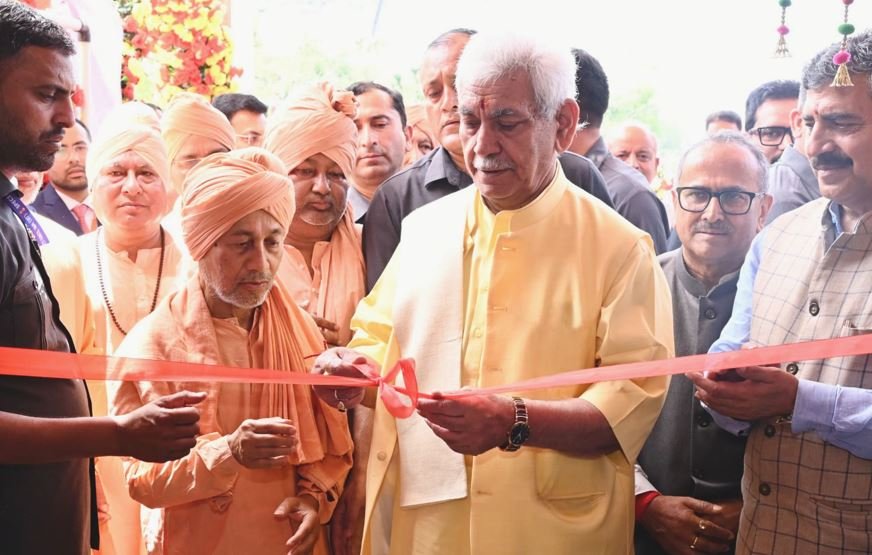
The inauguration of the new school building of Swami Pranavanand Vidyamandir in Nagrota is a welcome and heartening development for the education sector in Jammu and Kashmir. It reflects a thoughtful effort to strengthen access to quality learning for children, especially those coming from disadvantaged and economically weaker backgrounds. More than the opening of a new building, it represents an expansion of hope, opportunity, and support for many young students whose lives can be positively shaped through education.
The significance of this initiative lies in its larger purpose. Swami Pranavanand Vidyamandir, run by Bharat Sevashram Sangha, has already been serving students from poor families for several years. The new infrastructure is expected to widen that outreach and create better conditions for teaching, learning, and skill development. Such institutions play an important role in ensuring that education reaches beyond urban privilege and becomes a meaningful force of inclusion and social upliftment. In that sense, the new building is not only an academic facility but also a step towards greater educational equity. Lieutenant Governor Manoj Sinha’s remarks on the occasion offered an important and balanced perspective on the direction education should take. His emphasis on holistic learning, cultural awareness, and future-ready classrooms reflects the changing needs of the present time. Education today cannot remain limited to textbooks, examinations, and marks alone. It must also help students develop confidence, creativity, communication skills, and moral understanding. A school becomes stronger when it nurtures the whole child, not only the academic side of learning. This view is especially relevant in a world that is changing rapidly due to technology, artificial intelligence, and new patterns of work. Students now need more than subject knowledge. They need the ability to think critically, learn continuously, work with others, and respond to challenges with maturity and flexibility. These are human qualities that remain deeply valuable, and schools have an essential role in shaping them. When education encourages creativity, art, sports, practical skills, and emotional growth alongside academics, it becomes more meaningful and more lasting. The stress laid on cultural awareness is equally important. Students need to grow with a sense of rootedness, respect for diversity, and an understanding of the social and moral values that hold communities together. Education should prepare them not only for careers but also for responsible citizenship and constructive participation in society. In a region like Jammu and Kashmir, where education carries both developmental and social significance, such an approach can make a lasting difference. The development of higher secondary and skill-related infrastructure at the school is also encouraging. It shows a recognition that learning must be supported by proper facilities and an environment that allows students to progress with dignity and confidence. The possibility of eventually serving a larger number of students and providing residential facilities for boys from remote or disadvantaged backgrounds adds to the social importance of the project. When educational infrastructure grows in such a manner, its benefits often extend beyond the school itself and reach families, communities, and local development. The broader connection with the National Education Policy also gives this initiative additional relevance. The policy encourages holistic development, flexibility, skill integration, and the reduction of rural-urban and social gaps in education. Projects such as this help bring those ideas closer to reality. They show that educational reform is not only about policy language but also about creating actual spaces where students can learn better, dream bigger, and prepare for the future with confidence.
Finally, the new school building at Swami Pranavanand Vidyamandir stands as a symbol of faith in the power of education to change lives. It reflects a humane vision in which learning is linked with values, opportunity, and service. If nurtured with continued commitment and care, this institution can become a strong centre of inclusive, value-based, and future-oriented education in Jammu and Kashmir, helping many young students move forward with knowledge, self-belief, and purpose.

