


Nvidia Expands AI Push as CEO Jensen Huang Bets Big on Robotics Revolution
Nvidia deepens partnerships with South Korean technology giants, identifying robotics and physical AI as the next major growth frontier beyond data centers and generative AI.
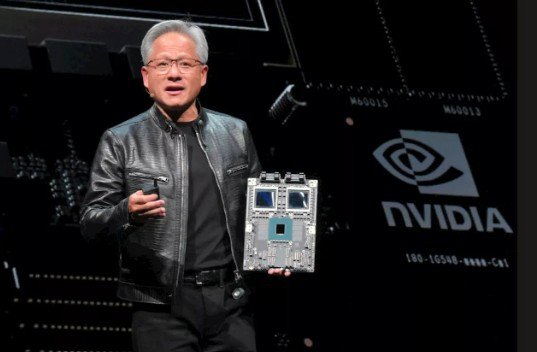
India, June 05 : The global technology industry witnessed another significant milestone on June 5 as Nvidia Chief Executive Officer Jensen Huang outlined the company’s ambitious vision for the future of robotics and artificial intelligence during a high-profile visit to South Korea. The announcement signals Nvidia’s intention to move beyond its dominance in AI chips and become a central player in the emerging physical AI ecosystem.
Huang described robotics as one of the most promising technology sectors of the coming decade, highlighting South Korea’s manufacturing expertise as a key factor in Nvidia’s future growth strategy. During meetings with leading Korean companies, including major semiconductor, electronics, and industrial manufacturers, discussions focused on integrating AI-powered robotics into factories, logistics networks, and industrial operations.
The visit comes at a time when global technology companies are racing to commercialize artificial intelligence applications beyond software. While generative AI has transformed digital services, experts increasingly believe the next wave of innovation will involve intelligent machines capable of interacting with the physical world.
According to industry analysts, Nvidia’s latest strategy reflects a broader shift in the technology landscape. The company has already established itself as a dominant supplier of AI processors powering large language models and cloud computing infrastructure. However, robotics offers an entirely new market encompassing autonomous machines, industrial automation, smart manufacturing, logistics, transportation, and healthcare systems.
South Korea has emerged as a natural partner in this effort. The country possesses one of the world’s most advanced manufacturing ecosystems, supported by globally recognized corporations specializing in electronics, semiconductors, automobiles, batteries, and industrial equipment. These industries are increasingly adopting AI-driven automation to improve productivity and maintain competitiveness.
Huang emphasized that physical AI the application of artificial intelligence to machines operating in real-world environments could eventually become as transformative as generative AI itself. He noted that manufacturing facilities equipped with intelligent robots can improve efficiency, reduce operational costs, and address labor shortages affecting many industrial economies.
The Nvidia chief also highlighted the growing convergence of robotics and semiconductor manufacturing. Advanced chip production facilities require extraordinary precision, making them ideal candidates for AI-enhanced automation. Future semiconductor plants are expected to rely heavily on autonomous systems capable of monitoring production lines, detecting defects, and optimizing processes in real time.
Investors closely followed Huang’s comments, viewing them as an indication of Nvidia’s long-term priorities. The company has enjoyed remarkable growth during the AI boom, but maintaining momentum requires identifying new revenue opportunities beyond traditional data center hardware. Robotics presents a potentially multi trillion dollar market capable of sustaining growth for years to come.
Technology experts believe physical AI could eventually transform sectors ranging from transportation and agriculture to construction and healthcare. Autonomous delivery systems, intelligent warehouse robots, robotic surgical assistants, and AI-powered industrial machines are already demonstrating the potential of combining machine learning with advanced hardware.
South Korean companies are expected to play a major role in this transformation. Several leading firms have announced investments in robotics research, autonomous systems, and smart manufacturing platforms. Nvidia’s collaboration could accelerate these initiatives by providing access to advanced AI infrastructure and software frameworks.
The visit also underscores Asia’s growing importance in the global AI ecosystem. Countries across the region are investing heavily in semiconductor manufacturing, cloud computing, and robotics technologies. Governments increasingly view AI leadership as a strategic priority with implications for economic competitiveness and national security.
Industry observers note that robotics adoption remains in its early stages despite rapid technological progress. Challenges related to costs, safety standards, regulation, and workforce integration continue to slow deployment. However, advances in AI reasoning capabilities are making robots more adaptable and capable than previous generations.
As companies seek new ways to improve productivity and address demographic challenges, intelligent automation is expected to become an increasingly important part of business strategy. Nvidia’s latest initiatives suggest the company intends to position itself at the center of this transformation.
The coming years will determine whether physical AI can replicate the explosive growth witnessed in generative AI. For now, Nvidia’s confidence in robotics reflects a growing industry consensus that the future of artificial intelligence extends far beyond computer screens and into the physical world itself.

