


Panchang Spiritual Compass for Devotees
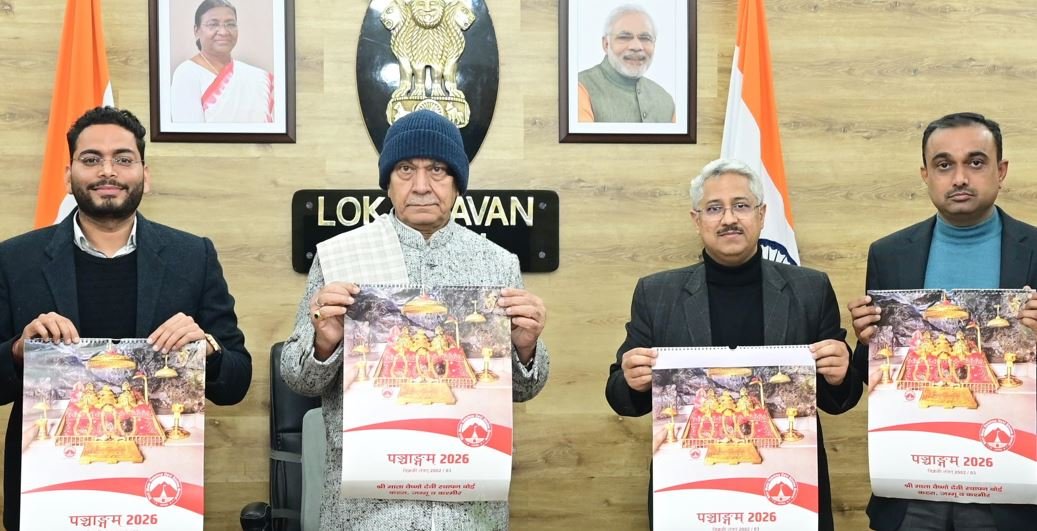
Calendars have always occupied a special place in civilizations that value continuity, memory, and collective rhythm. Long before they became everyday tools, panchangs guided agricultural cycles, ritual observances, and social life, quietly shaping how communities related to time itself. In this historical context, the release of the Shri Mata Vaishno Devi Shrine Board’s Panchang Calendar and Diary for 2026 carries a significance that goes beyond a routine institutional publication. It reflects a conscious effort to preserve sacred timekeeping while adapting it to the needs of a modern, globally connected community of devotees.
The Panchang remains one of the most trusted sources of spiritual guidance for millions. It helps devotees align daily life with religious observances, auspicious timings, and festivals, offering a sense of order and reassurance in an otherwise fast-moving world. By curating the 2026 Panchang under the guidance of eminent scholars and priests, the Shrine Board has reaffirmed its commitment to authenticity and ritual accuracy. Such care matters deeply, particularly for a shrine that draws pilgrims from across India and abroad, many of whom rely on institutional guidance to maintain their devotional practices away from home. What distinguishes this initiative is the manner in which spiritual tradition is embedded within an administrative framework that understands its wider responsibility. The Shrine Board today is not only a custodian of faith but also a large public institution involved in pilgrimage management, community welfare, and environmental stewardship. The Panchang and diary, therefore, function as bridges between belief and governance. Alongside sacred dates and observances, they document the Board’s initiatives aimed at improving pilgrim facilities, promoting cleanliness, and protecting the fragile ecology of the Trikuta Hills. This blending of faith and public service reflects an evolving model of spiritual governance in contemporary India. Religious institutions are increasingly expected to operate with transparency, sensitivity, and social awareness. The Shrine Board’s decision to highlight initiatives such as free langar sewa, Swachhata Abhiyan, and environmental conservation within its official publications signals an understanding that devotion and responsibility must go hand in hand. Faith, in this sense, is not confined to ritual alone but extends to care for people and the environment that sustains pilgrimage. The Panchang also serves as a quiet instrument of cultural continuity. In an age dominated by digital alerts and fleeting information, a physical calendar and diary retain a sense of permanence. Displayed in homes and offices, they become part of daily life, gently reinforcing traditions without imposing them. Each glance at a date or festival is a reminder of shared heritage and collective belonging. For a region as spiritually significant as Jammu and Kashmir, such reminders help anchor identity amid social and technological change. Equally important is the role of institutional stewardship in preserving ritual knowledge. Sacred calendars require precision, scholarly rigour, and ethical responsibility. Errors can erode trust, while carelessness can dilute tradition. The Shrine Board’s emphasis on expert guidance and careful compilation reflects respect for the knowledge systems that have been transmitted across generations. It acknowledges that institutions entrusted with faith must act as responsible intermediaries between tradition and contemporary life. The diary accompanying the Panchang further extends this role by serving as a record of institutional vision and outreach. It documents how the Shrine Board engages with devotees not only during pilgrimage but throughout the year. In doing so, it strengthens the bond between the institution and the wider community, reminding devotees that faith-based organisations can also be representatives of social good and environmental awareness.
In a broader sense, the 2026 Panchang initiative illustrates how sacred documentation can remain relevant in modern governance. It shows that tradition does not need to be frozen in time to retain its meaning. When thoughtfully curated and responsibly presented, it can speak to present concerns while honouring the past. The Shri Mata Vaishno Devi Shrine Board’s effort stands as an example of how institutions rooted in faith can preserve cultural memory, guide devotional life, and contribute positively to public welfare. In doing so, it reinforces the idea that sacred timekeeping is not merely about marking days but about nurturing continuity, responsibility, and shared values across generations.

