


Pir Panjal Gets Attention
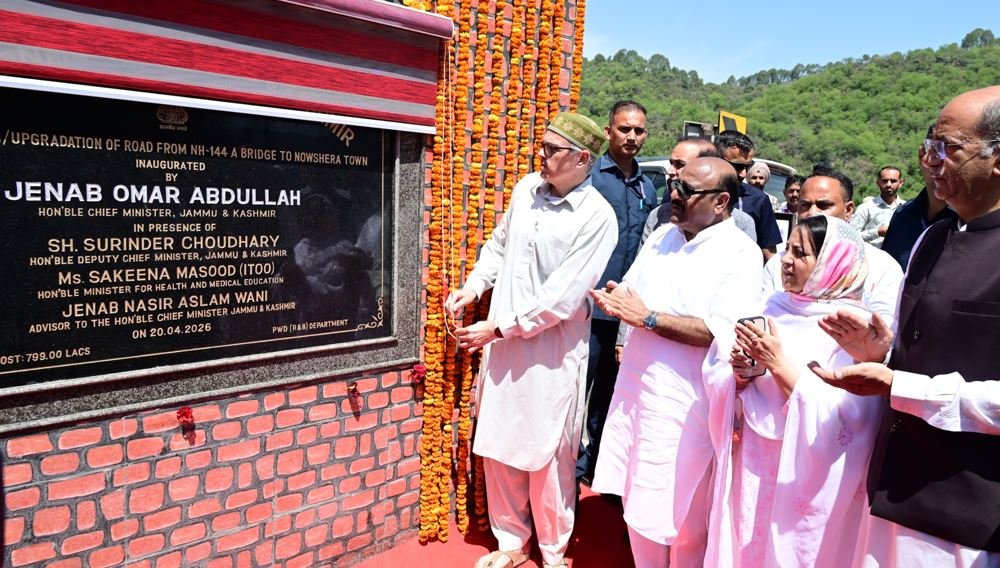
Chief Minister Omar Abdullah’s visit to Nowshera can be seen as more than a ceremonial political event. It reflects an approach to governance in which development is linked with the everyday needs of people living in border and hilly regions. In places like Rajouri and the wider Pir Panjal belt, public infrastructure carries a meaning far deeper than bricks, concrete, and official announcements. Roads, hospitals, and strategic connectivity projects often determine how people access education, healthcare, markets, and basic dignity. In that sense, the recent inaugurations and inspections in Nowshera present a meaningful example of how governance can respond to the aspirations of regions that have long awaited sustained attention.
The inauguration of the upgraded road from the NH-144A Bridge to Nowshera town is an important development for the area. Better road infrastructure not only improves the movement of vehicles. It makes daily life easier for students, traders, workers, patients, and families who depend on safe and efficient travel. In remote and semi-remote areas, even a modest improvement in road connectivity can save time, reduce hardship, and create a stronger sense of inclusion. When such projects are completed after years of delay, they also restore public confidence that development can eventually reach the ground in visible form. The upgraded 100-bedded Sub-District Hospital is another important step that deserves appreciation. Healthcare remains one of the most pressing concerns in many parts of Jammu and Kashmir, especially in regions where people often have to travel considerable distances for treatment. A better-equipped hospital in Nowshera can provide relief not only to local residents but also to people from adjoining areas. Diagnostic facilities, improved infrastructure, and broader access to patient care can strengthen the overall sense of security among the public. Hospitals in such places are not just institutions. They are symbols of state care and public reassurance. The chief minister’s review of the ongoing Sungal Tunnel project added another important dimension to the visit. Strategic connectivity projects have long-term value for both development and mobility. In difficult terrain, tunnels and roads are not merely engineering works. They help reduce travel time, improve access, and connect communities more effectively. They also encourage trade, tourism, and administrative reach. The tunnel project, once completed, is expected to make travel easier and contribute to the broader development of the area. Such projects remind us that regional progress depends on a combination of planning, patience, and consistent follow-up. What also stood out during the visit was the larger message about governance. Omar Abdullah’s remarks that public office is meant to serve people and improve their quality of life carry weight in the present time. Citizens expect governments to respond to practical concerns such as healthcare, roads, education, unemployment, and poverty. His assurance that the aspirations of the Pir Panjal region will guide policy reflects an understanding that people in peripheral regions want not just promises but presence, participation, and progress. At the same time, the significance of this visit will be measured by continuity. Public enthusiasm is important, but lasting trust comes when development is sustained, services remain functional, and commitments are followed by action. The completion of pending works in Nowshera is encouraging, yet many regions in Jammu and Kashmir still look towards similar attention and intervention. The true value of this tour lies in whether it becomes part of a wider pattern of balanced development across neglected and far-flung areas.
The significance of this tour, therefore, goes beyond one road, one hospital, or one tunnel. It offers a template for how Jammu and Kashmir can move towards more equitable development by recognizing that peripheral regions are not margins of governance but central to its legitimacy. If this spirit is carried forward with seriousness and continuity, Nowshera may well stand as a symbol of how responsive government can bridge both physical distance and public neglect.

