


Katra Kitchen Initiative
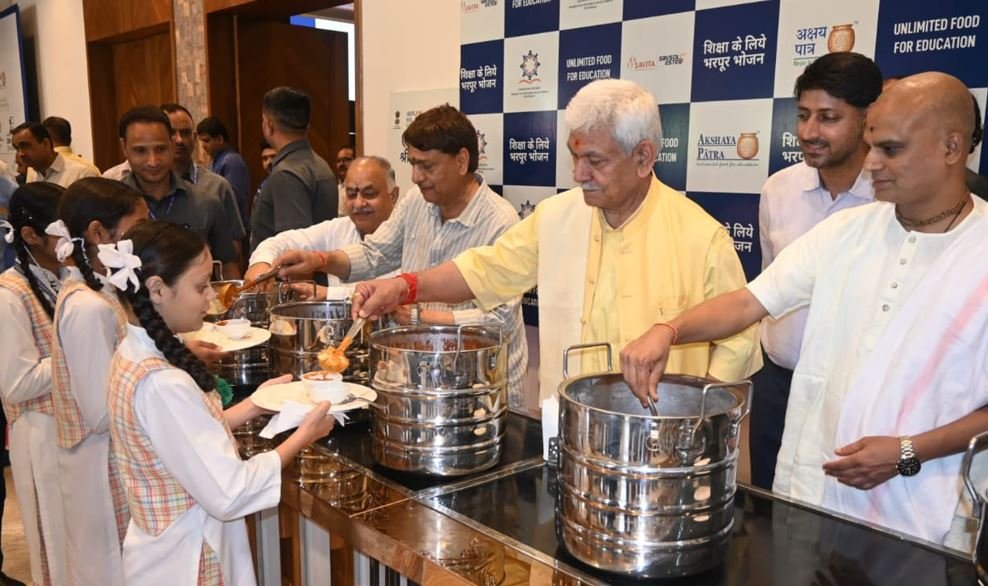
The laying of the foundation stone of Akshaya Patra’s centralised midday meal kitchen in Katra is not merely a ceremonial development. It is a strong reminder that the future of Jammu and Kashmir will not be shaped only by roads, buildings, and institutions but also by the health, nutrition, and confidence of its children. A kitchen that will provide 5,000 nutritious meals to school children every day is a meaningful step towards strengthening both education and social justice. It sends a clear message that no society can claim progress while its children sit in classrooms hungry, weak, or deprived of basic nourishment.
School nutrition is not charity. It is a developmental necessity and a moral duty. A child who comes to school hungry cannot be expected to concentrate, learn, participate or compete with confidence. Hunger silently damages the promise of education. It weakens attention, reduces energy and pushes children from poorer families into disadvantage even before the lesson begins. Therefore, providing balanced meals in schools is not simply about filling plates. It is about creating equal conditions for learning and giving every child a fair chance to grow. Lieutenant Governor Manoj Sinha’s call for stronger collaboration between the government and social organisations deserves serious attention. Public welfare cannot remain trapped in files, announcements and departmental routines. It must reach the last child, the last school and the most vulnerable family with visible results. When the government joins hands with credible social organisations like Akshaya Patra, the outcome can be more efficient, disciplined and impactful. Such partnerships can bridge gaps in delivery, improve quality and ensure that welfare schemes do not lose their purpose between policy and implementation. Akshaya Patra’s experience in serving millions of school children across the country gives this initiative greater credibility. Its centralised kitchen model can bring scale, hygiene, consistency and better monitoring to the midday meal system. However, the real test will not lie in the foundation stone or the announcement. The real test will lie in daily delivery, nutritional quality, cleanliness, punctuality and accountability. Children deserve fresh, safe and balanced meals, not symbolic assurances. Every meal served must reflect dignity, care and responsibility. The larger message of this initiative is that education cannot be separated from nutrition. Schools are not only centres of instruction. They are also spaces where society must protect the physical and emotional well-being of children. A classroom becomes truly inclusive only when every child, irrespective of economic background, sits with the confidence that hunger will not obstruct learning. The mid-day meal system, when implemented sincerely, becomes a powerful instrument against inequality. It encourages attendance, supports poor families, reduces classroom exclusion and builds trust in public education. The lieutenant governor’s observation about legacy adds deeper meaning to the issue. We often ask what we are creating, what we are preserving and what we will hand over to future generations. But the most urgent question is what we are feeding our children today. A malnourished generation cannot become the foundation of a strong society. If we want educated, capable and confident citizens tomorrow, we must invest in their health and nutrition today. Nation-building begins not only in universities, industries and assemblies but also in school kitchens where children receive the strength to learn and dream. Jammu and Kashmir needs such initiatives with seriousness and expansion. Remote, hilly and economically weaker areas must receive special attention. No child should be pushed behind because of poverty, distance or administrative neglect. The Katra kitchen should become a model for other districts, but only if it is backed by strict monitoring, transparent systems and continuous improvement. Good intentions must be matched by disciplined execution.
This initiative certainly merits appreciation, but its true value will be measured by the responsibility it inspires. It must move beyond ceremonial praise and become a sustained commitment shared by government departments, school institutions, civil society, local communities and social organisations. Protecting child nutrition is not the duty of one agency alone but a collective obligation towards the future. A society that nourishes its children with dignity quietly builds the strength of generations to come. The Akshaya Patra kitchen in Katra can stand as a meaningful symbol of compassion, equality and responsive governance.Every child must receive nourishment, every child must be enabled to learn and no child must ever be left behind.

