


President Murmu Calls for Stronger One Health Approach to Tackle Emerging Diseases
Addressing the convocation of ABVIMS and Dr Ram Manohar Lohia Hospital, the President stresses cooperation between human, veterinary and environmental health experts to strengthen disease prevention and improve healthcare access.
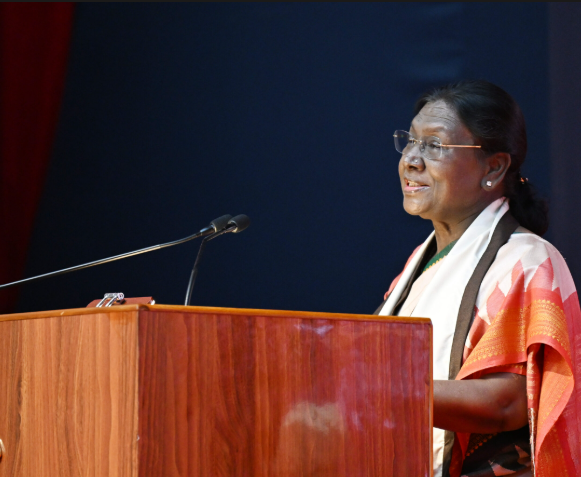
NEW DELHI, Nov 20: President Droupadi Murmu on Friday emphasised the need for a coordinated approach involving human medicine, veterinary science and environmental studies to address emerging health threats, stating that cooperation across these disciplines is essential to achieving the goal of One Health.
Addressing the 12th convocation ceremony of the Atal Bihari Vajpayee Institute of Medical Sciences (ABVIMS) and Dr Ram Manohar Lohia Hospital in New Delhi, the President highlighted the growing interdependence between human beings, animals, plants and their surrounding environment. She said health challenges originating in one area could have consequences for several others, making coordinated scientific intervention increasingly important.
Murmu observed that infectious diseases transmitted from animals to humans, along with environmental concerns such as air and water pollution, climate change and ecological imbalances, have emerged as significant challenges for public health. Tackling these concerns requires medical professionals, veterinary experts and environmental scientists to work together rather than operate within separate disciplines.
She said an integrated approach would improve disease prevention, strengthen early detection mechanisms and enhance the country’s ability to respond to future public health emergencies.
The President’s remarks placed particular emphasis on the need to understand the relationship between environmental conditions and disease patterns. Changes in ecosystems, human interaction with animals and variations in environmental quality can influence the emergence and spread of illnesses. Consequently, health planning must consider factors extending beyond hospitals, laboratories and conventional medical treatment.
She also stressed that the social and economic circumstances of communities, nutritional conditions and environmental surroundings play an important role in determining health outcomes. These factors influence people’s exposure to diseases, their ability to seek timely medical assistance and the effectiveness of preventive measures.
Murmu called for greater encouragement of scientific research aimed at developing treatment methods and preventive strategies suited to local health requirements. She indicated that healthcare solutions should take into account the specific challenges faced by different regions and communities instead of relying exclusively on approaches designed for different circumstances.
The One Health concept recognises that human health cannot be separated from the condition of animals and the environment. Its practical importance extends to disease surveillance, food safety, environmental protection and preparedness against infectious disease outbreaks.
For India, where communities, livestock, wildlife and agricultural activities frequently interact, coordination between different scientific and administrative institutions can contribute to stronger public health planning. Information collected by veterinary services, environmental agencies and medical institutions can help authorities develop a broader understanding of potential health risks.
The approach also highlights the importance of sharing scientific information between institutions. Medical professionals may identify unusual disease patterns among patients, while veterinary experts could detect similar concerns among animals. Environmental scientists can examine whether changes in water, air or other ecological conditions are contributing to the situation.
Bringing such information together can support a more comprehensive assessment of health threats and help authorities plan timely interventions.
The President further referred to India’s National Health Policy, revised in 2017, which placed greater emphasis on preventive and promotive healthcare alongside curative services. She said the policy also strengthened attention towards rehabilitation and palliative care, reflecting the need for a broader healthcare system that addresses different stages of illness and recovery.
She noted that non-communicable diseases, including diabetes and cancer, as well as mental stress, have become important concerns requiring greater attention to prevention. These conditions underline the importance of public awareness, early identification and healthier living practices.
The growing burden of chronic illnesses also makes it necessary to strengthen the connection between primary healthcare services, specialised treatment facilities and community-level awareness programmes. Preventive healthcare can help people understand health risks and seek medical advice before conditions become more complicated.
Murmu said initiatives undertaken in the healthcare sector over the past decade had contributed to the expansion of services from primary to tertiary levels. However, she stressed that further efforts were necessary to ensure that the benefits of medical advancement reached every section of society.
Addressing the graduating doctors, she encouraged them to use their knowledge, professional skills and research capabilities to make healthcare more effective, affordable, accessible and people-centric.
She particularly urged young medical professionals to ensure that their expertise benefits people living in remote and underserved areas. Such communities often face difficulties in accessing specialised medical facilities, making the availability of qualified healthcare personnel and stronger primary healthcare services particularly important.
The President also underlined the responsibility of medical graduates towards marginalised populations. She said the benefits of scientific knowledge and modern medical practices should not remain confined to well-developed urban centres but should reach disadvantaged communities as well.
The emphasis on affordable and accessible treatment reflects the importance of reducing disparities in healthcare delivery. Medical institutions, research organisations and healthcare professionals have an important role in developing solutions that address the needs of people across different economic and geographical backgrounds.
The convocation also provided an opportunity to highlight the responsibilities of newly qualified doctors as they enter professional life. Beyond clinical treatment, their contribution to research, public health education and preventive medicine can strengthen the country’s healthcare system.
The President’s address highlighted that medical education must remain connected with the wider needs of society. Doctors need to understand not only the scientific aspects of diseases but also the social, nutritional and environmental circumstances that influence people’s health.
The One Health approach offers a framework for bringing these different dimensions together. Its effectiveness depends on sustained cooperation, scientific research, timely information exchange and coordinated action among institutions.
The message delivered at the convocation also reinforces the importance of preparing healthcare systems for challenges that may emerge from changing environmental conditions and interactions between humans and animals.
Murmu’s call for interdisciplinary cooperation comes at a time when healthcare planning increasingly requires a combination of medical expertise, scientific innovation and environmental understanding. Her remarks underscored that improving public health is a shared responsibility involving governments, researchers, healthcare workers and communities.
She urged the graduating doctors to remain committed to serving society and ensuring that medical progress translates into meaningful improvements in people’s lives.
The President’s address concluded with a broader message that the future of healthcare depends not only on advanced treatment facilities but also on prevention, research, accessibility and cooperation across scientific disciplines.
The details of the address were released by the President’s Secretariat on November 20.

