


Rahul Gandhi, Kharge Honour Nehru, Highlight His Vision for a Democratic India
Congress leaders remember the former Prime Minister's contribution to India's freedom struggle and his commitment to secularism, equality and nation building.
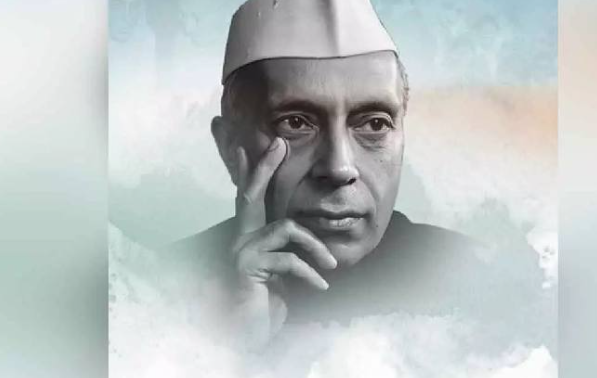
NEW DELHI, Nov 14: Congress leader Rahul Gandhi and party president Mallikarjun Kharge on Saturday paid homage to India’s first Prime Minister, Pandit Jawaharlal Nehru, on his birth anniversary, remembering his contribution to the freedom struggle and his role in shaping independent India’s democratic foundations.
In separate posts on social media platform X, the two leaders highlighted Nehru’s commitment to democracy, secularism, equality, scientific thinking and inclusive development. They said his vision of a modern and progressive India continued to hold significance.
Rahul Gandhi, the Leader of the Opposition in the Lok Sabha, described Independence as the beginning of a new national journey in Nehru’s understanding, rather than the final destination of the freedom movement.
Paying his respects, Rahul wrote in Hindi, “Hind ke Jawahar, Bharat ke pratham Pradhan Mantri Pandit Jawaharlal Nehru ji ki jayanti par sadar naman.”
He said Nehru believed that self-rule was not merely about political authority but about giving every citizen a role in shaping the country’s future. According to Rahul, the former Prime Minister viewed India as an evolving national idea in which diversity strengthened society, democracy guided governance and equality formed the foundation.
Rahul also recalled Nehru’s aspiration to build a modern, scientific and self-reliant country, adding that efforts to realise this vision represented a meaningful tribute to his legacy.
Kharge, the Leader of the Opposition in the Rajya Sabha, also recalled Nehru’s leadership during the freedom movement and his contribution to establishing the institutions of a democratic republic.
He said India faced immense challenges after Independence, but Nehru’s leadership and long-term outlook helped guide the country’s political, economic and social development.
Emphasising the importance of democratic institutions, secular values and equal opportunities, Kharge said Nehru worked towards building a country where citizens could progress without discrimination and live together in unity and fraternity.
The Congress president also highlighted Nehru’s affection for children and his belief in the importance of their education and development. November 14 is observed as Children’s Day across India to mark his birth anniversary.
Fondly remembered by children as ‘Chacha Nehru’, the former Prime Minister believed that young people represented the country’s future. Kharge extended greetings to children and called for ensuring access to quality education, equal opportunities and the freedom to pursue their ambitions.
He stressed that providing children with the resources and environment necessary to develop their abilities was a shared national responsibility.
“Nehru’s thoughts and ideals continue to guide us even today,” Kharge said, calling for the preservation of the values that contributed to India’s democratic and constitutional framework.
Nehru’s role in India’s nation-building
Born on November 14, 1889, in Allahabad, now known as Prayagraj, Jawaharlal Nehru was one of the most prominent leaders of India’s independence movement. He became the country’s first Prime Minister in 1947 and remained in office until his death on May 27, 1964, making him India’s longest-serving Prime Minister.
A close associate of Mahatma Gandhi, Nehru played a significant role in the Indian National Congress and the struggle against British rule. Following Independence, he became a central figure in shaping the country’s political institutions and development priorities.
His tenure witnessed efforts to strengthen parliamentary democracy, expand industrial capacity, develop major infrastructure and establish institutions dedicated to science, technology and higher education.
Nehru placed considerable emphasis on scientific research, industrialisation and planned economic development. Institutions such as the Indian Institutes of Technology, the All India Institute of Medical Sciences and the Atomic Energy Commission became important parts of India’s early nation-building framework.
His approach to international relations was guided by the principle of non-alignment, through which India sought to maintain an independent foreign policy during the Cold War. He advocated peaceful coexistence, respect for national sovereignty and cooperation among countries emerging from colonial rule.
At the domestic level, Nehru’s political outlook emphasised secularism, social equality, democratic governance and the promotion of scientific temper. These principles formed an important part of the national vision pursued during the early decades after Independence.
The tributes from Rahul Gandhi and Mallikarjun Kharge on Saturday brought attention to Nehru’s contributions to India’s political and institutional development, while the observance of Children’s Day renewed the focus on his association with education and the welfare of younger generations.
Their messages underscored the Congress leadership’s view that Nehru’s legacy extends beyond the freedom struggle to the democratic, social and scientific foundations of modern India.

