


RBI Faces Rate Hike Test as Inflation, Crude Prices Put Pressure on Policy
Three day MPC meeting begins as rising prices, expensive oil and global rate movements shape expectations for monetary policy.
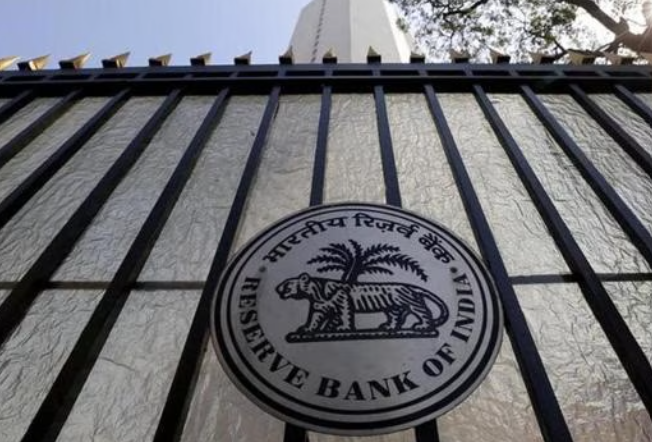
New Delhi, Oct 5: The Reserve Bank of India’s Monetary Policy Committee began its October meeting on Monday amid growing expectations that the central bank could raise interest rates as inflationary pressures widen and elevated crude oil prices create fresh risks for the economy.
The three day meeting, scheduled from October 5 to 7, comes at a crucial point for monetary policy. Economists and financial markets are closely watching whether the RBI will retain the repo rate at 5.25 per cent or begin a tightening cycle after keeping borrowing costs unchanged at its previous policy review.
A Reuters poll showed that nearly 60 per cent of economists expect the central bank to increase the benchmark rate by 25 basis points to 5.50 per cent. Such a move would mark the first rate increase in almost four years and indicate a significant shift in the policy environment.
The main concern for policymakers is the recent expansion in inflationary pressure. Consumer inflation reached 4.82 per cent in August, moving above the RBI’s medium-term target of 4 per cent for the third consecutive month. At the same time, India’s economy has continued to expand strongly, giving policymakers greater room to address price pressures without immediately risking a sharp slowdown.
Economic growth was reported at 7.8 per cent in the second quarter, while bank credit growth also remained strong. The combination of firm demand, expanding credit and rising prices has strengthened the argument among economists that monetary conditions may need to become less accommodative.
Crude oil has added another layer of uncertainty. International oil prices have remained above $100 a barrel amid continuing instability in the Middle East. Although prices eased on October 5 after additional supplies entered the market and G7 countries announced a coordinated release of emergency reserves, the broader energy outlook remains fragile.
For India, changes in crude prices are particularly important because the country imports a large share of its oil requirements. A prolonged period of expensive crude can increase the cost of transport, manufacturing and imported goods while putting pressure on the current account and the rupee.
There was some relief for Indian buyers on October 5 after Saudi Arabia reduced the official selling price of its Arab Light crude for Asian customers by $3 a barrel for November. India is one of the world’s major oil importers and received around 570,000 barrels per day of Saudi crude in September, according to reports. The lower Saudi price could provide some relief to Indian refiners if the reduction is sustained.
However, policymakers cannot rely solely on lower crude prices. The central bank must also assess developments in global interest rates and their impact on capital flows. A widening gap between Indian and overseas interest rates can influence foreign investment and exchange-rate stability.
Foreign investors have already reduced their exposure to Indian financial assets during 2026, while global monetary policy has become increasingly important for emerging markets. A rate increase could help strengthen the interest-rate differential and potentially support the rupee, although it could also increase financing costs for businesses and households.
The impact of any decision will extend beyond financial markets. If the RBI raises the repo rate, banks could eventually increase lending rates, affecting home loans, vehicle finance, personal loans and corporate borrowing. Businesses that depend heavily on credit may face higher interest expenses, while savers could benefit if deposit rates rise.
On the other hand, maintaining the existing rate could support investment and consumption by keeping borrowing costs lower. But such a decision could leave the central bank with less room to respond if inflation accelerates further.
Financial markets are therefore expected to remain sensitive to every signal from the MPC. Investors will pay close attention not only to the rate decision but also to changes in the RBI’s inflation and growth projections and the language used to describe future policy.
The stock market entered the week after a prolonged period of weakness. Indian equities had recorded eight consecutive weekly declines, the longest such losing streak in 25 years, with investors concerned about foreign fund outflows, higher crude prices and global monetary uncertainty.
Markets nevertheless opened positively on Monday as easing crude prices and reduced expectations of aggressive US Federal Reserve tightening improved sentiment. The Nifty 50 rose 0.56 per cent to 22,545.25, while the Sensex gained 0.62 per cent to 72,359.72 in early trading. Financial and information technology stocks led the recovery.
The RBI’s decision will therefore be watched against a complicated economic backdrop: strong domestic growth, broadening inflation, volatile energy prices, shifting global interest-rate expectations and a cautious equity market.
A modest rate increase would signal that controlling inflation has become a greater priority for the central bank. At the same time, policymakers will have to ensure that tighter financial conditions do not unnecessarily weaken economic activity.
The October policy review is consequently expected to provide an important indication of India’s monetary direction for the remainder of 2026 and into 2027.

