


Red Sea Shipping Disrupted After Houthi Strikes Target Saudi Energy Infrastructure
Maritime traffic through Bab el-Mandeb falls to its lowest level in months as renewed regional tensions disrupt oil transport across key global shipping routes.
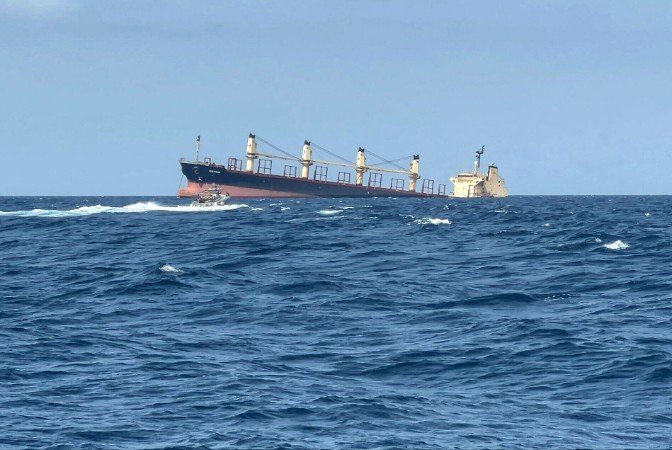
Singapore, July 27: Commercial shipping activity through the strategically important Bab el-Mandeb Strait declined sharply on Sunday after Yemen’s Houthi rebels launched attacks on Saudi Arabia’s energy infrastructure along the Red Sea coast, raising fresh concerns over global oil supply chains and maritime security.
According to shipping analytics firm Kpler, only 11 commodity vessels transited the Bab el-Mandeb Strait on Sunday the lowest daily volume recorded in several months. The slowdown reflects growing concerns among shipping companies following the escalation of hostilities in one of the world’s busiest energy trade corridors.
The latest disruption comes as the Iran-aligned Houthis expand their campaign targeting Saudi exports, adding further pressure to global shipping routes already affected by instability around the Strait of Hormuz.
Oil Tankers Continue Limited Operations
Despite heightened security risks, seven oil tankers were among the vessels that crossed Bab el-Mandeb on Sunday. Three entered the Red Sea, including two Very Large Crude Carriers (VLCCs) sailing towards Saudi Arabia’s Yanbu port to load crude oil.
The third vessel entering the region was identified as a Russian linked tanker, according to shipping data.
Meanwhile, four vessels exited the Red Sea carrying significant energy cargoes. Among them was the Hong Kong-flagged VLCC New Explorer, transporting nearly two million barrels of Saudi and Emirati crude destined for Ningbo in eastern China.
Other outbound shipments included a tanker carrying approximately one million barrels of Russian crude for China and another vessel transporting nearly 750,000 barrels of Saudi crude to Pakistan.
Industry analysts noted that the New Explorer became the third Chinese-bound VLCC to successfully navigate the Bab el-Mandeb Strait despite the escalating security risks.
Houthis Claim Responsibility
Houthi military spokesperson Yahya Saree announced that the group had carried out strikes against facilities operated by Saudi state-owned oil company Aramco in the coastal cities of Jizan and Yanbu on Saturday.
The attacks mark another escalation in the conflict, with energy infrastructure becoming a central target amid broader regional tensions involving Iran, Saudi Arabia, and the United States.
Security experts warn that repeated attacks on energy facilities and commercial vessels could force more shipping companies to reroute cargo, increasing transportation costs and delivery times for global energy markets.
Hormuz Traffic Also Remains Weak
Shipping activity through the Strait of Hormuz also remained subdued over the weekend despite a temporary pause in military strikes between the United States and Iran.
Kpler data showed that fewer than ten commodity vessels crossed the strategic waterway each day during the weekend.
Only seven vessels transited the Strait on Sunday, including three Iranian linked oil product tankers departing the Gulf.
Saturday witnessed even lighter traffic, with only three vessels navigating the passage. All reportedly sailed with their tracking transponders switched off, a measure often adopted during periods of heightened regional tension.
Those ships included a VLCC heading to Qatar for crude loading, a liquefied petroleum gas carrier bound for the UAE’s Ruwais port, and a tanker transporting Qatari naphtha to Japan.
On Friday, seven commodity vessels crossed the Strait, most of them leaving Gulf ports with crude oil and refined petroleum products.
Global Energy Markets on Alert
The decline in vessel movements through both Bab el-Mandeb and the Strait of Hormuz has renewed concerns over the stability of global oil supply chains. Together, the two waterways handle a substantial share of the world’s seaborne crude oil and petroleum exports.
Shipping companies are closely monitoring the evolving security situation, while energy traders remain cautious over the possibility of prolonged disruptions that could affect freight rates, insurance premiums, and international oil prices.
With geopolitical tensions continuing across the Middle East, industry observers expect maritime security to remain a critical factor influencing global energy trade in the coming weeks.

