


Stop Forest Encroachment
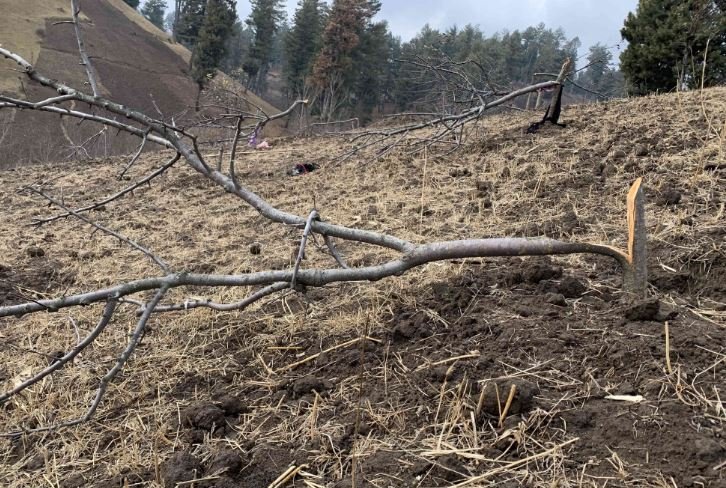
The continued encroachment of nearly 20,000 hectares of forest land in Jammu and Kashmir, despite clear High Court directions, is a serious warning for both governance and ecology. Forest land is not unused space. It is a public asset, an environmental shield and a natural inheritance that belongs not only to the present generation but also to those who will come after us. When such land remains under illegal occupation for years, the loss is far greater than the physical area encroached. It weakens the authority of law, damages ecological balance and raises troubling questions about administrative will.
The High Court had issued explicit directions in 2020 for the removal of encroachments from forest land in a time-bound manner. It had also ordered the formation of high-level committees and directed Government departments not to alter revenue records or the physical status of land identified by the Forest Department as encroached. These directions were clear, lawful and necessary. Yet, more than five and a half years later, around 20,000 hectares of forest land continue to remain under illegal occupation across the Union Territory. This delay cannot be brushed aside as routine administrative difficulty. The existence of nearly 70,000 encroachment cases shows the scale of the challenge. These cases are spread across forest divisions, compartments and protected green belts in different parts of Jammu and Kashmir. The problem is not small, isolated, or accidental. It is the outcome of long neglect, weak boundary protection, outdated records, local resistance and pressure from various quarters. While cross-verification with the Revenue Department may be necessary, it must not become a permanent excuse for slow action. Lawful procedure is important, but endless delay only benefits encroachers. The issue of forest boundary demarcation is equally critical. Jammu and Kashmir has nearly 2,200 forests, while the last major updation of boundary records reportedly took place in the 1960s. Around three lakh boundary pillars were installed at that time to protect forest land from illegal occupation. Over the decades, many of these pillars disappeared, were damaged naturally, or were allegedly removed deliberately to help encroachments. This has created confusion on the ground and made enforcement difficult. The Forest Department has reinstalled nearly two lakh boundary pillars in recent years, which is appreciable, but around one lakh pillars still remain to be restored. The plan to reinstall nearly 35,000 boundary pillars during the current year must be implemented with firmness. However, the Forest Department cannot be left alone to face resistance. Demarcation and retrieval require full coordination among the Forest Department, Revenue Department, district administrations and law enforcement agencies. When officials move to identify, demarcate or reclaim forest land, they must receive uninterrupted administrative support. If pressure groups, influential individuals, or local resistance are allowed to weaken enforcement, the entire exercise will lose credibility. Forest encroachment is not merely a land dispute. It is an environmental offence with long-term consequences. In a fragile and mountainous region like Jammu and Kashmir, forests protect slopes, regulate water sources, prevent soil erosion, reduce landslide risks and support biodiversity. When forest land is illegally occupied, the natural defence system of the region is disturbed. The damage may not always be visible immediately, but it later appears in the form of floods, erosion, drying springs, shrinking habitats and increased climate vulnerability. The role of monitoring committees is important, but committees must deliver results, not remain confined to files. The Union Territory-Level Monitoring Committee and District-Level Committees must be empowered to function freely and transparently. Regular progress reports, public disclosure of retrieved land, updated demarcation records and strict action against repeat encroachers can restore confidence in the process. Genuine disputes, if any, should be examined lawfully, but illegal occupation must not be allowed to gain legitimacy through delay. This issue is now a test of governance. It will show whether court orders are implemented sincerely, whether public land is protected firmly and whether environmental accountability has real meaning on the ground. Jammu and Kashmir’s forests cannot be sacrificed to hesitation, pressure or administrative silence. The Government must act with both sensitivity and firmness. Lawful eviction, transparent demarcation and strong inter-departmental coordination are essential.
Protecting forests is not an act against people. It is an act for the people. It protects water, soil, climate, biodiversity and public safety. The retrieval of encroached forest land must therefore be treated as a priority. If the administration acts decisively now, it can still safeguard Jammu and Kashmir’s forest wealth. If it delays further, the ecological and moral cost will be far heavier.

