


Supreme Court Seeks Centre’s Response On Plea For Dedicated Revenue Judicial Service To Handle Land Disputes
PIL Raises Concern Over Revenue Officers Deciding Property Cases Without Legal Training
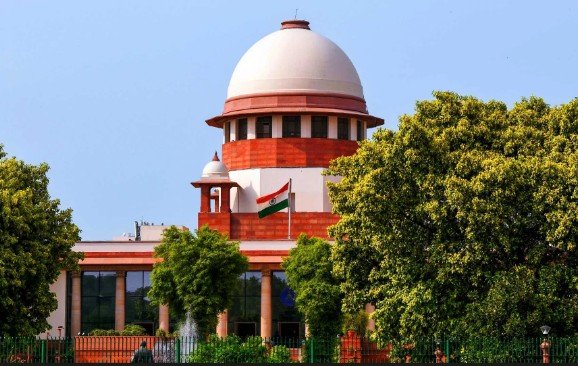
NEW DELHI, Apr 30: The Supreme Court on Thursday issued notices to the Centre, the Law Commission and other authorities on a public interest litigation seeking the creation of a dedicated revenue judicial service for adjudicating land-related disputes across the country.
A bench comprising Chief Justice Surya Kant and Justice Joymalya Bagchi sought responses on the plea, which also demanded mandatory legal qualifications and structured judicial training for revenue officers handling disputes related to land ownership, succession and inheritance.
The petition, filed by advocate Ashwini Upadhyay and drafted by advocate Ashwani Dubey, argued that a significant number of civil litigations in India arise from land conflicts, yet many such matters are decided by administrative officials lacking formal legal education.
Demand For Specialised Revenue Judicial Service
The plea highlighted that nearly 66 per cent of civil cases pending before courts are linked to land and property disputes. According to the petitioner, one of the primary reasons behind prolonged litigation is the absence of legally trained adjudicating officers in the revenue administration system.
The petition urged the apex court to direct the Union government and state governments to establish a specialised revenue judicial service aimed at ensuring uniformity, accountability and legal expertise in deciding property-related cases.
It also sought the introduction of compulsory judicial training modules in consultation with the respective high courts for officers adjudicating matters connected to title ownership, possession, inheritance and succession.
Concern Over Arbitrary Decisions
The PIL contended that the existing system often results in inconsistent and legally flawed orders due to the absence of proper judicial training among revenue officers.
According to the petition, such decisions create uncertainty over ownership rights, delay transfer and use of property, and increase the burden of litigation on courts and citizens alike.
The plea further argued that arbitrary adjudication of land disputes affects the constitutional rights of citizens under Articles 14 and 21, which guarantee equality before law and protection of life and personal liberty.
Reference To Allahabad High Court Directions
The petitioner informed the Supreme Court that similar concerns had earlier been examined by the Allahabad High Court, which had issued directions on the issue. However, the plea claimed that those directions were not implemented effectively.
The petition requested the apex court to declare that adjudication of property disputes by public servants without formal legal education and judicial training is legally unsustainable.
It also sought directions for placing such adjudication processes under the supervision and monitoring of the respective high courts to ensure transparency and judicial accountability.

