


Supreme Court Seeks Om Birla’s Reply on Plea Challenging Recognition of Six Shiv Sena (UBT) MPs’ Merger
Top court refuses immediate stay on Lok Sabha Secretariat’s July 18 circular, issues notices to Speaker Om Birla, six MPs and other respondents; next hearing on August 10.
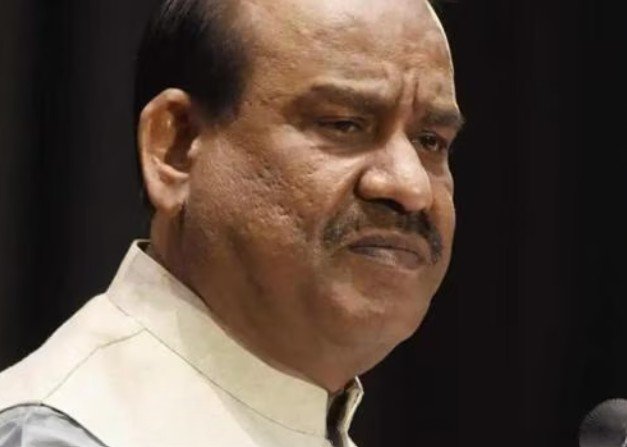
New Delhi, July 23 : The Supreme Court on Wednesday issued notices to Lok Sabha Speaker Om Birla and other respondents on a petition filed by Shiv Sena (Uddhav Balasaheb Thackeray) challenging the recognition of six of its Lok Sabha members as part of the Shiv Sena led by Maharashtra Deputy Chief Minister Eknath Shinde. While agreeing to examine the matter, the apex court declined to grant an immediate stay on the disputed parliamentary circular and scheduled the next hearing for August 10.
A Bench comprising Justice Pamidighantam Sri Narasimha and Justice Alok Aradhe took up the petition filed by Shiv Sena (UBT) leader in the Lok Sabha, Arvind Ganpat Sawant. The plea seeks to quash the July 18, 2026 circular issued by the Lok Sabha Secretariat, which officially reflected the six Members of Parliament as belonging to the Shiv Sena (Shinde) Parliamentary Party.
The Bench issued notices to Lok Sabha Speaker Om Birla, the Joint Secretary of the Lok Sabha Secretariat who signed the circular, and the six MPs involved in the change of party affiliation—Bhausaheb Wakchaure, Nagesh Patil Ashtikar, Omprakash Raje Nimbalkar, Sanjay Bandu Jadhav, Sanjay Deshmukh and Sanjay Dina Patil. The court also sought responses to the plea requesting an interim suspension of the July 18 circular.
Despite considering the interim application, the Supreme Court declined to halt the operation of the circular at this stage. The Bench decided that both the main petition and the request for interim relief would be heard together on August 10.
Appearing for petitioner Arvind Sawant, senior advocate Devadatt Kamat urged the court to hear the matter urgently, arguing that delay would weaken the purpose of judicial intervention. He submitted that the issue directly affects parliamentary functioning and that “time is the essence,” especially while Parliament remains in session.
Kamat argued that the dispute raises serious questions concerning constitutional morality and parliamentary democracy. According to the petitioner, six of the nine Shiv Sena (UBT) MPs were elected on the party’s official symbol, and no disqualification proceedings are pending against them. He contended that their recognition as members of another parliamentary party was carried out without any constitutional process governing a valid political merger.
The petition further maintained that the Supreme Court’s earlier observations in the Subhash Desai judgment had already clarified principles relating to party identity and legislative recognition. It alleged that the developments were timed to alter the political balance during the ongoing Parliament session.
Senior advocate Neeraj Kishan Kaul, representing the Shiv Sena led by Eknath Shinde, opposed the petition and defended the recognition of the six MPs. The court, however, did not express any opinion on the merits of either side’s submissions and limited its order to issuing notices.
In its petition, Shiv Sena (UBT) described the July 18 circular as unconstitutional, arbitrary and legally unsustainable. It argued that legislators cannot unilaterally claim a merger with another political party without approval from the parent political organisation. According to the party, such recognition undermines the constitutional framework governing political parties and parliamentary democracy.
The petition stated that allowing elected representatives to alter their parliamentary affiliation without satisfying constitutional requirements weakens the anti-defection framework and creates uncertainty regarding the mandate given by voters. It contended that parliamentary democracy, recognised as part of the Constitution’s basic structure, cannot be compromised through administrative recognition of disputed political claims.
Seeking immediate judicial intervention, the petitioner warned that refusal to suspend the circular would cause irreversible damage to the democratic process and the functioning of the Shiv Sena (UBT). It argued that any final relief granted later would fail to undo the political consequences of permitting the six MPs to function under a different parliamentary banner during the intervening period.
The July 18 circular issued by the Lok Sabha Secretariat revised the official party position in the Eighteenth Lok Sabha following the reported change in affiliation of the six MPs. As a result, the strength of the Shiv Sena (Shinde) Parliamentary Party increased from seven to thirteen members.
The petition urged the apex court to strike down the circular, describing it as an action that undermines constitutional governance and parliamentary conventions. It further requested the court to prevent the six MPs from functioning under the Shiv Sena (Shinde) Parliamentary Party until the legal dispute is finally decided.
With notices now issued to all respondents, the Supreme Court will examine the constitutional validity of the Lok Sabha Secretariat’s decision and determine whether the recognition of the six MPs complies with the legal framework governing party affiliation and parliamentary representation. The outcome of the case is expected to have significant implications for parliamentary procedure, anti-defection jurisprudence and the interpretation of political mergers within legislative bodies.

