


Trump-Xi Summit Highlights Trade and Iran Talks as Taiwan Missing From White House Summary
Trump-Xi Talks Centre on Trade, Iran as Taiwan Left Out of White House Summary
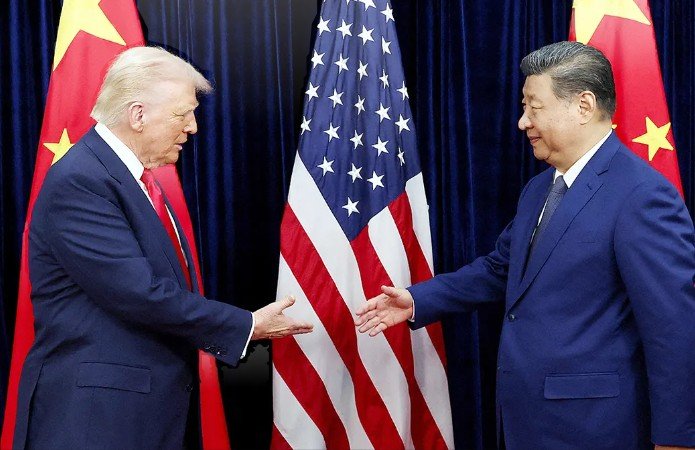
BEIJING/WASHINGTON: The White House on Sunday released a detailed summary of US President Donald Trump’s China visit, highlighting agreements on trade, investment and the Iran crisis, while notably avoiding any direct reference to Taiwan despite the issue reportedly dominating closed-door discussions with Chinese President Xi Jinping.
The official fact sheet outlined a series of economic and diplomatic understandings aimed at stabilising ties between the world’s two largest economies amid rising geopolitical tensions and ongoing trade disputes.
New trade and investment mechanisms announced
According to the White House statement, Washington and Beijing agreed to establish fresh economic coordination platforms named the “US-China Board of Trade” and the “US-China Board of Investment”. The mechanisms are expected to handle bilateral trade concerns, investment issues and strategic commercial cooperation over the coming years.
The announcement also confirmed that both nations would continue engagement under a broader “strategic stability” framework based on what officials described as fairness, reciprocity and long-term cooperation.
The White House further revealed that Trump would host Xi in Washington later this year, while both countries agreed to support each other during their respective hosting responsibilities for upcoming G20 and APEC summits.
Rare earth supply and Boeing deal in focus
A major portion of the agreement focused on critical mineral supplies and aviation trade.
China reportedly assured the United States that it would address American concerns over shortages of rare earth minerals and strategic materials including yttrium, scandium, neodymium and indium, which are considered essential for defence systems, electric vehicles and advanced technologies.
In another significant development, China approved an initial order of 200 Boeing aircraft for Chinese airlines. The White House described the agreement as the largest commitment involving American-made Boeing planes since 2017 and a major boost for the US aerospace sector.
Beijing also pledged to import at least 17 billion dollars worth of American agricultural products annually between 2026 and 2028, in addition to earlier soybean purchase commitments made during previous negotiations.
The agreement further restored market access for more than 400 American beef processing facilities and reopened poultry imports from US states cleared of bird flu-related restrictions.
Iran crisis and Strait of Hormuz discussions
The White House statement said Trump and Xi held extensive talks regarding the escalating Iran situation and global energy security concerns.
According to the document, both leaders agreed that Iran “cannot possess a nuclear weapon” and supported reopening the Strait of Hormuz, one of the world’s most critical oil shipping routes.
The statement also asserted that both sides agreed that no country or organisation should impose tolls or restrictions on maritime movement through the strategic waterway.
However, Chinese officials later maintained a more cautious public position, stressing that the concerns of all parties involved in the regional crisis must be addressed through dialogue and diplomacy.
Taiwan absent despite reportedly dominating talks
Despite the broad scope of the White House summary, Taiwan was completely absent from the official document, even though reports suggested it emerged as one of the most sensitive issues during Trump’s meetings in Beijing.
Sources familiar with the discussions indicated that Xi warned Trump that any mishandling of Taiwan-related matters could push China and the United States towards direct confrontation.
Trump avoided discussing Taiwan publicly while in China. However, after departing Beijing, he acknowledged that the issue featured heavily in his conversations with Xi.
The US President also indicated that he was reconsidering a previously approved American arms package for Taipei following objections raised by the Chinese leadership.
In subsequent media interviews, Trump reportedly described the proposed multibillion-dollar weapons sale to Taiwan as a “negotiating chip”, remarks that triggered concern among officials in Taipei and regional security analysts.
‘Strategic stability’ framework for next three years
Chinese officials described the emerging framework as a fresh model for managing relations between Beijing and Washington over the next three years.
The approach is expected to prioritise cooperation in trade, investment and global security while attempting to prevent disagreements over Taiwan, technology and military issues from escalating into direct confrontation.
Analysts believe the absence of Taiwan from the White House summary reflects a deliberate attempt by both sides to prevent sensitive political disagreements from overshadowing economic and strategic outcomes achieved during the summit.

