


Two Drops of Life
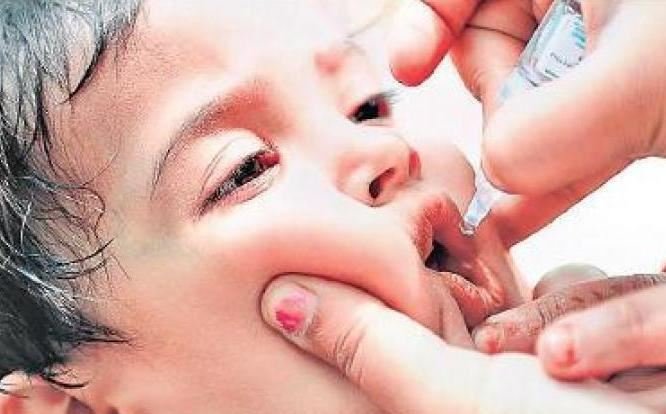
The Pulse Polio Immunization Campaign in Jammu and Kashmir is not merely another public health programme. It is a serious responsibility towards every child, every family and the future of society. A polio-free India is a national achievement earned through decades of commitment, but such achievements survive only when governments, health institutions and communities refuse to become careless. The upcoming Pulse Polio National Immunization Day, scheduled for June 28, 2026, is therefore a timely reminder that public health victories must be defended with discipline, planning and complete field action.
India reported its last case of wild poliovirus in January 2011 and received polio-free certification in March 2014. This remains a proud chapter in the country’s health history. Yet, the danger has not disappeared from the world. Continued transmission in some neighbouring countries means that the risk of re-importation cannot be ignored. Jammu and Kashmir, with its sensitive geography, movement of people and diverse terrain, must remain alert. A single missed child can create a weak point in the protection chain, and that is a risk no responsible system can afford. The detailed review chaired by Commissioner Secretary, Health and Medical Education, M Raju, reflects a welcome seriousness in the administration’s approach. The participation of Deputy Commissioners, Chief Medical Officers, Director Family Welfare, MCH and Immunization, Director Health Services Jammu and Director Health Services Kashmir shows that the campaign is being treated as a coordinated mission rather than a departmental formality. This is exactly how a preventive health campaign should be conducted. Polio immunization is not just about placing booths in villages and towns. It is about mapping every settlement, identifying every vulnerable pocket and making sure that the system reaches the child before the virus finds an opening. The target of covering 18,91,821 children below five years across the Union Territory is massive and meaningful. Behind every number is a young life that deserves protection. The deployment of 40,291 vaccinators, 2,610 supervisors, 10,253 vaccination booths, 791 transit points, 337 mela and bazaar sites, and 825 mobile teams gives the campaign both scale and reach. The distribution of 24,176 vaccine carriers also highlights the importance of cold chain management, without which the credibility and effectiveness of any immunization effort can be weakened. However, numbers alone do not guarantee success. The real test will be ground-level execution. The direction that no child should be missed must be enforced with firmness. High-risk areas, nomadic settlements, migratory slums, brick kilns, construction sites, industrial areas and scattered habitations must receive special attention. These are the places where children are often missed because families are mobile, economically vulnerable or outside the regular network of public services. A strong health system is not one that waits for people to come to it. It is one that goes out and reaches those who need it the most. Transit teams also have a major responsibility. Railway stations, airports, bus terminals, religious places, tourist spots, picnic locations and busy public spaces must be covered with full seriousness. Jammu and Kashmir witnesses pilgrim movement, labour migration, tourism and seasonal travel. These movements make transit immunization a vital part of the campaign. Any casual approach at such locations can defeat the purpose of an otherwise well-planned drive. The Union Territory’s performance in non-polio Acute Flaccid Paralysis surveillance is encouraging and deserves appreciation. An AFP surveillance rate of 6.6 cases per 100,000 population among children below 15 years, compared to the national average of 3.6, shows that the health system is alert and sensitive. Surveillance is the backbone of disease prevention. It gives early warning, strengthens response and prevents complacency. This strong monitoring must continue with the same commitment. At the same time, the success of the campaign cannot rest only on official machinery. Parents, teachers, religious leaders, social workers, local representatives and civil society groups must support the health workers. No rumour, hesitation or negligence should stand between a child and protection. The “Two Drops of Life” are simple in form, but powerful in meaning. They carry the strength of science, the promise of prevention and the duty of society towards its children.
Jammu and Kashmir now has an opportunity to show that careful planning, strict coordination and community participation can make preventive healthcare truly effective. The Pulse Polio Campaign 2026 must be implemented with compassion, urgency and zero tolerance for missed coverage. A polio-free future cannot be protected by past success alone. It must be secured again and again, child by child, booth by booth and village by village.

