


UK Labour Party Set to Confirm Andy Burnham as Britain’s Next Prime Minister
Labour prepares for a leadership transition as Andy Burnham promises regional empowerment, public service reform, and economic renewal while inheriting major fiscal and political challenges.
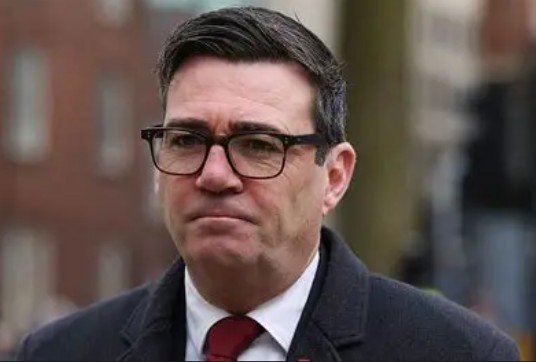
London: The United Kingdom is poised for another significant political transition as the governing Labour Party prepares to formally confirm Andy Burnham as its new leader, paving the way for him to become the country’s next prime minister. The announcement is expected during a special Labour conference on Friday, with Burnham scheduled to assume office after meeting King Charles III early next week.
The leadership change comes just weeks after Burnham returned to Parliament following nearly a decade away from Westminster. His rapid rise reflects growing confidence within Labour ranks that he can reconnect with voters and provide fresh momentum after the party’s recent political setbacks.
With Labour holding a commanding majority in the House of Commons, Burnham’s confirmation is largely procedural, ensuring a smooth transfer of power without the need for a general election.
A Swift Return to National Politics
Burnham’s journey back to the centre of British politics has been remarkable. After leaving Parliament in 2017 to become Mayor of Greater Manchester, he established himself as one of the country’s most recognizable regional leaders.
His successful leadership of Greater Manchester during challenging periods, including public health emergencies and regional funding disputes, significantly enhanced his national profile. His reputation for advocating local communities earned him the nickname “King of the North,” symbolizing his commitment to regional development outside London.
The recent parliamentary by-election victory marked the beginning of an unexpectedly rapid return to frontline politics, eventually positioning him as Labour’s preferred successor.
Labour Unites Behind Burnham
Unlike previous Labour leadership contests that were marked by intense internal divisions, Burnham’s latest bid received overwhelming support from parliamentary colleagues.
After securing the backing of an overwhelming majority of Labour MPs, no rival candidate managed to gather enough nominations to challenge him. The absence of opposition reflects the party’s desire for stability after months of political uncertainty.
Burnham previously contested the Labour leadership in both 2010 and 2015 but fell short on each occasion. Those defeats, however, did little to diminish his influence, as his years in local government strengthened his political standing and broadened his appeal.
Many Labour lawmakers believe Burnham possesses stronger communication skills and a more relatable public image than his predecessor, making him better equipped to reconnect with voters ahead of the next general election.
Replacing Keir Starmer After Mounting Pressure
The leadership transition follows increasing pressure on outgoing Prime Minister Keir Starmer, whose administration struggled with a series of domestic policy controversies despite Labour’s decisive electoral victory in 2024.
Starmer had successfully returned Labour to government after fourteen years in opposition by defeating the Conservatives with a historic parliamentary majority. However, several policy decisions and political controversies weakened public confidence during his tenure.
Poor performances in local elections further intensified criticism from within the party, while Burnham’s successful return to Parliament accelerated calls for leadership renewal.
Eventually, Starmer announced his resignation after many Labour MPs withdrew their support, opening the path for Burnham’s uncontested leadership campaign.
A Vision Focused on Regional Britain
Burnham has consistently argued that Britain’s political and economic systems have become overly centralized in London.
One of his flagship proposals involves shifting greater decision making powers to regional authorities while strengthening local governments across England.
Among his most ambitious ideas is the creation of a northern administrative hub often referred to as “No. 10 North,” designed to ensure that government policymaking reflects the interests of communities beyond the capital.
He believes stronger regional leadership can stimulate investment, improve infrastructure, and generate economic opportunities across the country.
Supporters argue that this approach could help reduce long-standing regional inequalities that have shaped British politics for decades.
Economic Renewal at the Centre of His Agenda
Burnham has repeatedly emphasized that Britain’s economy must work more effectively for ordinary citizens.
Rather than focusing exclusively on economic growth figures, he has promoted what he describes as “good growth” that delivers visible improvements in living standards throughout every region.
His strategy includes:
Expanding regional investment.
Improving transport infrastructure.
Strengthening public services.
Supporting local businesses.
Encouraging innovation outside London.
Burnham believes economic opportunity should not depend on geography and has promised to pursue policies that distribute investment more evenly across the United Kingdom.
Improving Public Services
Another major priority for the incoming prime minister is rebuilding Britain’s public services.
The National Health Service, local councils, education systems, and public transport remain under significant financial pressure following years of economic strain.
Burnham has argued that reform should focus on delivering practical improvements rather than relying solely on spending increases.
His supporters expect greater collaboration between local governments and central authorities to improve service delivery while maintaining fiscal discipline.
Addressing Labour’s Electoral Challenges
Although Labour currently commands a substantial parliamentary majority, recent opinion polls have highlighted growing support for Reform UK, led by Nigel Farage.
Immigration, economic uncertainty, and concerns over public services have contributed to Reform UK’s increasing popularity.
Labour strategists believe Burnham’s broader appeal among working class communities may help the party regain support in traditional Labour strongholds that have become increasingly competitive.
His record in Greater Manchester is frequently cited as evidence that he can connect with voters across diverse political backgrounds.
Fiscal Constraints Remain Significant
Despite ambitious plans for reform, Burnham inherits a difficult financial environment.
Britain continues to face:
Slow economic growth.
Elevated government borrowing costs.
Inflationary pressures.
Tight public finances.
The incoming government also needs to identify additional funding for defence commitments while maintaining existing public spending priorities.
Burnham has pledged to honour Labour’s election commitment not to increase the country’s principal taxes, limiting the options available for raising additional revenue.
As a result, his administration is expected to focus on improving efficiency and prioritising investment rather than implementing major tax increases.
Immigration Continues to Dominate Political Debate
Irregular migration remains one of Britain’s most politically sensitive issues.
Crossings of the English Channel by small boats continue to generate heated political debate, with opposition parties demanding tougher border controls.
Burnham will be expected to balance stronger immigration management with Labour’s broader commitment to maintaining humanitarian responsibilities.
How effectively his government handles migration policy could significantly influence public opinion before the next general election.
Navigating an Uncertain International Environment
Foreign policy challenges will also shape Burnham’s premiership.
Global energy markets remain volatile following geopolitical tensions in the Middle East, while uncertainty surrounding international trade continues to affect economic planning.
Relations with the United States, European partners, and NATO allies will remain central to Britain’s diplomatic agenda.
The government must also respond to changing global security dynamics while maintaining commitments to defence spending and international cooperation.
Public Expectations for Change
Many Labour supporters see Burnham as a politician capable of restoring optimism after a period of political turbulence.
Known for his informal communication style and frequent engagement through social media, he has built a reputation for accessibility that distinguishes him from many national political figures.
Throughout his leadership campaign, Burnham repeatedly stressed the importance of restoring confidence in government and ensuring that economic recovery benefits every community.
He has argued that Britain’s future depends on creating opportunities beyond London while strengthening national unity through regional development.
Looking Ahead
As Andy Burnham prepares to enter Downing Street, expectations are high both within Labour and across the country.
His leadership begins at a time when Britain faces economic uncertainty, fiscal pressures, public service challenges, and an increasingly competitive political landscape.
Whether his emphasis on regional empowerment, economic renewal, and public service reform can translate into lasting national success will define the next chapter of British politics.
For now, Labour hopes that Burnham’s arrival signals not only a change in leadership but also the beginning of a broader effort to reshape the country’s political and economic direction.
With the next general election still several years away, his government now has the opportunity and responsibility to demonstrate that a fresh leadership approach can deliver meaningful improvements for communities across the United Kingdom.

