


US Air Traffic Technology Failure Disrupts Thousands of Flights, Exposes Ageing Infrastructure
A major communications failure across US air traffic control centres forced a nationwide flight suspension, affecting thousands of passengers and highlighting the urgent need to modernise outdated aviation technology and critical communication networks.
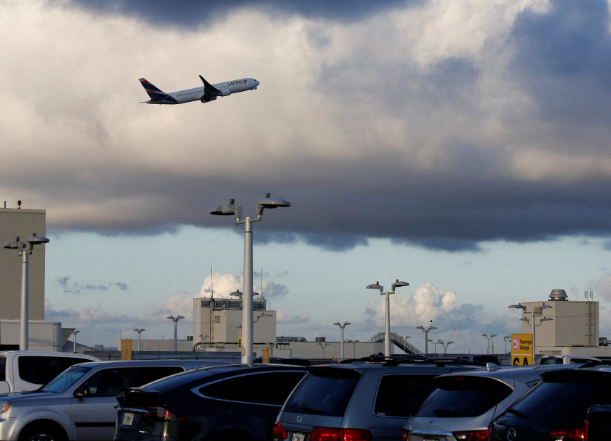
WASHINGTON, Nov 13: A major technology failure affecting the US air traffic control network triggered widespread disruption across the country’s aviation sector, forcing authorities to suspend flights nationwide and leaving thousands of passengers stranded at airports.
The Federal Aviation Administration (FAA) lifted the nationwide ground stop on Friday evening after communication problems affected air traffic control operations. However, officials warned that restoring normal flight schedules would take considerable time because of the large number of cancellations and delays.
The incident exposed vulnerabilities in the technological infrastructure supporting one of the world’s busiest aviation networks and renewed concerns about the reliability of ageing communication equipment.
According to information released by US authorities, the disruption began at approximately 3:36 pm when air traffic control centres experienced instability involving radar and communication systems.
Transportation Secretary Sean Duffy said the problem involved overloaded network switches and routers, which began generating inconsistent information.
The malfunction prompted authorities to halt flight operations as a precautionary measure to maintain aviation safety.
Officials subsequently confirmed that the immediate technical problem had been addressed and that aircraft operations could resume. Nevertheless, the disruption affected airports across the country, with airlines facing difficulties reorganising aircraft, crews and passenger schedules.
Reuters reported that more than 6,600 flights had been cancelled and approximately 8,600 delayed during the disruption. Another 1,500 cancellations had already been recorded for Sunday, indicating that the consequences could extend beyond the initial shutdown.
Reuters
Network overload triggers nationwide aviation disruption
The incident demonstrated how heavily modern aviation depends on interconnected digital systems and reliable communication networks.
Air traffic controllers use sophisticated technological infrastructure to monitor aircraft movements, exchange information with pilots and coordinate departures and arrivals.
These systems rely on multiple components, including radar equipment, communication networks, data-processing platforms, routers and specialised software.
Even when individual components remain operational, instability in the wider network can create inconsistencies that affect the accuracy and reliability of information available to controllers.
In this incident, the overload affecting network switches and routers reportedly caused irregularities in the data being transmitted through the system.
Authorities decided that continuing normal operations under such circumstances could create unnecessary safety risks.
The nationwide grounding was therefore implemented to allow technical teams to address the problem and ensure that air traffic control facilities could operate reliably.
Transportation Secretary Duffy said the system had not completely lost radar or communication capabilities during the incident. Thousands of aircraft were also able to land safely despite the technical difficulties.
However, the disruption was sufficiently serious to require a nationwide suspension of departures.
The scale of the incident highlighted the importance of maintaining reliable backup systems and ensuring that critical aviation networks can manage sudden increases in data traffic.
Ageing technology raises questions about infrastructure investment
The failure has renewed debate over the condition of America’s air traffic control infrastructure.
US aviation authorities have faced longstanding challenges involving outdated equipment, communication systems and shortages of air traffic controllers.
Modern aviation requires increasingly sophisticated technological capabilities as passenger numbers increase and airlines operate complex international and domestic schedules.
Air traffic management systems must process enormous amounts of information while maintaining continuous communication between aircraft, control centres and airport operations.
Older infrastructure can struggle to meet these requirements, particularly when different generations of equipment and software need to operate together.
Duffy argued that the latest incident demonstrated the need for a comprehensive modernisation programme.
He called for substantial investment to replace outdated systems and improve the technological foundation of the country’s aviation network.
The Transportation Secretary estimated that approximately $50 billion would be required for a broader air traffic control overhaul.
Separately, the White House and the Department of Transportation had urged Congress to approve $30.1 billion for improvements to airports and air traffic control infrastructure.
The proposed investments are intended to address long-standing deficiencies and strengthen the reliability of aviation operations.
Modernisation could involve replacing legacy communication equipment, improving network capacity, upgrading radar systems and introducing more advanced digital platforms.
It could also help authorities improve the ability of different control centres to exchange information and respond to unexpected technical problems.
However, such a transformation would require considerable funding, planning and coordination among government agencies, technology providers and aviation industry participants.
Cyberattack ruled out as immediate cause, investigation continues
The incident also raised questions about whether the disruption could have been caused by a cyberattack or an artificial intelligence-related malfunction.
Homeland Security Secretary Markwayne Mullin said there was no evidence at that stage indicating that the failure resulted from a cyberattack or an uncontrolled artificial intelligence system.
He suggested that the available information pointed towards a mechanically driven problem, although investigators had not completed their examination.
The National Security Agency was working with the Department of Homeland Security as part of the investigation.
The outage appeared to have affected a telecommunications network overseen by L3Harris Technologies, according to two airline officials cited by Reuters. The network is associated with critical radio frequencies used by air traffic controllers to communicate with pilots.
The company did not immediately respond to Reuters’ request for comment.
Reuters
The investigation is important because aviation communication infrastructure represents a critical component of national security.
Any prolonged interruption affecting these networks could have consequences beyond passenger inconvenience, potentially affecting emergency operations, aircraft coordination and airport security.
Authorities must therefore establish whether the incident resulted from equipment limitations, software-related problems, network congestion or another technical issue.
The findings could influence future investment priorities and cybersecurity requirements for aviation infrastructure.
Airlines struggle to restore normal operations
Although the FAA lifted the ground stop, airlines continued facing considerable operational challenges.
Aircraft and flight crews were left out of position after thousands of departures and arrivals were affected.
Airlines also had to accommodate passengers whose journeys had been cancelled or delayed, creating additional pressure on airport facilities and customer-support teams.
Major airports across the United States experienced crowded departure halls as travellers waited for updated information.
The disruption affected domestic and international connections, with passengers facing missed connecting flights and overnight delays.
Airlines began prioritising services based on aircraft availability, crew schedules and operational requirements.
American Airlines said it was prioritising flights to smaller cities outside major hubs, alongside international destinations, to help reposition aircraft and crews and accelerate recovery.
The financial consequences were also becoming visible.
Shares of American Airlines, United Airlines and Delta Air Lines declined between 1 per cent and 2 per cent in after-hours trading, while JetBlue Airways recorded a fall of approximately 3 per cent.
Passengers were not automatically entitled to compensation from airlines because the disruption resulted from an FAA system failure rather than an operational decision by the carriers.
The incident also demonstrated the difficulties airlines face when disruptions originate outside their own technological systems.
Even when individual airlines maintain functioning booking platforms, aircraft and customer-service networks, they remain dependent on centralised aviation infrastructure for permission to operate flights safely.
Technology resilience becomes a priority for aviation
The incident has placed renewed attention on the importance of technological resilience in critical public infrastructure.
Air traffic management is increasingly dependent on digital communication, automated data processing and interconnected information systems.
These technologies have improved efficiency and allowed aviation authorities to manage increasingly complex operations.
However, greater connectivity also means that failures in one part of the infrastructure can affect multiple organisations simultaneously.
The latest disruption illustrates why critical networks require continuous monitoring, sufficient capacity and reliable contingency arrangements.
Technology specialists have long emphasised the importance of maintaining backup communication channels and designing systems that can continue operating when individual components fail.
For aviation authorities, this involves ensuring that control centres can exchange information securely and maintain essential functions during technical interruptions.
Modernisation efforts must also consider cybersecurity because aviation networks are potential targets for sophisticated digital attacks.
Although officials had not identified a cyberattack as the cause of this particular incident, protecting communication systems remains essential for the long-term security of the sector.
Another important consideration is the growing volume of information generated by modern aircraft and airport operations.
As aviation technology develops, air traffic control systems will need greater processing capacity and more sophisticated tools to manage operational information.
Investments in modern infrastructure could help reduce the risk of similar disruptions while improving efficiency and coordination.
A warning for critical infrastructure operators
The US aviation disruption has broader implications for other industries that depend on interconnected digital networks.
Energy providers, telecommunications companies, financial institutions and emergency services all rely on technology systems that must remain available during unexpected situations.
A failure involving centralised infrastructure can affect thousands of users and organisations even when their individual systems remain operational.
This makes technological resilience an important consideration for both public authorities and private-sector businesses.
Organisations increasingly need to assess their dependence on external service providers, establish alternative operating arrangements and regularly test emergency response procedures.
For the aviation industry, the immediate priority will be restoring normal operations and determining precisely what caused the communications failure.
The longer-term challenge will be ensuring that the technological systems responsible for managing American airspace can handle growing operational demands without compromising safety.
The incident has provided a stark reminder that advanced digital capabilities must be supported by reliable physical infrastructure.
As governments invest in artificial intelligence, automation and next-generation communication systems, maintaining dependable foundational technology will remain equally important.
The success of future aviation modernisation programmes will depend not only on introducing newer equipment but also on building a resilient network capable of functioning under pressure.

