


Voting Kicks Off for 152 Seats in First Phase of West Bengal Assembly Elections
Massive voter turnout expected as tight security and political rivalry set the tone for a decisive electoral battle
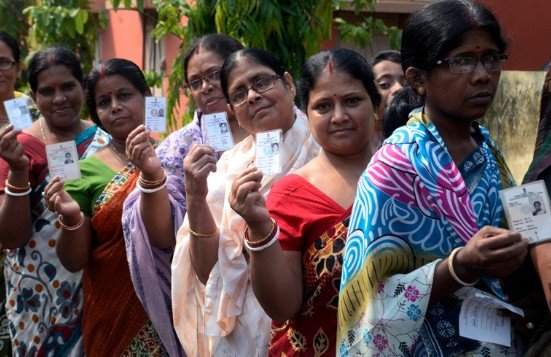
Kolkata, Apr 23: The first phase of the West Bengal Assembly Elections commenced on Thursday, with polling underway across 152 constituencies, marking a pivotal moment in one of the country’s most closely watched political contests. The voting process, which began at 7 am, has drawn large crowds of voters queuing outside polling stations, reflecting high public engagement in shaping the state’s political future.
From the hills of Darjeeling and Jalpaiguri in the north to districts like Murshidabad, Nadia, Birbhum and Hooghly in the south, polling booths witnessed steady footfall early in the day. Officials noted that this phase alone covers more than half of the state’s 294 assembly constituencies, underlining its importance in determining the overall trajectory of the elections.
The contest is widely seen as a defining test between the ruling All India Trinamool Congress (TMC) and the Bharatiya Janata Party (BJP). While the TMC, led by Chief Minister Mamata Banerjee, is aiming to secure a fourth consecutive term, the BJP is striving to consolidate its position and make an early breakthrough in this phase.
Prime Minister Narendra Modi urged citizens to actively participate in the democratic process, with a special appeal to youth and women voters. He described the elections as a “festival of democracy” and encouraged large-scale participation to strengthen democratic values.
According to the Election Commission of India, over 3.60 crore voters are eligible to cast their ballots in this phase, including approximately 1.75 crore women and 465 third-gender electors. Authorities have taken extensive measures to ensure smooth and secure voting, deploying nearly 2.5 lakh personnel from central paramilitary forces across the state.
A total of 2,450 companies have been stationed at sensitive locations, with more than 8,000 polling booths identified as vulnerable. Districts such as Malda, Uttar Dinajpur, Cooch Behar and Purba Bardhaman remain under heightened surveillance. Additionally, over 2,000 quick response teams and flying squads have been mobilised to prevent any untoward incidents and maintain order.
Governor R. N. Ravi also appealed to voters to exercise their democratic rights responsibly, stressing that each vote holds the power to shape the state’s future.
This phase holds particular strategic importance due to its inclusion of all 54 seats in North Bengal a region that played a significant role in the BJP’s rise during the 2019 general elections. In the previous 2021 assembly elections, the BJP had secured 59 seats in these constituencies, while the TMC won 93, making this round a crucial battleground for both parties.
The electoral contest has been further intensified by the recent revision of voter rolls, which led to the removal of around 91 lakh names. The move has sparked sharp political debate, with the BJP defending it as a necessary cleanup of fraudulent entries, while the TMC has criticised it as an attempt to disenfranchise legitimate voters, particularly minorities and migrant communities.
Several prominent leaders are contesting in this phase, adding to its political weight. Notable candidates include Suvendu Adhikari from Nandigram, Nisith Pramanik from Mathabhanga, Udayan Guha from Dinhata, Goutam Deb from Siliguri, and Adhir Ranjan Chowdhury from Baharampur.
With the second phase scheduled for April 29 and vote counting set for May 4, the outcome of this initial round is expected to set the momentum for the remaining phases. As voters continue to turn out in significant numbers, the first phase is shaping up to be a crucial indicator of the political direction West Bengal may take in the coming years.

