


Iran Warns ‘Hormuz Security Isn’t Free’ as US Tensions Escalate: VP Mohammad Reza Aref
Tehran links global energy stability to lifting sanctions as tensions rise following US seizure of Iranian vessel in the Gulf region
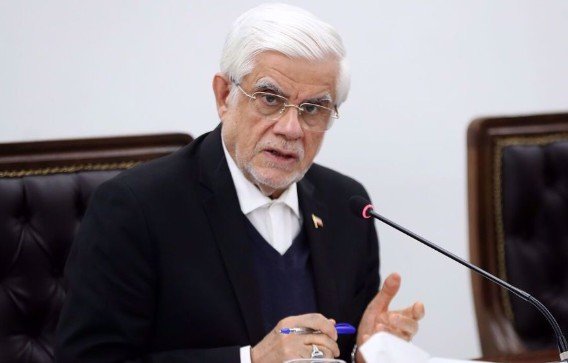
Tehran, Apr 20: Amid intensifying geopolitical friction with the United States, Iran has issued a pointed warning over the future of global energy stability, declaring that safeguarding the vital Strait of Hormuz cannot be taken for granted while its own oil exports remain restricted.
Iran’s First Vice President Mohammad Reza Aref on Sunday underscored that maritime security in one of the world’s most critical transit corridors is directly tied to economic fairness. In a strongly worded statement posted on the social platform X, Aref asserted that expecting Iran to guarantee safe passage for global oil shipments while facing sanctions is untenable.
“The security of the Strait of Hormuz is not free. One cannot restrict Iran’s oil exports while expecting free security for others,” he said, framing the issue as a broader question of equity in global energy governance.
Strategic Waterway at the Center of Tensions
The Strait of Hormuz remains one of the most strategically sensitive maritime chokepoints, with nearly a fifth of the world’s oil supply passing through it daily. Any disruption in this narrow corridor between the Persian Gulf and the Arabian Sea has immediate and far reaching implications for international markets.
Aref’s remarks signal a shift toward more assertive rhetoric from Tehran, as the country increasingly ties regional stability to its economic rights. He warned that continued pressure on Iran could trigger consequences extending well beyond the Middle East, particularly impacting global fuel prices and supply chains.
“The choice is clear: either a free oil market for all, or the risk of significant costs for everyone,” he added, emphasizing that sustainable price stability depends on removing both economic and military constraints imposed on Iran.
Maritime Incident Escalates Confrontation
The warning comes in the wake of a dramatic maritime incident involving the reported interception of an Iranian-flagged cargo vessel by US forces. Iranian authorities have accused Washington of carrying out what they termed an act of “maritime piracy.”
According to a statement from Iran’s Khatam al-Anbiya Central Headquarters, the United States violated existing understandings by targeting a commercial ship in regional waters. The statement alleged that the vessel was unlawfully seized and warned of a forthcoming response.
“We warn that the Armed Forces of the Islamic Republic of Iran will soon retaliate against this armed piracy,” the statement said, hinting at possible escalation.
US Military Defends Interception
On the other side, the United States Central Command maintained that the operation was a lawful enforcement of naval blockade measures. Officials stated that the Iranian vessel, identified as the Touska, was attempting to breach restrictions when it was intercepted in the Arabian Sea.
A US Navy destroyer, the USS Spruance, reportedly fired targeted rounds to disable the ship’s propulsion system after issuing repeated warnings. American forces later boarded the vessel, which remains under US control.
US officials described the action as a necessary step to uphold maritime security protocols in a region already fraught with instability.
Political Fallout and Rising Stakes
Adding to the tension, US President Donald Trump publicly confirmed that American forces had taken full custody of the vessel, reinforcing Washington’s position on enforcing maritime restrictions.
However, Tehran has rejected US claims surrounding both the incident and broader diplomatic developments, dismissing suggestions of renewed negotiations as “false narratives.” Iranian officials argue that Washington is intensifying pressure through a combination of sanctions and military actions rather than pursuing genuine dialogue.
Global Energy Markets on Edge
The unfolding situation has raised alarms across global energy markets, with analysts warning that even limited disruptions in the Strait of Hormuz could lead to sharp price volatility. The waterway’s significance as a transit artery means that geopolitical instability in the region often translates directly into economic uncertainty worldwide.
Iran’s latest warning underscores a broader strategic message: that the balance between sanctions and security is becoming increasingly fragile. By linking maritime safety to economic concessions, Tehran appears to be signaling that continued restrictions could come at a steep global cost.
As tensions continue to mount, the international community faces growing pressure to de-escalate the situation before it triggers wider disruptions in trade, energy supply, and regional security.

