


Fix Chronic Khad Issues
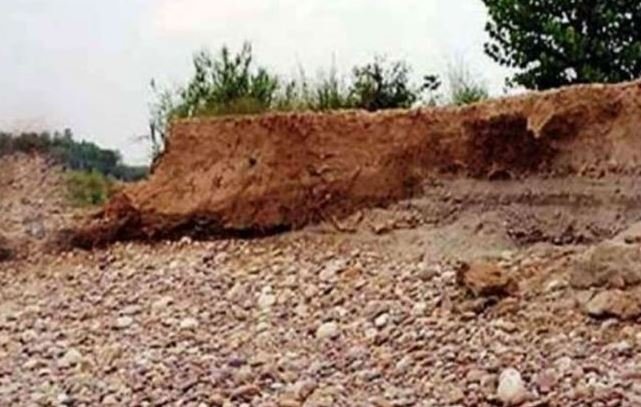
Reviewing the issues related to Gair Mumkin Khads in Jammu and Kashmir is an important step in addressing this sensitive public matter with care, balance, and fairness. This issue is not limited to revenue records or technical classification alone. It is connected with people’s homes, land, livelihoods, local development, environmental protection, and long-pending grievances. Therefore, any decision on this subject must be guided by transparency, legal wisdom, public participation and humane understanding.
Gair Mumkin Khads, rivers and nallahs form an essential part of natural drainage systems. Their protection is necessary to prevent flooding, waterlogging, environmental damage and unsafe development. In a region where rapid urbanisation and changing settlement patterns are already putting pressure on natural spaces, ecological safeguards cannot be ignored. At the same time, genuine concerns of citizens affected by land classification, restrictions, or segregation also deserve a fair and patient hearing. Good governance must protect the environment while also ensuring that people are not left in uncertainty or hardship. The decision to seek public suggestions before finalising the report is a welcome and meaningful move. Matters involving land and water channels should not be decided only through files, maps or old records. Ground realities are often more complex than official documents suggest. Public consultation can help identify genuine cases, old anomalies, recurring disputes and practical difficulties faced by residents. When citizens are given an opportunity to present their concerns, decision-making becomes more credible and acceptable. The proposed designation of a nodal officer at the Civil Secretariat for receiving public suggestions can further strengthen this process. Many people often struggle to find the right office or proper channel for submitting their grievances. A clear and accessible mechanism can reduce confusion and help ensure that public inputs are properly recorded and examined. However, this system must remain simple, citizen-friendly and time-bound so that people do not face another layer of procedural difficulty. The constitution of a technical team for proper segregation of Khads is equally important. This exercise requires field verification, scientific mapping, accurate revenue assessment and coordination among concerned departments. Proper segregation must clearly distinguish between active water channels, old recorded entries, settled habitations, disputed areas and land requiring environmental protection. Without accurate technical details, any decision may either harm ecological interests or create unnecessary hardship for citizens. The focus on identifying chronic problem areas also reflects a practical approach. Some locations may have repeated disputes because of unclear records, expanding habitations, development needs, flood risks or overlapping departmental claims. Such areas require focused attention and case-specific solutions. A generalised approach may not serve justice in every situation. The administration must ensure that genuine public concerns are addressed without weakening the protection of natural drainage systems. The larger challenge is to maintain a careful balance between environmental sustainability and public rights. Natural water bodies and drainage channels must be protected because they are vital for ecological stability and disaster prevention. At the same time, citizens with genuine claims, long-standing hardships or lawful concerns must not be treated harshly. The system should be firm against encroachments, but sensitive towards legitimate cases that require correction, clarification or relief. The proposed report must therefore be prepared with seriousness and accuracy. A time-bound process is necessary, but speed should not come at the cost of fairness. The final recommendations should be based on public feedback, technical verification, legal clarity and environmental responsibility. Such an approach can reduce confusion, prevent future disputes and provide clear guidance to departments for dealing with similar matters.
Jammu and Kashmir needs a land governance framework that is both protective and people-orientated. It must preserve natural drainage systems for the safety of future generations, while also addressing the genuine difficulties of present citizens. The issue of Gair Mumkin Khads provides an opportunity to correct old ambiguities, build public confidence and create a balanced policy that respects both ecology and justice. A fair resolution will be one that protects nature, safeguards people’s rights and ensures that development proceeds with responsibility, clarity and compassion.

