


BMI Projects India’s FY27 Growth at 6.6% Amid Slower Investment and Consumption
Fitch Solutions unit sees inflation pressures and West Asia-related trade disruptions weighing on economic momentum despite supportive monetary conditions.
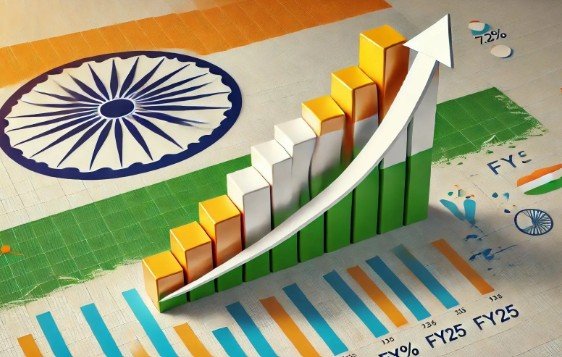
NEW DELHI: India’s economic growth is expected to moderate to 6.6 per cent in the financial year 2026-27, reflecting slower domestic demand and easing investment activity, according to BMI, a research firm under the Fitch Group.
The projection follows a strong performance in FY26, when the country’s gross domestic product expanded by 7.7 per cent, up from 7.1 per cent in the previous fiscal year. Official data showed that consumer spending and capital expenditure remained the primary drivers of growth during the period.
BMI said the economy is likely to maintain a healthy pace of expansion in FY27 despite emerging headwinds. While the forecast indicates a slowdown from the previous year, it remains above India’s average annual growth rate recorded over the past decade.
The report pointed to a gradual cooling of consumer demand after the boost generated by the Goods and Services Tax reforms introduced in September 2025. Those measures had triggered a surge in spending during the December quarter of FY26, but the momentum eased in the following quarter as growth in household consumption moderated.
Another factor expected to influence economic activity is rising inflation. BMI projects consumer price growth to average 5.3 per cent during FY27, a development that could reduce purchasing power and affect discretionary spending. The firm also highlighted concerns over supply-chain disruptions and higher energy costs linked to tensions in West Asia and uncertainty around maritime trade routes.
Investment activity, which played a key role in supporting growth during FY26, is also expected to lose some momentum. According to BMI, the anticipated moderation is not primarily linked to monetary policy but rather to a broader normalisation following a period of strong capital formation.
The report noted that the Reserve Bank of India’s substantial interest rate reductions during 2025 continue to provide support to economic activity. Lower borrowing costs have improved liquidity conditions and are expected to cushion the impact of external shocks on businesses and consumers.
On the currency front, BMI expects the rupee to average around 95.1 against the US dollar during the current calendar year. A weaker currency could improve the competitiveness of Indian exports in global markets and partially offset the impact of higher import costs, particularly in the energy sector.
The assessment aligns with the Reserve Bank of India’s own growth outlook for FY27, which also estimates economic expansion at 6.6 per cent. Both projections suggest that while the pace of growth may moderate from recent highs, India is likely to remain among the world’s fastest-growing major economies.
Economists believe the country’s medium-term prospects remain supported by strong domestic demand, ongoing infrastructure development, digital transformation and policy measures aimed at strengthening manufacturing and investment. However, global uncertainties, commodity price movements and geopolitical developments will continue to influence the economic landscape in the months ahead.
BMI concluded that India’s economy is entering a phase of more balanced growth, with supportive monetary conditions helping offset some of the challenges arising from inflationary pressures and external risks.

