


Oil Falls Sharply on US-Iran Agreement to Reopen Strategic Hormuz Waterway
Energy markets react positively as ceasefire framework raises expectations of restored crude supply flows
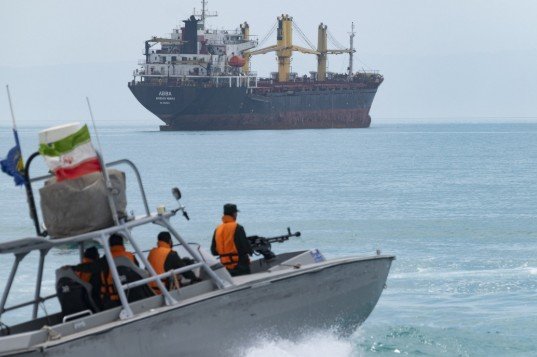
SINGAPORE, June 15: Global crude oil markets opened the week under pressure, with benchmark prices falling sharply after the United States and Iran announced an initial agreement aimed at ending months of conflict and restoring shipping activity through the strategically important Strait of Hormuz.
Brent crude futures declined by $3.58, or 4.1 percent, to trade at $83.75 per barrel in early Asian trading. U.S. West Texas Intermediate (WTI) crude dropped $4.01, or 4.7 percent, to $80.87 per barrel. The latest decline pushed both benchmarks to their lowest levels since March and extended losses recorded at the end of last week.
The market reaction followed statements from U.S. President Donald Trump and senior Iranian officials indicating that a preliminary peace framework had been reached. The agreement is expected to pave the way for the gradual reopening of the Strait of Hormuz, a crucial maritime route that handles roughly one-fifth of global oil and liquefied natural gas shipments.
According to officials involved in the mediation process, the United States and Iran are expected to sign a memorandum of understanding in Switzerland later this week. Pakistan, which played a key diplomatic role in facilitating talks between the two countries, confirmed that negotiations had made significant progress and were moving toward a formal settlement.
President Trump announced on Sunday that commercial traffic through the Strait of Hormuz would be allowed to resume without restrictions. He also indicated that U.S. naval measures imposed during the conflict, including the blockade of Iranian ports, would be lifted as part of confidence-building efforts.
Iranian media outlets reported that the draft agreement includes provisions to reopen the strategic waterway within 30 days. Under the proposed arrangement, Iran would oversee maritime security operations to ensure the safe movement of commercial vessels through the region.
The development marks a major turning point in a conflict that disrupted global energy markets for more than three months. The closure of the Strait of Hormuz significantly reduced oil and gas exports from the Middle East, tightening supplies and driving energy prices higher across international markets.
Market analysts noted that the sharp decline in crude prices reflects investor expectations that supply disruptions will gradually ease. With the prospect of additional barrels returning to the market, traders have begun removing the geopolitical premium that had accumulated during the conflict.
Tim Waterer, Chief Market Analyst at KCM Trade, said the market was rapidly adjusting to the possibility of normalised energy flows. According to him, investors are reassessing risk levels as diplomatic progress lowers concerns over prolonged supply shortages.
However, industry experts cautioned that challenges remain. While shipping routes may reopen, restoring production and export capacity across affected regions could take time. Infrastructure damage, logistical disruptions and security concerns may continue to limit output in the near term.
Energy companies and shipping operators are closely monitoring developments to assess when full-scale operations can resume. Many commercial vessels remain cautious about returning to the region until long-term security arrangements are clearly established.
Analysts at the Commonwealth Bank of Australia said that oil flows through the Strait of Hormuz do not need to return entirely to pre-war levels for market conditions to improve significantly. Even a partial recovery could restore the oversupply expectations that existed before the conflict erupted.
Vivek Dhar, Commodities Strategist at the bank, stated that a return to approximately 60 to 70 percent of previous shipping volumes would likely be sufficient to ease supply concerns and stabilise global energy markets. Such a recovery could place additional downward pressure on crude prices in the coming months.
Despite the optimism surrounding the ceasefire announcement, investors remain attentive to the next phase of diplomatic negotiations. Iranian Deputy Foreign Minister Kazem Gharibabadi confirmed that broader discussions covering political, economic and security issues would continue during a proposed 60-day ceasefire period.
One of the most significant issues expected to dominate future talks is Iran’s nuclear programme. Western governments have long sought greater transparency and restrictions on Tehran’s nuclear activities in exchange for economic incentives and sanctions relief.
In a potentially encouraging sign, the E4 nations Britain, France, Germany and Italy—announced their willingness to consider easing sanctions on Iran if meaningful progress is achieved on nuclear-related commitments. The statement signals growing international support for a comprehensive diplomatic resolution.
Financial markets reacted positively to the prospect of reduced geopolitical tensions. Equity markets across Asia registered gains, while investors shifted away from traditional safe-haven assets as risk sentiment improved.
Nevertheless, analysts warned that uncertainty remains elevated. Negotiations over nuclear issues are expected to be complex and could influence the pace at which sanctions are lifted and trade relations normalised.
Tony Sycamore, Market Analyst at IG, said that while the peace agreement has removed a major source of concern for energy traders, unresolved questions surrounding future negotiations may prevent oil prices from falling substantially further in the immediate term.
Market participants will closely monitor developments over the coming weeks, particularly progress toward the signing of the memorandum and the implementation of ceasefire commitments. Any delays or setbacks could quickly alter investor sentiment and reintroduce volatility into commodity markets.
For now, the agreement has provided a measure of relief to global energy consumers, governments and businesses that had been grappling with elevated fuel costs and supply uncertainties. The reopening of one of the world’s most critical energy corridors could help improve market stability and support economic activity across multiple regions.
As diplomatic efforts continue, the focus will shift from conflict management to rebuilding confidence, restoring trade flows and securing a lasting framework for peace. The success of these negotiations will likely play a crucial role in determining the future direction of oil prices and global energy security throughout the remainder of the year.

