


India’s Energy Shield: How the Country Avoided a Crisis During the Hormuz War
A mix of fiscal discipline, emergency crude diversification, excise relief and quiet diplomacy helped New Delhi cushion the fallout of the 2026 Hormuz conflict without tipping the economy into a full blown energy crisis.
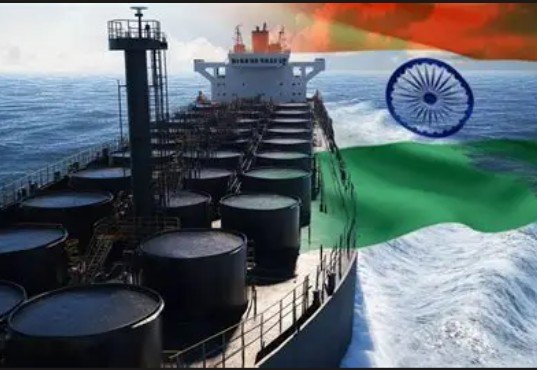
India, July 3 — When the Strait of Hormuz descended into conflict in 2026, the immediate fear across global markets was straightforward: a prolonged disruption in one of the world’s most critical oil transit routes could trigger an energy emergency far beyond West Asia. For India, which depends heavily on imported crude, the stakes were even higher. More than a pricing shock, the crisis threatened to upend inflation management, derail fiscal calculations, strain the rupee, and unsettle industrial supply chains. Yet, despite the scale of the disruption, India managed to avoid the kind of energy crisis many had predicted. The outcome was not the product of chance. It was the result of years of fiscal repair, quick policy recalibration, strategic oil sourcing and a government willing to absorb part of the pain to prevent a larger economic blowout.
The Hormuz conflict did not strike an economy that was fresh and untested. It arrived after a punishing run of external shocks that had repeatedly tested the Centre’s finances and policy capacity. The Covid-19 pandemic in 2020 forced extraordinary welfare spending and pushed the fiscal deficit above 9 per cent of GDP. In 2021, the global supply chain crisis drove imported inflation and disrupted industrial recovery. The Russia-Ukraine war in 2022 sent crude prices surging and reconfigured energy trade flows. In 2025, the tariff conflict involving major economies cast uncertainty over export prospects and external demand. By the time the Hormuz war erupted in early 2026, India had already spent six years navigating one global shock after another, often with little time to consolidate between crises.
That context is essential to understanding why India was able to respond the way it did. The Centre had spent the preceding years trying to rebuild credibility in public finances after the pandemic-era blowout. In 2021-22, it had laid out a fiscal consolidation path that targeted a deficit below 4.5 per cent of GDP by FY26. By the time the Hormuz disruption intensified, that goal had effectively been achieved, with the fiscal deficit brought down to 4.4 per cent. The FY27 budget had already pencilled in a further reduction to 4.3 per cent, underscoring the government’s intention to continue on the path of restraint even in a difficult external environment.
This mattered because a government with a fragile balance sheet has fewer options in a commodity shock. If public finances are already overstretched, a spike in oil prices tends to get passed on quickly to households and businesses through higher retail fuel prices and inflation. India, however, entered the Hormuz crisis with a stronger fiscal buffer than many expected. It also had sizeable foreign exchange reserves — above $680 billion — which provided confidence that the country could manage pressure on the rupee and pay for imports even if crude remained elevated for months. The Reserve Bank of India had already used part of that buffer to smooth currency volatility, but the reserves remained deep enough to reassure markets and policymakers alike.
The other crucial piece of the response came from energy procurement. India’s experience during the Russia-Ukraine war had already reshaped its oil strategy. In 2022, when many Western buyers shunned Russian crude, Indian refiners moved aggressively to purchase discounted barrels. That shift transformed Russia into one of India’s biggest suppliers and demonstrated that New Delhi was willing to pursue energy security even when geopolitical pressure mounted. It was a decision that drew criticism in some Western capitals, but it also delivered a hard lesson in strategic autonomy: in a world of fragmented energy markets, supply flexibility is not optional for a country of India’s size.
That lesson proved invaluable in 2026. By February, sanctions and financial restrictions affecting Russian energy companies had already complicated trade patterns, leading Indian refiners to moderate Russian purchases compared with earlier peaks. Then the Strait of Hormuz effectively shut, choking one of the most important routes for Middle Eastern crude. Since Gulf suppliers accounted for a major share of India’s oil basket, the disruption immediately created a supply gap. Imports from the region fell sharply, forcing refiners and the government to search for alternatives at speed.
India’s answer was to pivot back toward Russia with unusual decisiveness. As Gulf flows became unreliable, Russian crude once again became the stabilising anchor of India’s import strategy. By June, shipments from Russia had surged to record levels, reportedly reaching around 2.6 to 2.7 million barrels a day. That made Russia the dominant source in India’s crude basket at a time when the market was under severe strain. The significance of this move went beyond volumes. It signalled that India was prepared to treat energy security as a non-negotiable strategic priority, regardless of external pressure or diplomatic discomfort.
That posture was especially notable because there had been reports earlier in the year that a trade understanding with Washington might involve a reduction in Russian crude purchases. New Delhi never publicly endorsed any such commitment, and the import pattern during the Hormuz crisis suggested that energy calculations in India were being made independently of broader geopolitical expectations. Whether under one US administration or another, the message from New Delhi appeared consistent: the energy requirements of a country with 1.4 billion people could not be subordinated to the strategic preferences of outside powers.
The Petroleum Ministry’s role in this phase was central. Much of the operational burden fell on a system that had to keep supplies flowing while shipping routes were under threat and insurance, freight and payment arrangements became more complicated. The ministry worked with refiners, traders and diplomatic channels to secure cargoes, reroute shipments and maintain adequate availability at Indian ports. Tankers that had already been diverted in Asian waters were reportedly redirected back toward India. This was not the kind of policy response that produced dramatic headlines, but it was arguably the most important one. In an energy crisis, continuity of physical supply is often the difference between manageable disruption and panic.
At the same time, the Centre made a fiscal choice that shaped the domestic impact of the war. Rather than pass the full burden of higher crude prices directly on to consumers, it decided to absorb part of the shock through tax policy. In late March, excise duty on petrol and diesel was cut by ₹10 a litre each. The move effectively transferred a portion of the global price surge onto the government’s own balance sheet. It was not a small gesture. Fuel taxes are a major source of revenue, and cutting them during a period of uncertainty meant accepting a fiscal cost in order to contain broader inflationary damage.
The logic behind that decision was straightforward. Fuel inflation in India does not remain confined to petrol pumps. It spills over into freight rates, food prices, manufacturing costs and household inflation expectations. A sharp rise in diesel prices in particular can ripple across logistics and supply chains, raising the cost of moving everything from vegetables to industrial goods. By reducing excise duty, the Centre sought to prevent a supply shock from becoming a full-fledged inflationary spiral. The policy did not eliminate the pain, but it slowed the transmission of the shock into the wider economy.
There was, however, a visible asymmetry in how the burden was shared. States, which levy value-added tax on fuel and therefore control a significant portion of the final retail price, did not broadly mirror the Centre’s tax cut. That meant the effort to soften the impact rested disproportionately on the Union government. In a period when coordinated fiscal federalism could have helped distribute the strain more evenly, the response remained uneven. Even so, the Centre’s intervention bought time and prevented a sharper jump in fuel prices at a moment when global crude markets were exceptionally volatile.
The price relief was not enough to eliminate all pressure. By May, oil marketing companies were facing wider losses as global conditions remained unstable and the duration of the conflict was still uncertain. Fuel prices did rise again, but by then the increase came after other cushioning mechanisms had already been used. That sequencing mattered. The government had first attempted to absorb and delay the shock, only allowing a limited pass-through once the fiscal and commercial room narrowed. This reduced the risk of an immediate inflation spike and gave businesses more time to adjust.
The more important story, however, may not have been retail pump prices at all. It was the relative stability of commercial fuel and logistics costs. One of the biggest dangers in an oil shock is the second-round effect on transport, manufacturing and small businesses. If freight costs surge for a sustained period, the consequences spread quickly through production chains and consumer prices. India managed to avoid a runaway commercial cost shock during the Hormuz disruption. Logistics inflation did not spiral into double digits, and the feared collapse in cost structures for smaller firms did not materialise on the scale many had worried about. That helped protect the broader economy from a much more damaging chain reaction.
Diplomacy was another quiet but significant layer of the response. Even as the Strait remained dangerous, India worked multiple channels to keep energy cargoes moving and secure alternative supply arrangements. The Gulf remained important not only for crude but also for liquefied petroleum gas, a critical household fuel in India. Historically, a large share of India’s LPG supply had come from the region. With that route under pressure, the government moved to diversify procurement rapidly, turning to suppliers such as the United States, Norway, Canada, Algeria and Russia. Domestic refinery directives also reportedly pushed up LPG output, helping to cushion the risk of shortages in the cooking fuel market.
That part of the response rarely gets public attention because it lacks the visibility of retail petrol prices or diplomatic summits. But from an administrative perspective, it was a major test of crisis management. Household fuel shortages can quickly become politically explosive. Ensuring that LPG supplies remained available despite turmoil in a key energy corridor was therefore as much a social stability measure as an economic one. It showed that the response to the Hormuz war was not limited to crude imports and excise cuts; it extended into the everyday fuel economy that affects millions of homes.
The broader significance of India’s response lies in the interaction between macroeconomic discipline and tactical agility. The excise cut in March was possible because the Centre had spent years repairing its fiscal position after the pandemic. The ability to increase Russian crude purchases quickly was possible because India had already built commercial relationships and refining flexibility during the disruptions of 2022. The resilience of the rupee and import financing rested on foreign exchange reserves accumulated over time. The continuity of LPG and crude supplies depended on institutional coordination across ministries, public sector companies and diplomatic channels. None of these elements, taken alone, would have been enough. Together, they formed the architecture of a crisis response.
It is also worth noting that this was not merely a story of short-term improvisation. It reflected a larger shift in how India now thinks about economic sovereignty. The willingness to buy discounted crude from politically sensitive suppliers, to resist pressure where national energy interests are at stake, and to use fiscal space as a stabilisation tool all point to a more assertive policy posture than the one India often displayed in earlier commodity crises. That does not mean the country is insulated from external shocks. It remains one of the world’s largest energy importers and is still vulnerable to prolonged disruptions in global oil markets. But it does mean the toolkit has become more sophisticated, and the threshold for panic has risen.
The Hormuz conflict also exposed the limits of simplistic commentary on energy policy. In public debate, fuel price politics often dominates discussion, while the harder questions of crude sourcing, refining economics, shipping risk, reserve adequacy and tax buffers receive less attention. Yet those technical decisions are precisely what determine whether a global oil shock turns into a domestic economic emergency. During the 2026 crisis, India’s ability to prevent a breakdown depended less on rhetoric and more on operational competence inside ministries and public institutions.
That is where much of the credit appears to lie. The Petroleum Ministry, under Hardeep Singh Puri, played a visible role in steering the supply response and communicating the government’s position. The Finance Ministry’s earlier insistence on fiscal consolidation gave the Centre room to intervene when the crisis hit. The Reserve Bank’s management of the external account and exchange-rate pressures added another layer of confidence. Taken together, these moves helped ensure that a geopolitical crisis thousands of kilometres away did not metastasise into a domestic economic disaster.
None of this suggests that the risks have vanished. If disruptions in West Asian shipping lanes were to last much longer, or if crude prices were to remain structurally elevated for an extended period, India would still face difficult trade-offs. A sustained energy shock would eventually test subsidy capacity, inflation control and current account management. But the record of the Hormuz war shows that India entered this episode far better prepared than it would have been a decade earlier. The economy was not immune; it was simply more resilient, and the state was better organised.
In the end, India’s handling of the Hormuz crisis was not about escaping pain altogether. Prices rose, the fiscal arithmetic came under pressure, and policymakers had to make difficult choices in real time. The achievement was that the country avoided a broader energy breakdown despite one of the most dangerous oil supply disruptions in recent memory. It did so by combining macroeconomic caution with tactical flexibility tightening finances in calmer years, then spending that credibility when the emergency arrived.
For a country that has spent the past six years moving from one global disruption to another, that may be the clearest takeaway of all. India did not avert the effects of the Hormuz war by denying the scale of the challenge. It did so by preparing, adapting and acting before the shock could spread through the entire economy. In an era where external crises now arrive in quick succession, that capacity may prove just as valuable as any oil cargo or tax cut.

