


Supreme Court Halts CAG Audit of Delhi Power Discoms
Top court directs status quo on audit of BSES and Tata Power discoms, saying the Delhi regulator’s move to involve the CAG raises a serious legal issue that needs detailed judicial scrutiny.
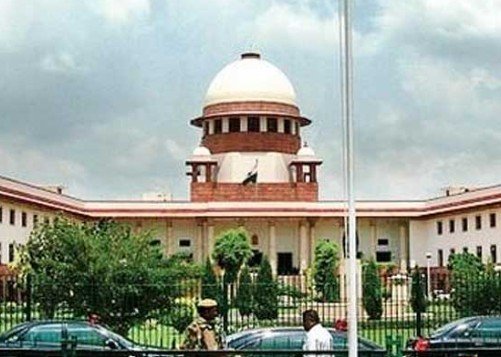
New Delhi, July 4: The Supreme Court on Friday stayed the Comptroller and Auditor General (CAG) audit of Delhi’s three private power distribution companies and ordered that status quo be maintained, observing that the Delhi Electricity Regulatory Commission’s (DERC) decision to initiate the process raises a substantial legal question that warrants closer judicial examination.
A Bench comprising Justice KV Viswanathan and Justice Shree Chandrashekhar issued notice in the matter and said the central issue before the court is whether DERC was legally empowered to trigger an audit of private electricity distribution companies through the constitutional auditor. The case has now been posted for further hearing on July 15.
“The present civil appeal concerns directly the issue whether the action of the DERC in initiating the process of audit of the distribution companies by CAG is legally permissible,” the Bench observed while granting interim relief to the discoms.
The order comes in a high-stakes dispute involving Delhi’s three major private discoms—BSES Rajdhani Power Limited (BRPL), BSES Yamuna Power Limited (BYPL) and Tata Power Delhi Distribution Limited (TPDDL)—and centres around the broader question of regulatory oversight, tariff-setting and the mounting burden of regulatory assets in the national capital’s power sector.
At the heart of the case are Regulatory Assets (RAs) estimated at nearly Rs 38,552 crore. These regulatory assets represent deferred costs that the power distribution companies have not yet recovered from consumers because electricity tariffs in Delhi have remained largely unchanged for years despite rising power purchase and supply costs. In effect, the amount reflects expenses incurred by the discoms but not immediately passed on to consumers through tariff revisions. These dues are eventually meant to be recovered through future tariff adjustments, making them a sensitive issue for both consumers and the companies.
The Supreme Court’s latest intervention has added another layer to a long-running legal and regulatory battle over Delhi’s power finances. The Bench noted that the issue in the present appeal is closely connected to earlier proceedings concerning the liquidation of Delhi’s regulatory assets. In view of that linkage, the matter has been directed to be placed before the same Bench that had delivered the apex court’s judgment on August 6, 2025 regarding the phased liquidation of the accumulated dues, subject to the approval of the Chief Justice of India.
In that 2025 ruling, the Supreme Court had dealt extensively with the ballooning regulatory assets of Delhi’s discoms and the impact of delayed tariff revisions. A Bench headed by Justice PS Narasimha had then directed that regulatory assets amounting to Rs 27,200 crore be liquidated within three years in favour of the three private discoms. The court had taken note of the steep increase in unrecovered costs and sought to create a time-bound framework for their recovery in order to stabilise the financial health of the distribution companies while also ensuring that the process remained under regulatory supervision.
As recorded in the August 2025 judgment, the regulatory assets of the three discoms had reached significant levels by March 31, 2024. BSES Rajdhani Power Limited had accumulated Rs 12,993 crore, BSES Yamuna Power Limited had Rs 8,419 crore, and Tata Power Delhi Distribution Limited had Rs 5,787 crore, taking the combined total to Rs 27,200 crore at that point. Since then, the figure is understood to have climbed further, and the current proceedings place the amount at nearly Rs 38,552 crore, underlining the scale of the financial strain within Delhi’s electricity distribution system.
The fresh controversy arose after DERC moved to initiate a CAG audit of the private discoms, a step that was challenged before the Supreme Court. The discoms argued that such an audit by the constitutional auditor was not legally tenable in the case of privately run distribution companies operating under a regulatory framework. The petitioners are understood to have contended that while DERC has statutory powers to regulate tariffs, performance standards and financial disclosures, the question of whether it can call in the CAG to audit private entities is far from settled in law.
By granting a stay and directing maintenance of status quo, the Supreme Court has, for now, prevented any further movement in the audit process until it examines the legal validity of DERC’s action. The court’s remarks indicate that it sees the issue as one that goes beyond routine regulatory oversight and touches upon the boundaries of state regulation, the autonomy of private utilities and the role of constitutional institutions in sectors involving private participation but public service obligations.
The case is significant not only because of the legal principles involved but also because of the potential implications for electricity consumers in Delhi. Regulatory assets are effectively deferred tariff burdens. When these dues are eventually liquidated, the cost is generally recovered from consumers over a period of time through power tariff adjustments. That means any decision affecting the scrutiny, validation or recovery of such dues has a direct bearing on future electricity bills.
Delhi’s power distribution sector has long been shaped by the tension between consumer interest and the financial viability of discoms. The city’s private distribution companies have often argued that tariffs have not kept pace with rising input costs, particularly the cost of purchasing power, maintaining infrastructure and meeting service obligations. Consumer groups, on the other hand, have frequently resisted steep tariff hikes, prompting regulators to stagger or defer recoveries. This has led to the steady accumulation of regulatory assets on the books of the discoms.
The Supreme Court’s 2025 judgment had attempted to address this issue by requiring a phased liquidation of the dues rather than allowing the burden to continue piling up indefinitely. However, the latest dispute over the proposed CAG audit shows that questions over transparency, financial accountability and regulatory authority remain unresolved.
For DERC, the issue is also linked to the need for public confidence in tariff determination and the financial claims made by discoms. Since regulatory assets are ultimately passed on to consumers, the regulator may have considered a detailed audit mechanism necessary to verify the claims, expenditure patterns and recovery calculations of the companies. The discoms, however, have maintained that they are already subject to statutory and regulatory checks and that the CAG’s jurisdiction cannot be extended to them without clear legal backing.
The Supreme Court has not yet ruled on the merits of either side’s claims. Its order on Friday is interim in nature and meant to preserve the situation until the legal issue is heard in detail. Still, the court’s observation that the matter raises an “arguable question” signals that the challenge to DERC’s decision will receive substantive consideration.
The outcome of the case could have consequences beyond Delhi. Power distribution in several parts of India involves private licensees functioning under state electricity regulatory commissions. A judicial pronouncement on whether such regulators can direct CAG audits of private discoms may shape the contours of oversight in the electricity sector across the country. It could influence future disputes involving tariff revisions, financial disclosures, regulatory assets and the extent of government-backed scrutiny over private utilities delivering essential public services.
For now, the immediate effect of the order is that the proposed CAG audit of BRPL, BYPL and TPDDL will remain on hold. The status quo direction means no further coercive or consequential action can be taken on the basis of the audit decision until the Supreme Court examines the issue in detail.
With the matter scheduled for hearing on July 15, attention will now turn to how the apex court interprets DERC’s powers under the electricity law framework and whether the constitutional auditor can be brought into the financial affairs of private discoms through a regulatory order. The decision will be closely watched by the Delhi government, electricity consumers, regulators and the power companies alike, as it could determine not only the scope of audits but also the future handling of thousands of crores in regulatory assets that remain at the centre of Delhi’s power tariff debate.

