


UP Bureaucracy Now Free of Policy Paralysis, Crucial for Viksit UP Goal: Chief Minister
At the inauguration of the new administrative academy campus in Lucknow, the chief minister says political leadership provides direction while trained and accountable officers turn development goals into results on the ground.
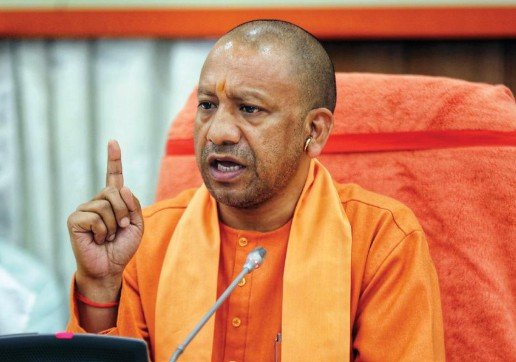
Lucknow: Stressing that the success of governance depends on how effectively policies are implemented at the grassroots, Uttar Pradesh Chief Minister Yogi Adityanath on Friday said the state’s bureaucracy has moved beyond the phase of “policy paralysis” and now has a decisive role in fulfilling the goal of a Viksit Uttar Pradesh.
Addressing the inauguration ceremony of the new campus of the Dr Ram Manohar Lohia Uttar Pradesh Academy of Administration and Management in Lucknow, the chief minister said Uttar Pradesh would play a foundational role in the larger vision of Viksit Bharat, but that ambition could only be realised if every village, town and urban ward in the state became self-reliant and development-oriented.
He underlined that while elected governments set the vision and policy direction, it is the administrative machinery that carries the responsibility of converting those goals into tangible outcomes for citizens. In that context, he said, training, capacity building, technological competence and a positive work culture were no longer optional but essential for effective governance.
“Uttar Pradesh will become the foundation of Viksit Bharat, and for that every village, every town and every ward has to move towards self-reliance,” the chief minister said. “Political leadership can provide vision, but it is the administrative system that has the full strength to implement that vision on the ground. Therefore, training, capacity building and a constructive work culture are of utmost importance.”
Yogi Adityanath expressed confidence that the academy’s new campus would emerge as one of the country’s leading centres of public leadership and administrative excellence. He said the institution would not merely function as a training centre for government officials, but as a platform that links knowledge with development, development with public trust and public trust with nation-building.
According to the chief minister, the upgraded infrastructure and modern facilities at the academy would help strengthen its role in shaping officers who are responsive, technologically equipped and capable of delivering citizen-centric governance. He said the institute would provide opportunities for continuous learning and promote the use of innovation and technology in administration so that governance becomes more transparent, sensitive and result-driven.
He also used the occasion to underline the importance of teamwork in administration, saying that governance outcomes suffer when officers work in isolation or fail to build institutional coordination. “No meaningful result can be achieved with the mindset of walking alone or weakening the team,” he said. “Team spirit, positive thinking and innovation are the pillars of success.”
The chief minister said the progress made by Uttar Pradesh over the last nine years was proof that a committed bureaucracy, when aligned with political leadership and public expectations, can bring visible transformation. He described administrative officers as the most crucial bridge between the government and the people, saying the effectiveness of welfare delivery and public confidence in the state depend largely on how strong and responsive that bridge is.
“If this bridge is strong, the benefits of government schemes will reach the last person in society, and public perception of the administration will also remain positive,” he said.
Referring to the situation in Uttar Pradesh before the BJP came to power in 2017, Yogi Adityanath said the state had acquired a deeply negative image, both within and outside the country. He maintained that the responsibility for that condition rested not only with the political leadership of the time but also with the administrative system, which had failed to deliver the level of governance expected by the public.
Without naming previous governments directly, he said the state was once identified with weak law and order, slow decision-making, administrative stagnation and poor delivery of public services. According to him, the change seen in Uttar Pradesh after 2017 has been the result of a deliberate attempt to improve governance standards, restore public trust and bring accountability to administration.
The chief minister said that over the past several years, Uttar Pradesh has built a “new identity” for itself and has set fresh benchmarks in security, crowd management, technology-driven governance, service delivery and administrative reforms. He asserted that the state, once frequently categorised among the so-called “BIMARU” states, has now left that image behind and emerged as a revenue-surplus state for six consecutive years.
He also claimed that Uttar Pradesh has consistently ranked either first or second in the country in the implementation of several Government of India schemes, reflecting both the scale of governance in the state and the efficiency of its administrative network.
Highlighting capacity building within the bureaucracy, Yogi Adityanath referred to the Mission Karmayogi initiative of Prime Minister Narendra Modi and the iGOT digital learning platform designed for civil servants and government employees. He said Uttar Pradesh had once lagged behind in terms of participation and performance in online capacity-building initiatives, but had since made rapid progress.
“Earlier, Uttar Pradesh was far behind in capacity building on the iGOT platform under Mission Karmayogi,” he said. “But because of the efforts of our officers and employees, the state has now reached the first position in the country. This shows the strength and efficiency of our administrative system.”
The chief minister also spoke at length about the Viksit Bharat–Viksit Uttar Pradesh campaign carried out across the state last year, describing it as a participatory exercise in policy formation and public consultation. He said the campaign was designed to ensure that the state’s long-term development vision was not prepared only in government offices, but shaped through engagement with the public, experts and stakeholders at multiple levels.
According to him, discussions under the campaign were held from the Legislature to village chaupals, with nearly 300 senior administrative officers, former officials and academicians participating in interactions with different sections of society. Farmers, youth, women, traders, social groups and local communities were among those consulted during the exercise, he said.
The chief minister said the government received more than 98 lakh suggestions through the state portal during the consultation process. These inputs, he added, formed the basis of the Vision Document that is expected to guide Uttar Pradesh’s developmental priorities in the years ahead. He described the exercise as an example of democratic policy planning, where governance is shaped by feedback from the ground rather than by top-down decision-making alone.
On the role of technology in reducing leakages and corruption, Yogi Adityanath cited examples from the public distribution system and agricultural procurement. He said the introduction of e-POS machines in ration shops had transformed the food distribution network by making the process transparent and accountable.
According to him, the use of digital authentication and electronic records has significantly reduced corruption in the ration system and ensured that subsidised food grains reach eligible beneficiaries without manipulation or diversion.
He also referred to the difficulties once faced by sugarcane farmers, saying they had to deal with black marketing, under-weighing and delays in receiving payments. With digitisation and mobile-based access to information, he said, farmers are now better informed and more empowered than before.
“Today, information related to sugarcane supply and payments is available on mobile phones,” the chief minister said, adding that this has helped reduce exploitation and increase transparency in the system.
The chief minister further pointed to the expansion of the Direct Benefit Transfer (DBT) mechanism as one of the major reforms in welfare governance. He said pensions and benefits under various government schemes are now being deposited directly into the bank accounts of beneficiaries, sharply reducing the role of intermediaries and middlemen.
By using digital systems for beneficiary identification, fund transfer and record maintenance, the government has tried to create a model in which the poor receive support directly, quickly and without bureaucratic hurdles, he said.
Taken together, the chief minister’s remarks were aimed at placing the state bureaucracy at the centre of Uttar Pradesh’s development strategy. His speech framed administration not merely as an implementing arm of government, but as a transformative institution that can shape public trust, accelerate development and support the state’s ambition to emerge as a leading contributor to the national vision of Viksit Bharat.
The inauguration of the new campus of the Dr Ram Manohar Lohia Academy was therefore presented not only as an infrastructure milestone but also as an investment in the future of governance in Uttar Pradesh. By focusing on training, leadership development, technology and institutional culture, the state government appears to be positioning the academy as a key pillar in preparing officers for a more demanding and performance-driven administrative environment.
With Uttar Pradesh seeking to sustain its growth narrative and strengthen last-mile delivery of welfare and development schemes, the chief minister’s message was clear: the bureaucracy must remain proactive, people-oriented and accountable if the vision of a developed Uttar Pradesh is to be translated into reality.

