


France March Into World Cup Semi-Finals as Mbappe Inspires Clinical Win Over Morocco
European giants book their place in the last four after a composed display, while Morocco’s spirited campaign ends with pride despite another brave fight on the biggest stage
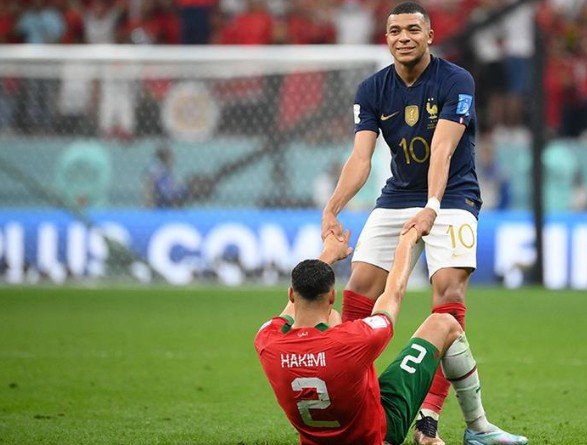
NEW DELHI, Jul 10: France powered into the semi-finals of the FIFA World Cup 2026 with a polished and ruthless performance against Morocco, ending the North African side’s stirring run and reaffirming their own credentials as one of the tournament’s strongest contenders. In a high-stakes knockout contest that carried both technical intrigue and emotional weight, the French side combined attacking quality, tactical maturity and tournament experience to secure a victory that now places them within touching distance of another World Cup final.
The match had all the ingredients of a memorable knockout battle. France entered the contest with the pressure of expectation and the burden of history, while Morocco carried the hopes of supporters who had watched the team emerge as one of the most compelling stories of the tournament. Morocco’s journey had already captured the imagination of football followers, but against a French side loaded with elite talent and comfortable in the demands of late-stage World Cup football, the challenge was always going to be immense.
France approached the game with a clear objective: establish control early, deny Morocco the emotional momentum that has fuelled their campaign, and use speed and precision in the final third to expose gaps. That plan came together effectively. The French attack, led by its marquee names, looked sharper in transitions, more efficient in front of goal and better equipped to punish moments of hesitation. Once they settled into rhythm, they began to dictate the terms of the game.
Kylian Mbappe, once again, was central to the narrative. Even in phases where he did not have the ball for extended periods, his movement altered Morocco’s defensive structure and created uncertainty across the back line. His pace forced defenders to retreat, his positioning opened spaces for teammates and his overall presence ensured that France remained dangerous every time they moved forward. Mbappe’s ability to shape a game without necessarily dominating every touch is what separates him from many other forwards, and this contest offered another example of that influence.
France’s attacking play was not built on chaos but on carefully timed surges. Their midfield ensured that possession was not wasted, and their full-backs supported forward movement without losing balance. The opening breakthrough came as a reward for sustained pressure and a willingness to attack with conviction. Once in front, France looked more comfortable, while Morocco were forced to chase a game that had already begun to tilt away from them.
Morocco, however, did not simply retreat into survival mode. Their response reflected the character that has defined their tournament. They continued to press in phases, looked for openings on the counter and tried to stretch France through quick movement in wide areas. There were passages where Morocco managed to unsettle the French defence, and their willingness to compete until the closing stages ensured that France could not relax. But where Morocco had found the decisive edge in earlier matches, this time the final ball, the final finish and the final decision often lacked the same sharpness.
France’s second goal effectively sealed the outcome and highlighted the difference between the two sides in the decisive moments. While Morocco were trying to convert territorial ambition into a genuine equalising threat, France remained cold and clinical. Their finishing in key situations, combined with an ability to stay composed under pressure, made the difference. At this level, especially in a World Cup knockout fixture, efficiency matters as much as flair, and France demonstrated both.
The victory was about more than just reaching the semi-finals. It was a statement of authority from a team that has consistently been judged not only by results but by its capacity to dominate the sport’s biggest occasions. France have built a squad capable of adapting to different opponents and different match situations. Against Morocco, they showed they can absorb energy, neutralise emotion and still deliver decisive attacking football. Their depth, discipline and experience now make them one of the favourites to go all the way.
For Morocco, the defeat marked the end of a campaign that will still be remembered with enormous respect. Their run deep into the tournament has been one of the defining stories of the 2026 World Cup, not merely because of the results but because of the manner in which they competed. Morocco combined defensive resilience with collective belief, tactical discipline with courage, and carried themselves like a side that belonged among the world’s best. Even in defeat, they left the pitch with their reputation enhanced.
Their tournament journey also carried wider significance. Morocco’s performances have once again highlighted the growing depth and ambition of football beyond the traditional European and South American powers. They showed that organisation, talent and belief can challenge established hierarchies, and their run is likely to inspire both supporters and emerging football systems across Africa and the Arab world. Though they fell short of the final, their campaign was not a temporary flash of emotion; it was evidence of a football culture that is evolving with confidence and seriousness.
From a tactical standpoint, France’s ability to manage space was one of the biggest reasons behind the result. They prevented Morocco from building rhythm through the middle, closed down key passing lanes and made sure that any Moroccan threat often came from less dangerous areas. Their midfield balance was particularly important, as it allowed them to remain compact without becoming passive. Whenever Morocco tried to build momentum, France responded with intelligent positioning and timely interventions.
Another striking feature of the match was France’s composure in transitions. Knockout football often turns on moments when a team regains possession and has just seconds to exploit an opponent’s disorganisation. France were excellent in these situations. Their decision-making in the attacking half was quicker, their runners were more coordinated and their final actions carried conviction. Morocco were never entirely outplayed, but they were repeatedly reminded that one loose pass or one mistimed challenge could be punished immediately.
As France now look ahead to the semi-finals, the questions surrounding them are no longer about whether they have enough quality, but whether they can sustain this level against even tougher opposition. The road to the title is rarely straightforward, and the margin for error becomes smaller with every round. Yet France have shown that they possess the tools required for the closing stretch of the tournament: game-changers in attack, structure in midfield, experience in defence and the psychological calm that often separates champions from contenders.
For supporters of the French side, the performance offered reassurance. It was not simply that the team won; it was the way they handled the occasion. They looked like a side that understood what was at stake and knew how to impose themselves without losing shape. In World Cup football, where one poor half can undo weeks of progress, that kind of control is invaluable.
The wider tournament narrative also gains from France’s progression. They remain one of the sport’s most marketable and technically gifted sides, and their presence in the final four ensures that the competition retains a heavyweight contender capable of producing matches of the highest quality. With Mbappe at the centre of their ambitions and a supporting cast capable of delivering in every department, France’s semi-final appearance feels less like an achievement in isolation and more like another chapter in a longer pursuit of global dominance.
For Morocco, the pain of elimination will linger, but so too will the pride. They arrived at the World Cup with ambition, but perhaps not many outside their camp expected them to become one of the tournament’s emotional and competitive pillars. They leave with admiration from around the football world and with proof that they can stand on equal footing with elite opponents for long stretches. Their journey may have ended, but its significance will endure.
In the end, France advanced because they were sharper where it mattered most. Morocco fought, organised, pressed and believed, but France were superior in the moments that decide semi-final places. They found the goals, controlled the pressure and moved one step closer to the trophy. With the semi-finals now awaiting them, the message from France is unmistakable: they are here not just to compete, but to win the World Cup once again.

