


PM Modi Hails Cabinet’s Landmark Decisions on Semiconductors, Smartphone Manufacturing and Urea Policy
Semiconductor expansion, mobile manufacturing incentives, new urea investment policy and major transport projects receive Cabinet approval to strengthen India's manufacturing ecosystem, agriculture and connectivity.
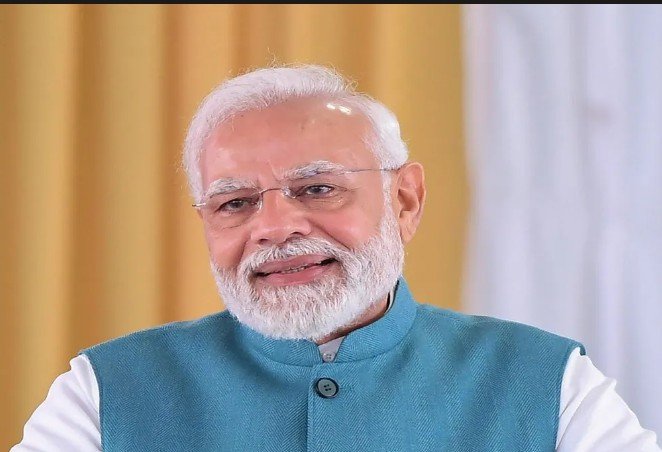
New Delhi, July 15: The Union Cabinet on Wednesday cleared a series of high-value policy initiatives aimed at accelerating India’s industrial transformation, boosting domestic manufacturing, improving agricultural security and expanding transport infrastructure. Prime Minister Narendra Modi described the decisions as significant milestones that would strengthen India’s journey towards technological leadership, economic resilience and self-reliance.
The approvals span multiple strategic sectors, including semiconductor manufacturing, mobile phone production, fertiliser manufacturing, railway expansion and highway development. Together, these initiatives represent one of the government’s largest coordinated investment packages focused on manufacturing capacity and infrastructure development.
Speaking after the Cabinet meeting, the Prime Minister said the decisions reflect the government’s long-term vision of making India a preferred destination for advanced manufacturing while simultaneously creating employment opportunities and strengthening domestic supply chains.
Semiconductor Mission Enters Its Second Phase
One of the most significant decisions taken by the Cabinet was the approval of Semicon 2.0, a programme with a financial allocation of ₹1.27 lakh crore aimed at accelerating India’s semiconductor ecosystem.
The initiative seeks to expand the country’s capabilities across the complete semiconductor value chain, including chip design, fabrication, packaging, testing and research.
Prime Minister Modi stated that India has already laid a strong foundation through the first phase of the semiconductor mission and that the second phase would further accelerate the country’s emergence as a global semiconductor hub.
He said the programme would encourage investments from global technology companies while simultaneously nurturing Indian innovation and manufacturing capabilities.
The government expects the new programme to support both established multinational firms and emerging domestic enterprises involved in semiconductor technology.
Building a Competitive Electronics Ecosystem
Officials believe that semiconductor manufacturing represents one of the most strategic sectors for India’s future industrial growth.
Modern industries ranging from smartphones and automobiles to medical equipment, defence systems and artificial intelligence depend heavily on advanced semiconductor chips.
The government hopes that expanding domestic manufacturing capacity will reduce import dependence while positioning India as an important participant in global semiconductor supply chains.
Industry experts have consistently argued that supply chain disruptions witnessed during recent global crises highlighted the importance of local semiconductor manufacturing capabilities.
The new investment programme aims to address these strategic concerns through long-term policy support.
Employment Generation Expected Across High-Tech Industries
According to the government, Semicon 2.0 is expected to create thousands of highly skilled employment opportunities.
The initiative will generate demand for engineers, researchers, software developers, fabrication specialists, equipment manufacturers and technical professionals across various segments of the semiconductor industry.
In addition to direct employment, ancillary industries supplying machinery, chemicals, logistics and design services are also expected to benefit from increased investments.
The government believes these developments will encourage greater participation of India’s young workforce in advanced manufacturing sectors.
Mobile Phone Manufacturing Gets Fresh Momentum
The Cabinet also approved a ₹62,500 crore Mobile Phone Manufacturing Scheme, designed to expand India’s rapidly growing electronics production ecosystem.
The programme will provide production-linked incentives to manufacturers while encouraging companies to increase domestic value addition.
Prime Minister Modi described the initiative as another important step in strengthening the Make in India campaign.
He said India has already become one of the world’s leading mobile phone manufacturing destinations, and the new scheme would further enhance production capacity and export competitiveness.
Domestic Value Addition Remains a Key Objective
Government officials indicated that the latest manufacturing incentive scheme aims to encourage companies to source more components domestically instead of relying heavily on imports.
Higher domestic value addition is expected to strengthen India’s electronics supply chain while creating business opportunities for component manufacturers, suppliers and small enterprises.
The government also expects the scheme to attract fresh investment from both Indian and international electronics manufacturers.
As production expands, exports of smartphones and electronic products are also expected to witness significant growth over the coming years.
Youth Employment Expected to Increase
The government believes that expansion of mobile manufacturing facilities will create substantial employment opportunities.
New production units are likely to require engineers, technicians, assembly workers, quality control professionals and logistics specialists.
Apart from direct employment, service providers involved in packaging, transportation, warehousing and industrial support services are expected to benefit from increased manufacturing activity.
Officials said the programme aligns with India’s objective of creating quality jobs through manufacturing-led economic growth.
New Urea Investment Policy Approved
The Cabinet also approved the National Investment Policy for Urea (NIPU-2026) to encourage fresh investment in fertiliser manufacturing.
Under the new policy, the government plans to facilitate the establishment of eight to nine new gas-based urea plants with a combined annual production capacity of around 10 million tonnes.
The initiative aims to reduce India’s dependence on imported fertilisers while strengthening domestic production.
Prime Minister Modi said achieving self-reliance in urea production would directly benefit Indian farmers and improve long-term agricultural sustainability.
Supporting India’s Agricultural Sector
India remains one of the world’s largest consumers of urea due to its extensive agricultural sector.
Increasing domestic production is expected to improve fertiliser availability while reducing vulnerability to fluctuations in global markets.
Officials believe that additional production capacity will help ensure stable supplies for farmers and support national food security.
The policy also seeks to encourage private sector participation through investment-friendly measures.
Railway Projects to Improve Freight and Passenger Movement
The Cabinet approved two major railway infrastructure projects covering Odisha and Jharkhand.
The projects include:
Doubling of the Paradeep–Haridaspur railway line
Construction of the fourth railway line between Rajkharsawan and Dangoaposi
According to the government, these projects will improve freight movement, reduce network congestion and strengthen connectivity in eastern India.
Prime Minister Modi said improved railway infrastructure would also promote industrial development, tourism and regional economic activity.
The projects are expected to enhance transportation efficiency for both passenger and freight services.
Major Highway Development Planned for Varanasi
The Cabinet further approved two major highway projects for Varanasi involving an investment of nearly ₹25,500 crore.
Among the approved projects is the construction of an elevated corridor connecting NH-31 with the Varanasi Ring Road along the Varuna River.
Another project includes a modern corridor along the Ganga river aimed at improving connectivity to important religious, educational and cultural destinations.
The projects are expected to reduce urban traffic congestion while facilitating smoother movement for residents and visitors.
Boost to Religious Tourism
The Prime Minister said enhanced road connectivity would improve access to Kashi Vishwanath Temple and other important locations across Varanasi.
Better transport infrastructure is expected to support tourism, pilgrimage activities and local businesses.
Officials believe the projects will also contribute to broader economic development across eastern Uttar Pradesh and the Purvanchal region.
Infrastructure Development Continues to Drive Growth
The latest Cabinet approvals reinforce the government’s strategy of combining industrial policy with large-scale infrastructure investment.
By simultaneously promoting advanced manufacturing, transport connectivity and agricultural self-sufficiency, the government aims to create long-term economic resilience.
Economists note that coordinated investments across multiple sectors can generate multiplier effects by stimulating industrial production, logistics, exports and employment.
The emphasis on strategic manufacturing sectors such as semiconductors and electronics also reflects India’s ambition to strengthen its position within global technology supply chains.
Looking Ahead
With the approval of Semicon 2.0, the mobile phone manufacturing incentive programme, the National Investment Policy for Urea and several transport infrastructure projects, the government has outlined a comprehensive roadmap focused on industrial expansion and national development.
Implementation of these initiatives over the coming years will be closely watched by industry stakeholders, investors and policymakers, particularly as India seeks to enhance manufacturing competitiveness, attract global investment and generate sustainable employment while advancing its vision of becoming a leading global economic powerhouse.

