


Security Council Reform Remains Stalled, India Tells United Nations
At the UN General Assembly, India says the Security Council’s outdated structure has weakened global peace efforts and urges comprehensive reforms to strengthen multilateral governance and support developing nations.
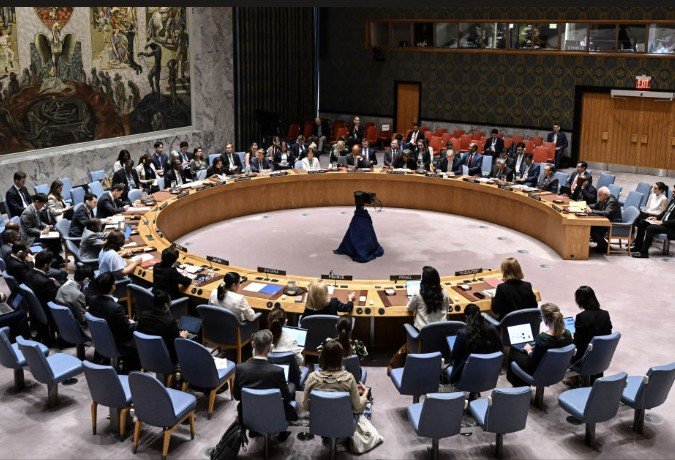
UNITED NATIONS, July 15: India has renewed its demand for sweeping reforms of the United Nations Security Council (UNSC), arguing that the existing structure no longer reflects present day geopolitical realities and has struggled to respond effectively to conflicts affecting millions of people worldwide.
Addressing an informal ministerial roundtable during the United Nations General Assembly, India’s Permanent Representative to the UN, Ambassador Harish Parvathaneni, said meaningful reform of global institutions has become essential if multilateralism is to remain credible in the twenty-first century.
The meeting, titled “Taking Stock of the Pact for the Future Making Multilateralism Fit for the Future,” focused on evaluating progress toward strengthening international cooperation and improving the effectiveness of the United Nations.
India Questions Effectiveness of Existing Security Council
During his address, Parvathaneni observed that confidence in the United Nations has declined because the Security Council has repeatedly failed to prevent or resolve several major international conflicts.
According to India, the Council’s inability to respond decisively to ongoing crises has raised serious concerns about whether it can still fulfil the core objective for which the United Nations was established in 1945 maintaining international peace and security.
He said that prolonged conflicts in different regions have resulted in immense humanitarian suffering, while the Security Council has often remained divided due to political differences among its permanent members.
India believes that these repeated deadlocks have undermined the credibility of the UN’s most powerful decision-making body.
An Institution Built for the 1940s Cannot Address Today’s Challenges
India argued that the present structure of the Security Council reflects the realities of the post-Second World War era rather than the political, economic and demographic landscape of the twenty-first century.
Parvathaneni stated that an institution designed nearly eight decades ago cannot effectively address today’s complex challenges, which include regional conflicts, terrorism, cyber threats, climate-related security risks, food insecurity and emerging geopolitical tensions.
He emphasized that the world has changed dramatically since 1945, yet the composition and decision-making process of the Security Council have remained largely unchanged.
India has consistently maintained that global governance institutions must evolve alongside changing international realities.
Slow Reform Process Draws Fresh Criticism
India also expressed disappointment over the prolonged negotiations on Security Council reform within the Inter-Governmental Negotiations (IGN) framework.
According to the Indian delegation, discussions have continued for years without producing meaningful progress.
Parvathaneni observed that negotiations have often become repetitive exercises dominated by prepared national statements rather than genuine efforts to reach consensus on structural reforms.
India believes the current pace of discussions is no longer acceptable given the growing expectations of the international community.
The country reiterated that reform efforts should move beyond procedural debates and deliver concrete outcomes.
Reference to the Pact for the Future
India also referred to the Pact for the Future, a UN initiative aimed at strengthening international cooperation and improving global governance.
Parvathaneni noted that some provisions related to Security Council reform were drafted by the then co-chairs of the Inter-Governmental Negotiations rather than by the facilitators responsible for the broader Pact discussions.
India had expressed reservations regarding certain aspects of those recommendations but ultimately chose to support the overall initiative in a constructive spirit to advance international dialogue.
The country maintained that while it remains committed to cooperative multilateralism, reform commitments must now translate into practical action.
India Seeks More Representative Global Institutions
India reiterated that making multilateralism relevant for future generations requires institutions that better represent the diversity of today’s international community.
It stressed the importance of expanding and reforming the Security Council to ensure broader representation of developing countries and emerging economies.
The Indian delegation also highlighted the need to strengthen the role of the United Nations General Assembly, describing it as the most representative global forum where every member state has an equal voice.
Additionally, India called for a stronger role for the Economic and Social Council (ECOSOC) in advancing sustainable development across economic, social and environmental dimensions.
According to India, stronger coordination among UN institutions would improve the organization’s overall effectiveness.
Financial Institutions Also Need Reform
Beyond Security Council reform, India argued that the international financial architecture must evolve to address the development priorities of low-income and emerging economies.
The country stressed that achieving the Sustainable Development Goals (SDGs) requires predictable, affordable and adequate financial support.
India urged international financial institutions to become more representative, responsive and development-oriented while continuing to fulfil their core mandates.
According to the Indian delegation, many developing nations continue to face financing gaps that hinder progress on infrastructure, healthcare, education, climate resilience and poverty reduction.
Strengthening global financial institutions would therefore complement wider reforms in international governance.
Campaign for Security Council Seat
The remarks came shortly after External Affairs Minister S. Jaishankar formally launched India’s campaign for a non-permanent seat on the UN Security Council for the 2028–2029 term during an event at UN Headquarters.
India’s campaign emphasizes its longstanding contribution to UN peacekeeping operations, support for multilateral diplomacy and commitment to international development.
The country has repeatedly stated that it seeks not only a non-permanent position but also broader structural reforms that would make the Council more democratic, transparent and representative.
India has consistently argued that countries with significant global responsibilities and contributions should have a greater role in international decision-making.
India Reaffirms Commitment to Multilateral Reform
Concluding its intervention, India reaffirmed its commitment to supporting genuine reforms across global governance institutions.
The country said the objective should be to build institutions capable of addressing present and future global challenges more effectively while restoring confidence in the international rules-based system.
India maintained that meaningful reform is essential to ensure that international organizations remain responsive, inclusive and equipped to promote peace, sustainable development and cooperation in an increasingly interconnected world.
With global challenges becoming more complex, India emphasized that strengthening multilateral institutions is no longer an option but a necessity for ensuring a stable and equitable international order.

