


Global Survey Shows China and Xi Jinping Outpace US and Trump in International Favorability
A new Pew Research Center study signals a major shift in global public opinion, with China emerging as the more positively viewed global power across much of the world while confidence in U.S. leadership declines amid geopolitical tensions and changing international perceptions.
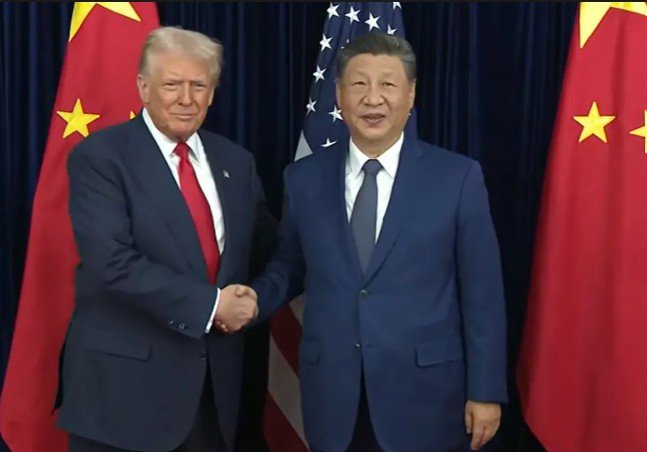
Washington, 16 July : A significant transformation in global public opinion has emerged, with China earning higher favorability ratings than the United States in a majority of surveyed nations for the first time since international polling on the subject began nearly two decades ago. The findings, released in the latest Pew Research Center Global Attitudes Survey, suggest that changing geopolitical realities, evolving diplomatic relationships, and recent international conflicts have reshaped how countries view the world’s two largest economies.
The survey, conducted between February and May 2026 across 35 countries along with respondents from the West Bank and East Jerusalem, reflects one of the most comprehensive assessments of international attitudes toward global powers. More than 42,000 people participated in the study, providing valuable insight into changing public perceptions during a period marked by heightened geopolitical uncertainty.
The results indicate that China has achieved a remarkable improvement in its global standing, while confidence in the United States has declined across many traditional partner nations.
China Leads Global Favorability Rankings
According to the survey, respondents in 25 of the 36 surveyed locations expressed a more favorable opinion of China than of the United States. The findings represent an unprecedented shift compared with previous years, when America generally maintained stronger international approval ratings.
Countries showing stronger support for China include several close U.S. partners such as:
Canada
Mexico
France
Germany
United Kingdom
Spain
Italy
Sweden
Netherlands
Researchers note that this marks the first time China has consistently outperformed the United States across such a broad range of nations.
The trend highlights how international perceptions are increasingly being shaped by current diplomatic engagement rather than historical alliances.
Xi Jinping Receives Higher Confidence Ratings
The study also examined confidence in world leaders.
Chinese President Xi Jinping received more positive ratings than U.S. President Donald Trump in 22 surveyed countries, including numerous Western democracies.
Although confidence in both leaders remained relatively modest in many places, Xi generally received stronger international support than Trump across Europe and North America.
Countries where Xi was viewed more positively include:
Canada
Mexico
France
Germany
United Kingdom
Spain
Italy
Researchers noted that leadership perceptions often influence broader attitudes toward a country’s international role.
Historic Change After Two Decades
Laura Silver, Associate Director of Pew Research Center’s Global Attitudes Research program, described the findings as historically significant.
Since Pew began tracking global attitudes approximately twenty years ago, China had never previously surpassed the United States in overall international favorability.
Earlier surveys occasionally showed narrow differences between the two countries, but Washington generally maintained an advantage.
The latest survey represents the first clear reversal of that long-standing trend.
Experts believe multiple international developments have contributed to the changing opinions.
Pandemic No Longer Dominates Global Perceptions
Researchers suggest one important reason behind China’s improved image is the fading political impact of the COVID-19 pandemic.
In previous years, international criticism regarding the pandemic significantly affected China’s reputation.
As those concerns gradually receded, attention shifted toward more recent international developments, including diplomatic relations, economic cooperation, and security issues.
The changing global agenda appears to have reduced the lasting influence of pandemic-related criticism.
International Conflicts Influence Public Opinion
The survey period coincided with heightened geopolitical tensions, including military developments involving Iran and continued instability in the Middle East.
Researchers believe ongoing conflicts influenced public perceptions regarding which countries contribute positively toward international peace and stability.
Many respondents appeared less convinced that recent American foreign policy had promoted global stability.
International observers suggest that military interventions and expanding geopolitical rivalries have affected Washington’s image among many overseas audiences.
U.S. Foreign Policy Under Greater Scrutiny
Public attitudes toward the United States have also been influenced by several foreign policy controversies over recent years.
Researchers pointed to issues including:
Trade disputes with allied nations
Debate surrounding Greenland
The Gaza conflict
Broader military operations
Diplomatic disagreements with international partners
These developments appear to have contributed to declining confidence among citizens in numerous allied countries.
Survey analysts emphasized that public opinion often reflects broader impressions of international engagement rather than individual policy decisions.
China Seen as a More Predictable Partner
Another notable finding from the research is that many respondents increasingly view China as a stable and reliable international partner.
Across multiple regions, participants were more likely to associate China with:
Long-term economic cooperation
Infrastructure investment
Predictable diplomacy
Global stability
Consistent international engagement
Researchers cautioned that these perceptions do not necessarily indicate agreement with China’s political system but rather reflect comparative views between major global powers.
White House Defends American Leadership
Responding to the survey, the White House rejected suggestions that U.S. global influence has weakened.
Officials argued that President Donald Trump’s leadership has strengthened international security through decisive military and diplomatic actions.
The administration highlighted recent counterterrorism operations and actions targeting Iran’s nuclear infrastructure as examples of policies intended to improve global stability.
Officials maintained that American leadership continues to play an essential role in protecting international security interests.
China Welcomes Survey Findings
Chinese officials welcomed the results of the international poll.
Representatives from China’s Embassy in Washington stated that the findings demonstrate growing recognition of China’s governance model and development achievements.
Chinese authorities also emphasized continued efforts to strengthen international partnerships through trade, infrastructure development, and diplomatic cooperation.
Beijing has increasingly positioned itself as an advocate of multilateral cooperation and long-term economic engagement.
Canada Shows One of the Largest Opinion Shifts
Among America’s closest allies, Canada recorded one of the most dramatic changes in public opinion.
Only about one-third of Canadians now express favorable views of the United States, representing a significant decline compared with surveys conducted just a few years earlier.
Meanwhile, positive views toward China have increased considerably during the same period.
Political analysts suggest bilateral trade disputes and recurring diplomatic tensions have influenced Canadian public attitudes.
Europe’s Perspective Continues to Evolve
Several major European nations also demonstrated noticeable changes in their perceptions.
Countries including:
France
Germany
Italy
Spain
Sweden
Netherlands
now view China more favorably than the United States.
In the United Kingdom, public opinion has become nearly balanced between the two countries after previously favoring Washington by a substantial margin.
Experts say European citizens increasingly evaluate global powers based on contemporary diplomatic behavior, economic cooperation, and international leadership.
Nations Where America Maintains an Advantage
Despite the broader trend, six surveyed countries continue to express stronger support for the United States than China.
These include:
Israel
India
Japan
South Korea
Philippines
Poland
Israel remains America’s strongest supporter among surveyed nations, with an overwhelming majority expressing favorable views of the United States.
However, even within these countries, researchers observed that American approval ratings have generally declined over recent years.
Personal Freedom Still Favors the United States
One area where America continues to outperform China involves perceptions of individual rights and civil liberties.
Respondents generally believe that the U.S. government respects personal freedoms more than China.
Nevertheless, researchers noted that this advantage has narrowed significantly since 2021.
The change is driven less by improving views of China’s governance and more by declining confidence in America’s commitment to civil liberties among international respondents.
This finding reflects broader debates surrounding democratic institutions, political polarization, and governance.
Experts Say Global Opinion Is Becoming More Competitive
International affairs specialists believe the survey illustrates a broader shift toward a more competitive global political environment.
Rather than automatically favoring traditional Western leadership, many countries now appear to evaluate major powers based on economic cooperation, diplomatic consistency, and contributions to international stability.
The results also demonstrate that public opinion can change significantly over relatively short periods when geopolitical events reshape international relationships.
Conclusion
The latest Global opinion survey 2026 represents a landmark moment in international public opinion. For the first time in two decades of comparable research, China has overtaken the United States in overall favorability across a majority of surveyed countries.
Although the United States continues to enjoy strong support in several important allies and retains an advantage in perceptions of personal freedom, the findings suggest that global attitudes are becoming increasingly balanced between Washington and Beijing.
As geopolitical competition continues to evolve, future public opinion will likely depend on diplomatic engagement, economic cooperation, conflict management, and each nation’s ability to build long-term international trust.

