


Mamdani Invokes Mandela’s Legacy, Cites Umar Khalid Among Voices for Justice
New York City mayor says justice must be defended before history delivers its verdict, drawing parallels between global human rights struggles and contemporary political cases.
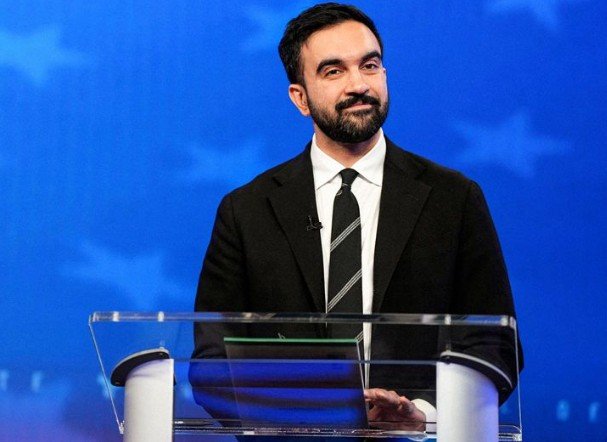
NEW YORK, July 16: New York City Mayor Zohran Mamdani used a keynote address at the Nelson Mandela Global Leadership Forum to pay tribute to the enduring influence of South Africa’s anti-apartheid icon while speaking about contemporary struggles for justice across the world. During his remarks, Mamdani referred to the imprisonment of Indian activist Umar Khalid alongside other international cases, urging audiences to examine how societies respond to issues of political freedom and human rights before history renders its final judgment.
The address, delivered at New York City Hall on Wednesday as part of commemorations honouring Nelson Mandela’s legacy, focused on the continuing relevance of Mandela’s ideals in modern democratic movements. Mamdani argued that Mandela’s influence remains visible wherever individuals gather to demand equality, justice and democratic rights.
Opening his speech, Mamdani described Mandela widely known by his clan name, Madiba—as a timeless symbol of resistance against oppression.
He said Mandela’s spirit continues to inspire protests demanding justice, campaigns supporting democracy and peaceful demonstrations seeking accountability from governments and institutions.
Justice Must Be Judged in the Present
Reflecting on Mandela’s long struggle against apartheid, Mamdani observed that many people now claim they always stood on the right side of history.
However, he argued that the true measure of moral courage lies in supporting justice while difficult decisions are still unfolding rather than after public opinion has shifted.
According to Mamdani, history often vindicates those who challenge injustice, but individuals and institutions are tested long before that recognition arrives.
He emphasised that standing for human rights requires action during moments of uncertainty rather than after historical consensus has already been established.
Reference to International Human Rights Cases
While discussing present-day examples, Mamdani cited several cases that he believes illustrate ongoing debates about civil liberties and political freedoms.
Among those mentioned was Palestinian paediatrician Hussam Idris Abu Safiya, whose detention in Israel has attracted international attention from various human rights groups.
He also referred to Indian activist Umar Khalid, who has remained incarcerated in connection with the 2020 northeast Delhi riots case.
Drawing a comparison with Mandela’s own imprisonment during South Africa’s apartheid era, Mamdani questioned why, in his view, individuals facing politically sensitive prosecutions continue to remain behind bars for extended periods.
He suggested that societies should evaluate such situations while they are unfolding rather than waiting until history passes judgment.
Earlier Message of Support
Mamdani’s remarks also recalled an earlier gesture of support towards Umar Khalid.
Earlier this year, it became public that Mamdani had written a personal message for Khalid in which he reflected on the importance of resisting bitterness despite prolonged incarceration.
The note referenced Mandela’s teachings about preserving hope and refusing to allow imprisonment to diminish one’s humanity.
The message later appeared on social media after being shared by Khalid’s partner, drawing attention among supporters and observers following the legal proceedings.
Background on Umar Khalid Case
Umar Khalid has remained in judicial custody for nearly six years after being arrested in connection with the February 2020 northeast Delhi riots.
Investigating agencies allege that he was part of a larger conspiracy linked to the violence, which claimed 53 lives and caused extensive damage to property across affected neighbourhoods.
He has been charged under the Unlawful Activities (Prevention) Act (UAPA) along with provisions of the Indian Penal Code.
Khalid has consistently denied the allegations against him, maintaining that he has been wrongly implicated.
His legal team has repeatedly sought bail, arguing that the prosecution lacks sufficient evidence to justify prolonged detention, while investigating authorities have opposed his release.
The case continues to move through India’s judicial process.
Mandela’s Legacy in Contemporary Politics
Mamdani’s speech formed part of wider international events commemorating Nelson Mandela’s contribution to democracy, reconciliation and human rights.
Mandela, South Africa’s first democratically elected Black president, spent 27 years in prison before leading the country’s transition away from apartheid.
His legacy continues to influence discussions on equality, civil liberties and democratic governance across the world.
By connecting Mandela’s experiences with present-day political debates, Mamdani argued that societies must remain vigilant in protecting justice and constitutional values.
His address underscored the belief that the principles Mandela championed remain relevant in addressing contemporary conflicts over political freedoms and human rights.
The remarks have generated discussion internationally, particularly because of Mamdani’s reference to Umar Khalid, whose legal case remains under judicial consideration in India.

