


Nepal Urges India to Accept National ID Cards as Valid Travel Documents
Proposal aims to make the National Identity Card a third valid travel document alongside passports and citizenship certificates, easing movement between the two neighbouring nations.
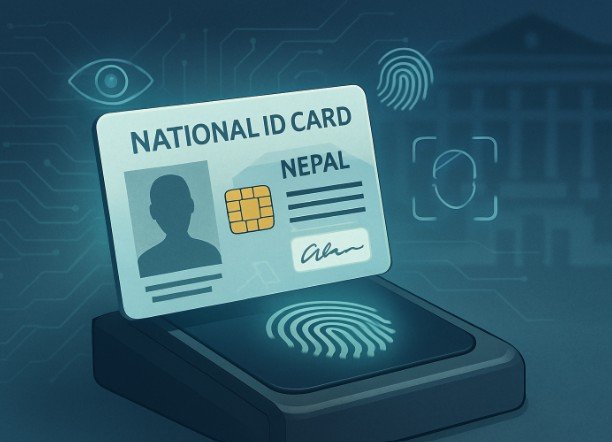
KATHMANDU, Jul 26: Nepal has formally requested India to recognise its National Identity Card (NID) as an official travel document for Nepali citizens visiting India, a step that could simplify cross border movement and strengthen people to people connectivity between the two countries.
The proposal, submitted through diplomatic channels, seeks to add the National Identity Card to the list of accepted travel documents, allowing Nepali citizens to travel to India using either a passport, citizenship certificate, or the biometric identity card.
According to Department of Immigration spokesperson Tika Ram Dhakal, the proposal was initially sent to Nepal’s Ministry of Foreign Affairs through the Home Ministry before being forwarded to the Indian government for consideration.
Dhakal said Nepal is maintaining regular communication with the Indian Embassy in Kathmandu and is awaiting an official response from Indian authorities.
If India approves the request, the National Identity Card will become the third recognised identification document for Nepali citizens travelling to India through both air and land routes. Officials believe the move would make travel procedures more convenient while supporting Nepal’s ongoing transition towards digital identity systems.
Currently, Nepali nationals travelling to India by air are required to present either a valid passport or a citizenship certificate. Likewise, Indian citizens travelling to Nepal by air must carry either a passport or a voter identity card issued by the Election Commission of India.
Nepal introduced the National Identity Card nationwide in 2018 as part of a broader effort to modernise governance and improve public service delivery. The biometric card has gradually become mandatory for accessing various government services, financial institutions, and other public sector facilities.
The government also plans to eventually replace the traditional paper based citizenship certificate with the National Identity Card, making it the country’s primary identity document for official purposes.
The request comes within the framework of the long-standing 1950 India-Nepal Treaty of Peace and Friendship, which allows citizens of both countries to travel, reside, and work across the open border without requiring visas. Despite the visa-free arrangement, travellers must still carry approved identity documents while crossing the border or boarding flights.
Officials in Kathmandu are optimistic that New Delhi will consider the proposal positively, viewing it as another step towards improving bilateral cooperation, facilitating smoother travel, and supporting secure identity verification through modern biometric documentation.
If accepted, the initiative is expected to benefit thousands of Nepali citizens who travel regularly to India for employment, education, healthcare, trade, religious visits, and family purposes, while further enhancing administrative efficiency in cross border travel management.

