


Spain Deploys Troops as Thousands of Migrants Reach Ceuta from Morocco
Thousands enter the Spanish enclave in North Africa as authorities reinforce border security and prepare for migrant returns.
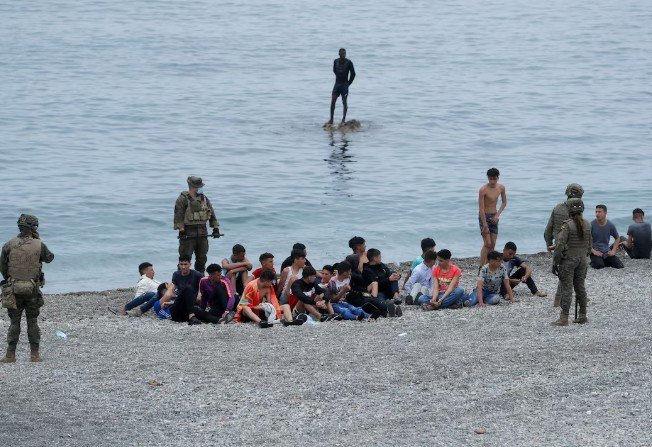
Madrid, Jul 31: Spain has ordered the deployment of its armed forces to the North African enclave of Ceuta after thousands of migrants crossed into the territory from Morocco this week, overwhelming local authorities and prompting urgent security measures.
The Spanish government said military personnel will assist the Civil Guard in securing the border following an appeal from Ceuta’s regional administration, which warned that the sudden rise in migrant arrivals had exceeded the city’s capacity to respond.
Scenes from the Tarajal border area showed large groups of migrants, including families with women and children, reaching Ceuta after making the journey from Morocco. Many entered by swimming around coastal barriers before moving onto local roads, creating pressure on security forces and reception facilities.
Officials described the situation as unprecedented in recent years. Representatives of Spain’s Civil Guard said border controls had been stretched beyond capacity as thousands attempted to reach the Spanish territory within a short period.
Authorities have not confirmed the exact number of arrivals, but local officials acknowledged that reception centres were already overcrowded before the latest influx. Hundreds of migrants had reportedly been forced to sleep outdoors as available accommodation filled up rapidly.
The latest wave followed several days of smaller crossings, during which multiple migrants reportedly lost their lives while attempting to swim across the sea route separating Morocco from Ceuta.
Spain’s Interior Ministry said it was working closely with Moroccan authorities to strengthen border management. According to the ministry, Moroccan security forces have intercepted numerous people attempting to cross, while both governments are coordinating efforts to return those who entered Ceuta without legal authorisation.
Spanish Interior Minister Fernando Grande-Marlaska is expected to visit Ceuta to review the evolving situation and coordinate the government’s response. While the regional administration had requested that Madrid declare a national emergency, the central government stated that migration does not currently fall under Spain’s legal definition of a national security emergency.
Local leaders believe recent legal developments may have influenced the increase in crossings. Earlier this month, Spain’s Supreme Court ruled that migrants arriving by sea cannot be immediately returned without due legal procedures. However, activists in Morocco questioned whether the court decision played a significant role, arguing that most migrants were unlikely to have been aware of the ruling.
Ceuta, located on the northern coast of Africa, remains one of Europe’s most sensitive migration entry points. The Spanish enclave has long attracted migrants seeking employment, safety and improved living conditions in Europe, with many attempting the dangerous sea crossing from nearby Moroccan coastal towns.
The latest developments have revived memories of the 2021 migration crisis, when more than 8,000 people entered Ceuta within two days, triggering diplomatic tensions between Spain and Morocco.
Spanish authorities have indicated that updated migration figures will be released in the coming days as efforts continue to restore order, reinforce border security and manage the humanitarian situation in the enclave.

