


Shops for Displaced Traders
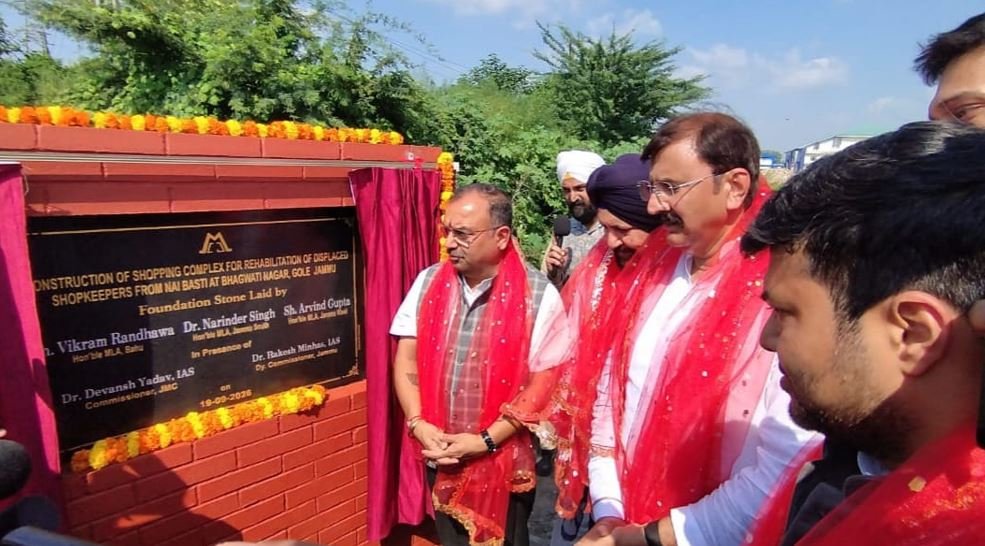
Urban development is necessary for Jammu, but it must never move at the cost of small traders and their livelihoods. The Jammu Municipal Corporation’s decision to lay the foundation stone for 36 new shops at Bhagwati Nagar for shopkeepers displaced from Satwari Chowk and Nai Basti due to the Satwari Flyover project is a welcome step. It sends a clear message that development should not only build roads and flyovers, but also protect the people affected by such projects.
Jammu is growing, and the city needs better infrastructure to manage traffic, improve mobility and support future urban expansion. Projects like the Satwari Flyover are important for easing congestion and making travel smoother. But every major infrastructure project has a human side. Shops are not just commercial structures. They are sources of daily income, family survival, employment and social connection. When such shops are removed for public works, the administration has a responsibility to provide timely and fair rehabilitation. The affected shopkeepers from Satwari Chowk and Nai Basti had been running their businesses from JMC-allotted shops and were regularly paying rent to the Corporation. Their displacement was linked to a public infrastructure project, but the impact on their lives was real. A trader cannot simply stop business and wait indefinitely. A break in work affects household income, business loans, staff wages, customer relations and market stability. For small shopkeepers, even a few months of uncertainty can create serious hardship. In this context, the construction of a new shopping complex at Bhagwati Nagar is both necessary and meaningful. The project will provide 36 shops, each measuring 8 feet by 10 feet, along with parking space in front of the shops and toilet facilities at the site. These provisions show that the plan is not merely about shifting shopkeepers from one place to another, but about creating a more organised commercial space where they can restart their work with some stability. The role of the district administration and JMC also deserves attention. The land for the rehabilitation project was handed over to JMC by the Deputy Commissioner Jammu, allowing the Corporation to move ahead with the construction. Such coordination is important because rehabilitation often suffers when departments delay decisions or pass responsibility from one office to another. In this case, the beginning has been made, but the real test will be timely completion. The concern now is execution. Foundation stones create hope, but delays can damage trust. The affected shopkeepers need clarity on timelines, allotment procedure, rent or ownership terms, basic facilities and the date by which they can restart business. The project must not get trapped in slow files, poor construction quality or unclear administrative decisions. Rehabilitation must be completed with the same urgency with which infrastructure projects are pursued. A shopping complex will succeed only if it is planned properly. Parking, sanitation, lighting, drainage, signage, security and easy access for customers should be ensured from the beginning. If the location is not made commercially viable, the purpose of rehabilitation will remain incomplete. A shopkeeper needs not only a space, but also a workable business environment. This initiative should also become a model for future urban development in Jammu. Whenever roads, flyovers, markets or public spaces are developed, the rehabilitation of affected traders and citizens must be planned in advance. People should not be displaced first and heard later. Consultation, written commitments, transparent allotment and grievance redressal should be part of every such project.
The message is simple but strong. Jammu needs development, but not development that leaves small traders helpless. Modern infrastructure and livelihood protection must move together. The Bhagwati Nagar shopping complex should be completed quickly, fairly and with full facilities so that displaced shopkeepers can rebuild their businesses with dignity. A city becomes truly modern not only when flyovers rise, but when the people affected by progress are treated with justice, respect and care.JMC should also prepare a public rehabilitation framework for all future development-linked displacement cases. It should include prior consultation with affected traders, written allotment clarity, completion timelines, grievance redressal and post-relocation support. Jammu needs flyovers and modern infrastructure, but it also needs livelihood-sensitive governance.

