


Sikkim Introduces AI-Based Learning Programme Across 71 Government Schools
The initiative aims to strengthen foundational literacy and numeracy while keeping teachers at the centre of classroom instruction.
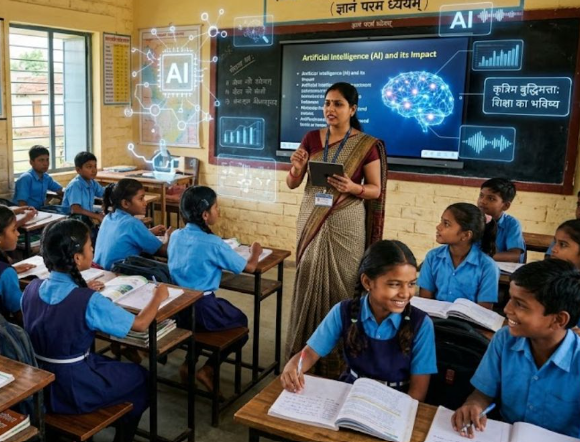
GANGTOK, Sept 21: The Sikkim government has introduced an artificial intelligence-powered learning programme across 71 government schools, marking a new step towards integrating emerging technology into school education.
The programme has been designed primarily to improve foundational literacy and numeracy among students. According to the state education department, artificial intelligence will be used as a support mechanism to assist the learning process rather than replace teachers in classrooms.
The initiative comes as schools across the country increasingly explore technology-based approaches to improve teaching and learning outcomes. In Sikkim, the focus of the new programme is on strengthening basic academic skills, particularly among students who require additional support in reading, writing and mathematics.
The state government’s decision to introduce the technology in 71 government schools is expected to provide students with access to additional learning resources while allowing teachers to continue playing the central role in classroom instruction.
The education department has emphasised that the use of AI will complement teachers’ work. Rather than functioning as an independent replacement for educators, the technology is intended to provide additional support within the learning environment.
The programme reflects the growing discussion around the responsible use of artificial intelligence in education. Schools are increasingly examining how digital tools can be used to provide students with more personalised learning experiences while maintaining direct interaction between teachers and learners.
Foundational learning remains particularly important because basic proficiency in language and mathematics provides the academic foundation for students’ progress in higher classes. Difficulties in these areas can affect a child’s ability to understand more advanced subjects as the student moves through the education system.
By introducing an AI-supported model at the school level, Sikkim is seeking to use technology to address some of these foundational learning needs. The initiative also provides an opportunity for teachers to work with new digital tools while retaining responsibility for classroom teaching and student engagement.
The programme is being implemented in government schools, making accessibility an important component of the initiative. The use of technology within the public education system could allow schools to experiment with new methods without changing the basic role of teachers in the classroom.
The initiative also highlights the changing nature of educational technology. Artificial intelligence is increasingly being discussed not only as a tool for administrative tasks but also as a potential support for teaching, assessment and individual learning requirements.
However, the success of technology assisted education depends on how effectively it is integrated into existing classroom practices. Teachers need to understand the tools being introduced and should be able to determine when technology can support a particular learning requirement.
Sikkim’s approach, which places teachers at the centre of the programme, seeks to maintain that balance. The education department’s emphasis on AI as a support tool indicates that classroom interaction and teacher involvement will remain important parts of the learning process.
The rollout across 71 government schools could also provide useful experience for evaluating the role of AI in improving foundational education. Student participation, learning progress and teacher feedback will be important factors in assessing how effectively the programme supports its objectives.
For students, the introduction of AI-supported learning could provide another avenue to practise academic concepts and strengthen basic skills. For teachers, it may offer additional resources that can be incorporated into lessons according to classroom requirements.
The development comes at a time when India’s education system is increasingly looking towards technology and new teaching methods. Digital learning platforms, online resources and technology-assisted instruction have become more prominent in schools and colleges, particularly as institutions seek ways to respond to different learning needs.
Sikkim’s programme adds another example of how artificial intelligence is entering school education. Its focus on foundational literacy and numeracy also places the initiative at the basic learning stage rather than limiting technology use to advanced academic or professional education.
The government has not positioned AI as a substitute for teachers. Instead, the programme is intended to combine technological assistance with conventional classroom teaching, allowing educators to remain responsible for guiding students through their learning.
The implementation across 71 schools will therefore be closely watched as the programme develops. Its experience could offer insights into how artificial intelligence can be introduced into government schools while preserving the importance of teacher-led education.
The initiative represents a growing effort to explore technology as an educational support mechanism. For Sikkim’s government schools, the immediate focus remains on strengthening students’ foundational skills and using AI to supplement the work already being carried out by teachers.

