


Goyal Urges India to Identify AI-Resilient Professions and Sectors for Global Leadership
Commerce Ministry maps sectors where human skills remain indispensable, while exploring ways to attract Indian researchers and scientists working abroad back to the country.
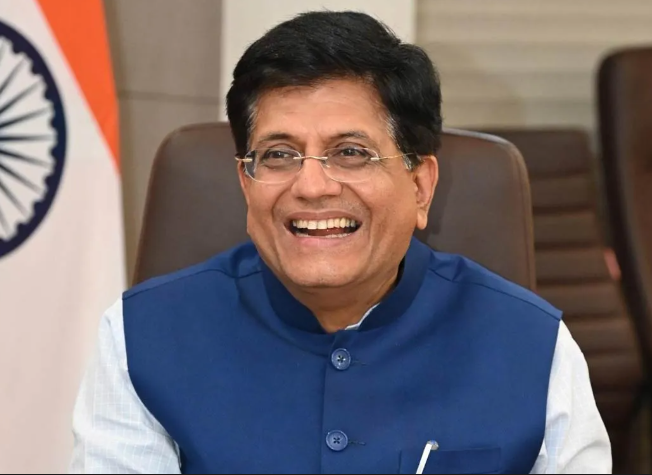
BERLIN, October 24: The Commerce Ministry is identifying professions and industries that are less susceptible to replacement by artificial intelligence (AI), as India seeks to prepare its workforce for technological disruption and strengthen its position in the global economy, Union Commerce and Industry Minister Piyush Goyal has said.
Addressing Indian researchers and students in Germany on Friday, Goyal said the government was examining sectors where AI could enhance productivity and efficiency without necessarily eliminating the need for human workers.
He emphasised that India’s large workforce, young population and traditional expertise offered significant opportunities to develop industries capable of competing internationally despite the rapid advancement of automation.
“I got my ministry to start working on what are the AI-proof professions,” Goyal said, explaining that the country needed a long-term strategy to create sustainable opportunities for millions of people.
The initiative aims to identify occupations where human judgement, creativity, specialised skills and personal interaction remain essential, even as businesses increasingly adopt AI-based technologies.
Goyal cited handicrafts, handloom, culinary arts and tourism as sectors where India could establish a stronger global presence by capitalising on its cultural heritage and skilled workforce.
He said traditional craftsmanship could not easily be replicated by artificial intelligence, making these industries particularly valuable in a future where automation may transform conventional employment patterns.
The minister stressed that developing such areas alongside emerging technologies would help improve livelihoods and support India’s broader economic ambitions.
On the possibility of providing incentives to selected industries, Goyal said government assistance would be offered wherever necessary, but not every sector would require financial support.
He indicated that the strategy would involve a combination of private investment, government initiatives, community participation and opportunities emerging from market demand.
The wider objective, he said, was to build on India’s existing strengths and create conditions that would improve the quality of life for its population of approximately 1.4 billion.
Goyal also discussed efforts to encourage Indian scientists, engineers and researchers employed overseas to return and contribute to domestic development.
During his interaction with students and researchers in Germany, he invited them to explain the conditions and support they would need to consider pursuing professional opportunities in India.
The minister said attracting skilled professionals required more than competitive salaries. A strong research environment, access to modern facilities, institutional support and opportunities for collaboration were equally important.
He said he intended to discuss these requirements with colleagues in the government, educational institutions, research organisations and industry representatives.
Goyal highlighted the importance of strengthening partnerships between industry, academia and researchers to create an ecosystem capable of supporting innovation and advanced scientific work.
He observed that talented professionals would be more likely to return if they could find opportunities to conduct meaningful research, develop new technologies and contribute to projects with practical applications.
The minister also pointed to changing global economic dynamics, arguing that developed economies would increasingly need to strengthen their engagement with emerging markets in Asia, Africa and Latin America, which are expected to play a major role in future growth.
Referring to the Indian community in Germany, Goyal said the country had approximately 330,000 people of Indian origin, alongside around 60,000 to 70,000 Indian students.
He noted that many students were increasingly interested in returning home after completing their education to participate in India’s economic expansion rather than pursuing careers exclusively overseas.
According to the minister, the enthusiasm among young Indians abroad reflects growing interest in the opportunities emerging within the domestic economy.
Goyal was in Germany to engage with government representatives and private-sector leaders on strengthening trade and investment ties between New Delhi and Berlin.
His remarks placed workforce planning, traditional industries, research collaboration and the return of skilled professionals among the areas India could develop to maintain competitiveness in a technology-driven global economy.
As AI adoption accelerates across industries, identifying occupations that complement rather than compete directly with automation could become an important element of India’s employment and industrial strategy. The proposed exercise is intended to help policymakers understand where technology can support workers and where human expertise will continue to provide a distinct advantage.

