


India Moves Towards Dedicated AI Law as Government Seeks Public and Industry Feedback
Electronics and IT Minister Ashwini Vaishnaw says a consultation paper will be released in the coming weeks, signalling a move towards rules intended to address artificial intelligence risks while supporting innovation.
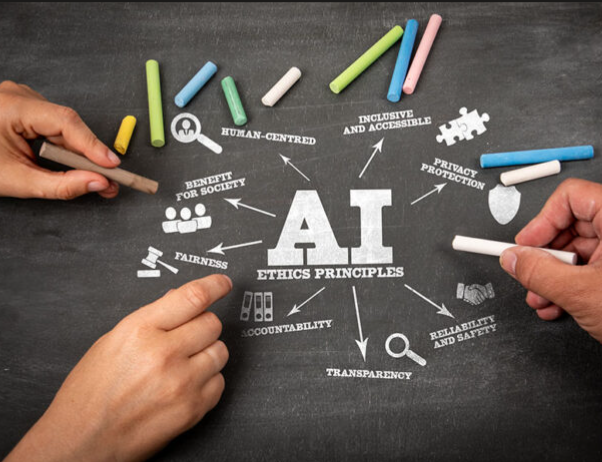
NEW DELHI, October 26: India is preparing to begin a consultation process for a proposed artificial intelligence law, as the government considers how to address emerging risks from rapidly advancing AI systems without slowing technological innovation.
Union Electronics and Information Technology Minister Ashwini Vaishnaw announced on October 23 that the government would release a consultation paper in the coming weeks. The document is expected to invite views from citizens, industry representatives and civil society on the need for regulation and the potential framework for addressing harms associated with artificial intelligence.
Speaking at an NDTV event in New Delhi, Vaishnaw said the risks associated with AI had reached a level at which legislation and new regulatory measures needed to be considered.
The announcement signals a change in the government’s publicly stated approach to AI governance. India’s earlier framework had emphasised the use of existing laws and targeted amendments rather than introducing a separate, comprehensive AI statute.
The consultation process could help determine how India balances the protection of citizens with the development and adoption of emerging technologies across businesses, public services and research institutions.
Government Seeks a Balance Between Safety and Innovation
Artificial intelligence is increasingly being used in areas such as customer support, financial services, education, healthcare, manufacturing and public administration. These applications can improve efficiency, help analyse large datasets and automate routine tasks.
However, wider adoption has also raised concerns about inaccurate outputs, misuse of personal information, manipulated content, discriminatory decisions and the consequences of allowing automated systems to act without sufficient human oversight.
The proposed consultation is intended to gather perspectives on how these risks should be addressed. The government has not yet published the final legislative framework, and key questions remain open regarding the scope of the proposed law, enforcement arrangements and possible penalties.
Vaishnaw has indicated that the government’s approach will seek to regulate harmful uses of AI while preserving room for experimentation and commercial development.
The minister has also argued that no single country can effectively govern a technology that operates across national borders. International cooperation, he said, will be important in establishing principles that can guide the development and deployment of AI systems.
For India, the challenge is to establish safeguards that work across different sectors while avoiding rules that place unnecessary burdens on smaller companies, researchers and startups.
Why AI Regulation Is Becoming More Urgent
The capabilities of AI systems have expanded rapidly, allowing them to generate text, images and video, analyse complex information, write software and perform multi-step tasks.
Newer AI agents can also interact with digital tools and carry out actions with limited human intervention. While these capabilities can increase productivity, they create additional risks when systems are given access to sensitive information, business networks or important operational functions.
An AI system that produces an incorrect answer may cause confusion, while an automated agent with excessive permissions could potentially make unauthorised changes, expose confidential information or perform an action that its operator did not intend.
Cybersecurity experts have also warned that AI tools can help researchers identify software vulnerabilities more quickly, while potentially giving malicious actors new ways to discover weaknesses and develop attacks.
A Reuters report published on October 23 described concerns among cybersecurity professionals that AI-assisted discovery of software flaws could lead to further internet disruptions. The report highlighted the need for organisations to identify vulnerabilities and deploy fixes before attackers can exploit them. These developments demonstrate why discussions about AI governance increasingly extend beyond the accuracy of chatbots. Policymakers must also consider security, accountability, transparency and the ability of people to intervene when automated systems behave unexpectedly.
Human Oversight at the Centre of the Proposed Approach
Vaishnaw has emphasised the importance of keeping AI systems under human control. According to his remarks, control over AI agents, models, processes and outcomes must remain in human hands, with mechanisms available to stop systems when necessary.
Such principles could become important in sectors where automated decisions have direct consequences for individuals.
In banking, for example, AI tools may assist with fraud detection, credit assessment and customer service. In healthcare, they can help organise information and support professional decision-making. In public administration, automated systems may be used to process applications or respond to citizen requests.
Although these applications can improve efficiency, errors can have serious consequences if decisions are accepted without verification.
A regulatory framework could therefore consider when human review should be mandatory, how responsibility should be assigned when AI systems cause harm, and what information organisations must provide to people affected by automated decisions.
The consultation paper may also help clarify whether different levels of risk should attract different obligations. A low-risk application used to organise internal documents may not require the same safeguards as a system used to make consequential decisions about people’s finances or access to essential services.
However, the government has not yet specified the final structure of any proposed legislation. The precise obligations, oversight mechanisms and enforcement provisions will depend on the policy process.
Public and Industry Participation Expected
The planned consultation is expected to seek views from a broad range of stakeholders, including ordinary AI users, civil society organisations, businesses and technology developers.
This approach recognises that the effects of AI are not limited to the companies building the systems. People who use AI-powered services, employees whose work is affected by automation and customers subject to algorithmic decisions also have an interest in how the technology is governed.
Industry participation will be important because businesses have practical experience of deploying AI tools and assessing their limitations. Their feedback could help identify where existing rules are sufficient and where new safeguards may be needed.
Civil society groups and individual users may raise concerns about privacy, fairness, accessibility and the ability to challenge decisions made with the assistance of automated systems.
A transparent consultation could help policymakers understand these competing priorities before drafting legislation. It could also give smaller businesses an opportunity to explain the costs and technical challenges associated with compliance.
The effectiveness of the process will depend on the breadth of participation, the clarity of the questions asked and how the government evaluates the feedback it receives.
India’s Earlier AI Governance Framework
India’s public approach to AI governance had previously placed emphasis on adapting existing laws and issuing guidelines rather than creating a standalone statute.
The India AI Governance Guidelines released in November 2025 favoured targeted changes to existing legal frameworks. The government’s latest announcement therefore represents a notable shift towards considering a dedicated legislative approach.
Vaishnaw has argued that AI regulation should avoid suppressing innovation through excessive restrictions. At the same time, he has said that the risks associated with the technology require measures to protect people.
The debate reflects a wider international policy challenge. Governments are attempting to establish rules for a technology that continues to develop quickly, while avoiding requirements that become outdated or difficult to apply as new capabilities emerge.
India’s eventual framework could influence how companies design AI services for the domestic market, manage sensitive information and assess risks before deploying automated systems.
The government has not announced a timeline for introducing a bill in Parliament, nor has it provided a final list of regulated activities or enforcement powers.
International Cooperation Remains an Important Consideration
AI systems are developed, hosted and used across borders. A model built in one country may provide services to users in another, while its computing infrastructure and data may be distributed across several jurisdictions.
This creates challenges for national regulators attempting to determine responsibility, enforce decisions and investigate harmful outcomes.
Vaishnaw has called for major AI ecosystems to work together on fundamental principles. He has pointed to international cooperation in other highly technical sectors as an example of how countries can establish shared standards.
Cooperation could help improve the compatibility of safety practices, cybersecurity expectations and accountability requirements. It may also reduce uncertainty for companies operating across multiple markets.
However, international alignment does not necessarily mean every country will adopt identical laws. Governments may differ in their approaches to privacy, competition, freedom of expression, public safety and the responsibilities of technology providers.
India will therefore need to consider its domestic priorities alongside international developments as it works towards a regulatory framework.
Implications for Startups and Established Technology Companies
The proposed consultation could have important implications for India’s technology industry.
Startups developing AI products may need clearer guidance on the safeguards expected of them, particularly when their services are used in finance, education, healthcare or other sensitive fields.
Larger technology companies may face questions about transparency, risk assessments, security testing and the accountability of systems deployed at scale.
For businesses adopting AI rather than developing it, the rules could influence how they select vendors, manage customer data and supervise automated decisions.
Clear and proportionate regulation could give companies greater certainty when investing in new services. Poorly designed requirements, by contrast, could raise compliance costs or make it difficult for smaller firms to compete.
The consultation process will be an opportunity to assess these trade-offs before the government settles on a final legislative design.
What Happens Next
The immediate next step is the release of the consultation paper, which the minister said would be issued in the coming weeks. Stakeholders will then have an opportunity to provide feedback on the proposed direction of AI regulation.
The government will need to consider that input before deciding the content and structure of any legislation. Important questions include the definition of harmful AI use, the responsibilities of developers and deployers, the role of human supervision, and the mechanisms available to people seeking redress.
For now, the announcement establishes the government’s intention to move the discussion towards a formal lawmaking process, rather than confirming that a new law has already been enacted.
As AI adoption accelerates across the economy, the consultation could become an important stage in determining how India manages technological risks while maintaining its ambitions in digital innovation.
The eventual framework will be judged not only by the safeguards it introduces but also by whether those safeguards can be implemented effectively, updated as technology changes and applied fairly across different kinds of AI systems.

