


Corning Starts Optical Connectivity Production in Pune, Plans Further Expansion in 2027
The new Pune facility will manufacture optical connectivity products for data centres and telecommunications networks, while Corning plans additional production capacity in 2027 amid rising demand for AI infrastructure.
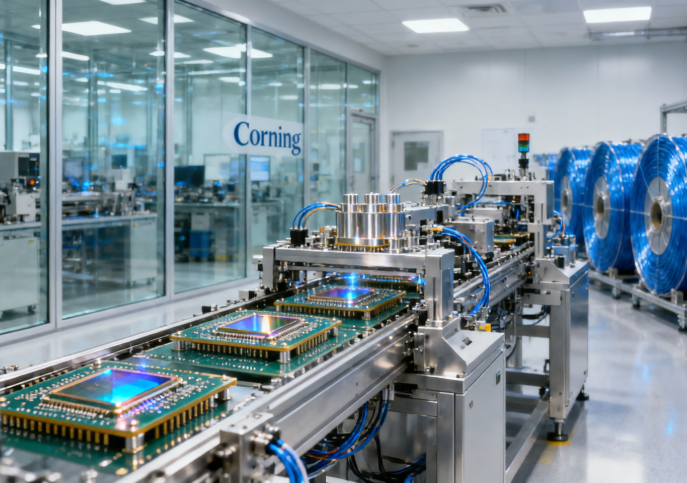
US, Nov 05 : US based technology company Corning has strengthened its manufacturing presence in India by beginning production at a new optical connectivity facility in Pune, Maharashtra, as demand for advanced networking infrastructure continues to rise alongside the global artificial intelligence boom.
The new facility will manufacture optical connectivity products designed for data centres and telecommunications networks. The company is also planning to bring additional manufacturing capacity online in 2027, expanding its ability to serve customers requiring advanced fibre-optic networking solutions.
The development comes at a time when technology companies worldwide are investing heavily in artificial intelligence infrastructure. While powerful processors and computing systems receive much of the attention, the networks connecting these components have become equally important for maintaining performance and supporting large-scale operations.
Corning’s latest expansion reflects the growing requirement for high-density optical connectivity solutions that can accommodate increasing data traffic, improve network efficiency and simplify infrastructure deployment.
The Pune facility is located alongside the company’s existing optical fibre manufacturing operation, which began production in 2012. With the latest addition, Corning is expanding its local manufacturing capabilities beyond optical fibre into the connectivity products required to build modern communication networks.
AI Data Centres Increase Demand for Advanced Connectivity
The rapid adoption of artificial intelligence is changing the requirements of data centre infrastructure.
Modern AI facilities contain large numbers of specialised processors, including graphics processing units, which work together to train and operate advanced artificial intelligence models.
These processors must exchange enormous amounts of information within extremely short periods. As computing capacity increases, the network connecting different components becomes a critical part of overall system performance.
Even highly powerful processors may not operate efficiently if the supporting network cannot transfer information quickly enough.
This makes optical fibre and connectivity equipment essential components of modern data centre development.
Optical fibre uses light signals to transmit information over communication networks. It supports high-speed data transfer and is widely used in telecommunications, cloud computing and large-scale digital infrastructure.
However, expanding the number of connections within a data centre also creates practical challenges involving space, installation, cable management and maintenance.
Corning’s latest manufacturing expansion in Pune is aimed at addressing some of these infrastructure requirements.
Four Key Requirements for AI Data Centre Networks
At a company media showcase in India, Sudhir Pillai, Managing Director for India, the Middle East and Africa at Corning, highlighted four important requirements shaping the development of AI data centre connectivity.
These include density, scalability, customisation and installation speed.
Density is important because modern data centres need to accommodate an increasing number of connections within limited physical space.
Scalability allows operators to expand network infrastructure as computing requirements increase without undertaking major redesigns.
Customisation helps data centre operators select connectivity solutions suited to their specific technical and operational requirements.
Installation speed is another important consideration because delays in deploying network infrastructure can affect the commissioning of entire computing facilities.
These factors demonstrate that data centre development involves more than purchasing processors and servers. Companies must also plan the physical network infrastructure needed to connect different systems efficiently.
Corning’s GlassWorks AI Portfolio Targets High-Density Networks
Corning has developed its GlassWorks AI portfolio to address the connectivity requirements of advanced data centre environments.
The portfolio includes high-density optical fibre, specialised cables, optical hardware and connector assemblies designed for modern networking applications.
According to the company’s published product specifications, its MMC-based connector assemblies can accommodate up to 36 times more fibre connections within a data centre rack unit compared with legacy LC connectors.
The company has also highlighted its SMF-28 Contour optical fibre, which features a cross-sectional area approximately 40 per cent smaller than conventional fibre designs.
These developments are intended to help data centre operators accommodate more connections within available space while supporting the deployment of increasingly complex network systems.
Higher connection density can be particularly valuable in large facilities where thousands of network links may be required.
However, network designers must also consider cable accessibility, maintenance requirements and installation procedures when selecting high-density connectivity solutions.
Corning’s approach focuses on combining these requirements to help customers develop scalable infrastructure for expanding computing operations.
Pune Facility Strengthens India’s Manufacturing Capabilities
The new optical connectivity facility adds another manufacturing capability to Corning’s established presence in Pune.
The company’s existing optical fibre plant, which started operations in 2012, has provided a manufacturing base for products used in communication networks.
The new facility extends this capability by focusing on connectivity products that help convert optical fibre into functional network connections.
The expansion is significant because data centre operators increasingly require integrated networking solutions rather than individual components purchased without considering their compatibility and deployment requirements.
With optical fibre and connectivity manufacturing present at the Pune location, Corning is strengthening its ability to serve customers across the data centre and telecommunications sectors.
The company has indicated that further capacity is expected to become operational in 2027.
However, specific details regarding the investment amount, production capacity and customer commitments associated with the new facility have not been publicly disclosed in the report.
The extent to which the expansion will influence domestic supply availability and delivery timelines will become clearer as production increases.
India Emerging as an Important Technology Manufacturing Destination
Corning’s latest investment in manufacturing capabilities comes amid India’s broader efforts to strengthen its position in the global electronics and digital infrastructure industries.
The country has been attracting investments across semiconductor manufacturing, telecommunications equipment, electronics production and data centre infrastructure.
Increasing internet usage, cloud adoption and digital services have also created demand for more advanced communication networks.
Optical connectivity is an important part of this development because digital infrastructure requires reliable networks capable of handling growing volumes of information.
Data centres supporting artificial intelligence, financial services, enterprise applications and cloud platforms all depend on efficient connectivity systems.
The expansion of local manufacturing can provide additional sourcing opportunities for companies developing such infrastructure.
It can also strengthen the domestic industrial ecosystem by supporting technical expertise, manufacturing operations and associated engineering activities.
Corning’s Pune expansion therefore represents another development in India’s growing optical communications and digital infrastructure sector.
Company Expands Its Technology Capabilities in India
Apart from manufacturing, Corning has also been expanding its technology-related operations in India.
During the company’s media showcase, Pillai highlighted the growth of its global capability centre, which he said had expanded fivefold since 2024.
The centre is also developing additional artificial intelligence-related talent and capabilities.
Although detailed employment figures and a breakdown of the centre’s activities were not provided, the expansion indicates that the company’s India operations extend beyond conventional manufacturing.
Global capability centres increasingly undertake engineering, research, digital operations and specialised technical activities for multinational businesses.
For technology companies, these centres provide access to skilled professionals while supporting innovation and business operations across international markets.
Corning’s expansion in Pune brings manufacturing and technology capabilities together as the company responds to changing requirements in the global communications industry.
Why Optical Connectivity Matters for the Future of AI
Artificial intelligence infrastructure depends on several interconnected technologies.
Processors perform calculations, memory systems store information, cooling equipment manages heat and networking components allow different systems to communicate.
As AI models become more complex, the amount of information exchanged between processors and servers continues to increase.
This creates additional pressure on data centre networks.
Optical connectivity offers an important solution because fibre-based networks can support high-speed information transmission across large infrastructure installations.
The physical design of these networks also influences how efficiently data centres can expand their computing capacity.
A well-designed connectivity system can help operators organise equipment, manage cable installations and prepare facilities for future expansion.
For this reason, optical fibre and specialised connector technologies are becoming increasingly important in the development of AI infrastructure.
Corning’s new Pune facility is positioned to serve this growing requirement by expanding local production of optical connectivity products.
Further Manufacturing Capacity Expected in 2027
The company expects additional capacity to come online in 2027, indicating that the Pune expansion is part of a longer-term manufacturing strategy.
The additional production capability could help Corning strengthen its ability to serve customers operating in data centre and telecommunications markets.
However, the actual impact will depend on production volumes, customer demand and the range of products manufactured at the expanded facility.
The company has not disclosed a detailed timeline for the next phase beyond indicating that further capacity is expected during 2027.
As AI-related infrastructure investment continues, manufacturers supplying optical networking components are likely to remain important participants in the technology supply chain.
Connectivity Becomes a Central Part of the AI Infrastructure Race
Corning’s latest manufacturing development highlights how the expansion of artificial intelligence is creating opportunities across different segments of the technology industry.
The focus is no longer limited to processors and computing hardware. Companies are also investing in the networks, cables and connectivity systems required to support increasingly powerful digital infrastructure.
By starting optical connectivity production in Pune and planning additional capacity for 2027, Corning is strengthening its manufacturing footprint in India.
The development also reflects the growing importance of optical networking technologies as data centres expand to meet demand for artificial intelligence and cloud computing.
As digital infrastructure becomes more complex, the ability to connect computing systems efficiently will remain an important factor in determining the performance and scalability of future AI facilities.

