


Asian markets wobble as Samsung sinks after earnings, dragging regional stocks lower
Regional equities turned lower as Samsung’s post-results slide weighed on technology stocks, while oil prices eased on oversupply concerns and traders reassessed the outlook for US interest rates.
India, July 07 : Asian equity markets traded in the red on Tuesday as weakness in technology counters overshadowed strong corporate earnings from Samsung Electronics, underscoring investor unease over valuations in the semiconductor and artificial intelligence driven tech rally. A combination of pressure on chipmakers, softer crude prices, renewed focus on US interest rate expectations and persistent currency concerns in Japan kept risk appetite in check across the region.
The broader MSCI Asia Pacific Index slipped 0.3 per cent, reflecting a cautious mood across key regional markets. Losses were led by technology stocks, a sector that has been central to the market’s rally over the past year on optimism surrounding artificial intelligence, memory chips and data-center demand. But even as earnings from one of Asia’s biggest tech names beat expectations, investors chose to book profits rather than extend the rally.
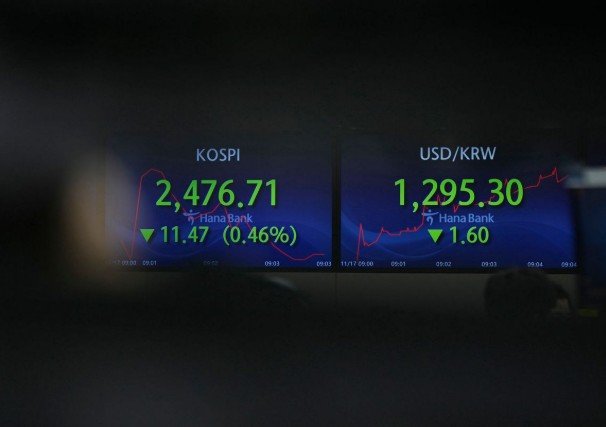
Samsung Electronics was at the center of market attention after the South Korean technology giant released stronger than expected preliminary results for the June quarter. Despite reporting a dramatic rebound in profitability, the company’s shares fell more than 5 per cent, dragging the benchmark Kospi Index down 3.5 per cent. The sharp reaction highlighted how elevated expectations around the semiconductor cycle and AI-linked demand are now being tested by markets looking for proof that current earnings momentum can be sustained.
Samsung said its quarterly operating income surged 19-fold from a year earlier, driven by booming demand for memory chips used in artificial intelligence servers and data centers. The company estimated operating profit at 89.4 trillion won, or roughly $58 billion, for the three months ended June, significantly ahead of analyst forecasts of 84.2 trillion won. The figure also dwarfed the company’s full-year performance in 2025, underscoring the scale of the recovery in the memory chip business.
The results were powered by rising prices of advanced memory products and a stronger order pipeline from AI-focused customers. Demand for high-bandwidth memory chips, a critical component in AI systems, has transformed the earnings outlook for major chipmakers in Asia. Samsung, the world’s largest memory manufacturer, has been among the biggest beneficiaries of this shift, alongside rivals such as SK Hynix.
Yet the market response suggested that strong headline numbers alone may no longer be enough to reassure investors. Concerns are building that the rapid rise in chip stocks may have already priced in much of the AI boom, leaving little room for disappointment. Investors are now looking beyond earnings beats to assess whether current capital spending, production expansion and pricing power can translate into durable long-term profitability.
SK Hynix, another key South Korean chipmaker and a major supplier of advanced memory for AI applications, also came under pressure. Its shares fell 1 per cent after the company formally launched the marketing process for a planned US listing. While the move is seen as a strategic effort to broaden its investor base and tap deeper capital markets, the immediate market reaction was muted, reflecting the cautious tone across the semiconductor space.
The selloff in South Korean technology stocks fed into a broader regional decline. Investors across Asia are increasingly grappling with the question of whether the artificial intelligence trade can continue to support stretched valuations in chipmakers and related technology firms. Recent gains in US semiconductor stocks, which posted a record quarter, have raised the bar for earnings delivery globally. That has left markets vulnerable to bouts of profit-taking even when results remain fundamentally strong.
The debate over whether markets are entering an AI bubble has also gained traction. Analysts and investment strategists remain divided on whether the current wave of enthusiasm is justified by future earnings growth or whether valuations have run too far ahead of fundamentals. For now, the AI narrative remains the dominant force driving sentiment in global equities, but the burden of proof is shifting toward actual monetisation, productivity gains and sustainable corporate profitability.
BlackRock Investment Institute added to that debate by framing the issue around the long-term economic potential of artificial intelligence. According to the institute’s team led by Jean Boivin, the key question is whether AI can transform current scarcity—of computing power, talent and infrastructure—into an era of greater productivity and abundance. Markets, they argued, are increasingly pricing in that optimistic outcome, betting that AI will boost economic growth and corporate earnings enough to justify the lofty valuations seen in technology stocks.
That optimism, however, is now being weighed against more immediate risks. Rising competition among semiconductor makers, huge capital expenditure commitments and the challenge of converting AI demand into consistent profits have made investors more selective. The market’s reaction to Samsung’s blockbuster numbers is a reminder that strong earnings growth must now be accompanied by confidence in future guidance and margin sustainability.
Outside equities, oil prices also drew attention after West Texas Intermediate crude slipped below $69 a barrel. The decline reflected signs of growing oversupply in global energy markets, particularly after Saudi Arabia cut its crude prices and shipping activity through the Strait of Hormuz showed signs of normalising. These developments eased some of the geopolitical risk premium that had supported oil prices in recent sessions.
Lower oil prices offered a mixed signal for Asian markets. On one hand, cheaper crude can reduce input costs for energy importing economies such as Japan, South Korea and India, helping to ease inflation pressures. On the other hand, the slide in prices also points to concerns about demand and supply imbalances in the global economy, which can weigh on broader market sentiment.
In currency markets, the Japanese yen remained relatively steady around 162.08 per dollar, though underlying sentiment toward the currency remained fragile. Hedge funds have reportedly turned the most bearish on the yen since 2007, highlighting growing pressure on Japan’s policymakers as the currency hovers near multi decade lows. The weakness in the yen reflects the wide interest rate gap between Japan and the United States, as well as uncertainty over the Bank of Japan’s willingness to tighten policy more aggressively.
A weak yen can support Japan’s export-heavy economy by boosting the overseas earnings of major companies when repatriated, but it also raises the cost of imports, particularly energy and food. That dynamic has become increasingly problematic for households and small businesses, and markets remain alert to the possibility of official intervention if the currency weakens further.
Meanwhile, in US fixed-income markets, short-dated Treasury notes edged higher during the New York session as investors continued to digest the implications of last week’s jobs data. The stronger labor-market report led traders to scale back expectations of aggressive monetary easing by the Federal Reserve and reinforced the view that policymakers may keep rates elevated for longer than previously expected.
The move in Treasuries reflected a broader reassessment of the US interest-rate path. While some investors had been hoping for a quicker shift toward lower borrowing costs, resilient economic data has complicated that outlook. The bond market is now pricing in a lower probability of rapid rate cuts, and that shift is reverberating through global asset markets, including Asian equities and currencies.
For Asian investors, the combination of US rate uncertainty and a fragile technology sector creates a more challenging environment in the near term. Higher-for-longer US rates tend to support the dollar, pressure emerging-market currencies and tighten financial conditions globally. They also make richly valued growth stocks, especially in technology, more vulnerable to corrections because future earnings are discounted at higher rates.
The latest trading session, therefore, captured a market at an important crossroads. On one side is the extraordinary earnings recovery in the semiconductor sector, powered by the global AI buildout and surging demand for memory chips. On the other is a growing sense that investors are demanding more than just strong quarterly numbers—they want evidence that current enthusiasm can translate into a longer, broader and more profitable cycle.
Samsung’s earnings should, in theory, have reinforced the bullish case for Asia’s technology sector. The company’s results clearly demonstrated the scale of the demand surge in memory chips and the importance of AI infrastructure spending. But the share-price decline suggests investors may have already positioned for a near-perfect outcome and are now reassessing how much further the rally can go without a new catalyst.
That shift in mood is significant because South Korean chipmakers have been among the biggest symbols of the AI investment boom outside the United States. If even record earnings from Samsung are not enough to push shares higher, markets may be entering a phase where valuation discipline and earnings quality matter more than momentum alone.
Looking ahead, investor focus is likely to remain fixed on three major themes: the sustainability of AI-led earnings growth, the trajectory of US monetary policy and the direction of commodity prices. Further earnings from chipmakers and major technology firms will be scrutinised for signs that demand remains robust and margins are improving. At the same time, any fresh signals from the Federal Reserve could quickly reshape risk sentiment across global markets.
For now, the picture in Asia remains one of cautious consolidation rather than panic. Equity losses were relatively modest outside South Korea, and the broader regional benchmark fell only slightly. But the market reaction to Samsung’s results is an important warning sign that the bar for positive surprises has risen sharply.
In the weeks ahead, investors will be watching whether other technology companies can match the earnings momentum seen in the memory-chip industry and whether the AI trade can broaden beyond a handful of semiconductor winners. If that happens, recent weakness may prove temporary. If not, markets could face a period of sharper volatility as traders question whether the rally has moved too far, too fast.
For the moment, Asian stocks are balancing between optimism and caution. Strong corporate earnings, easing oil prices and still resilient global growth offer support. But high valuations, policy uncertainty and concerns about the durability of the AI boom are limiting fresh upside. Tuesday’s session reflected that tension clearly: good news from one of the region’s biggest tech companies was not enough to overcome a market that is beginning to ask tougher questions.

