


Centre to Set Up Special Committee to Review UGC Equity Regulations 2026
Government informs Supreme Court of proposed review following concerns over provisions of the campus anti-discrimination framework, with the court stressing that safeguards must protect students from every community.
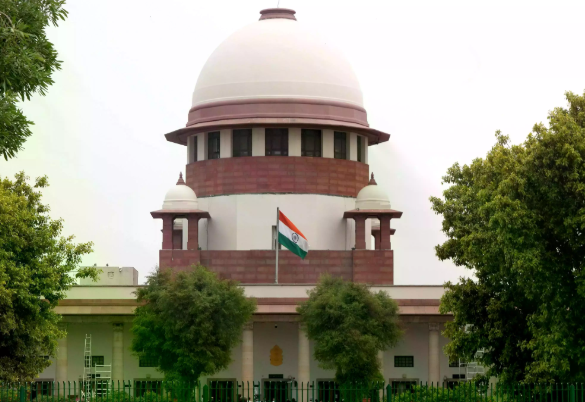
NEW DELHI, Nov 5: The Centre has informed the Supreme Court that it is considering setting up a special committee to re-examine the University Grants Commission’s (UGC) Promotion of Equity in Higher Education Institutions Regulations, 2026, following concerns raised over certain provisions of the framework.
The development came during a hearing before a bench headed by Chief Justice of India Surya Kant and Justice Joymalya Bagchi, where the government indicated that it was exploring ways to address concerns surrounding the regulations and ensure that students from all communities receive equal protection.
Solicitor General Tushar Mehta, appearing for the Centre, informed the court that the government was looking into the possibility of constituting a committee to review the rules. He said the objective was to develop a framework under which no section of students feels excluded, threatened or apprehensive.
The submission assumes significance as the regulations have remained under judicial scrutiny since their implementation was stayed by the Supreme Court in January 2026.
The court had earlier expressed concerns about certain provisions, particularly their wording and the possibility of misuse. The latest proceedings indicate that the government is considering a fresh examination of the framework before moving forward with its implementation.
Chief Justice Surya Kant emphasised that any proposed mechanism must safeguard the interests of all students. He observed that the concerns and well-being of the younger generation should remain central while reviewing the regulations.
The court’s observations underline the importance of creating an institutional environment in which students can pursue education without facing discrimination, intimidation or unequal treatment.
The UGC introduced the 2026 regulations with the objective of strengthening equity and preventing caste-based discrimination in universities and colleges. The framework replaced the earlier 2012 regulations and sought to establish a more structured mechanism for addressing complaints and promoting equal opportunities in higher education institutions.
However, certain provisions attracted criticism, with questions being raised about the scope of the definitions and whether the rules provided adequate protection to students from every community.
The concerns eventually reached the Supreme Court, which stayed the implementation of the regulations in January, allowing the matter to undergo judicial examination.
The proposed committee is expected to revisit the disputed provisions and examine whether changes are necessary to ensure that the framework achieves its intended purpose without creating uncertainty or discrimination.
The Centre’s submission does not mean that a revised set of regulations has already been finalised. The government is still considering the review process, and further details regarding the committee’s composition, terms of reference and timeline are awaited.
The Supreme Court is expected to take up the matter again after four weeks, when the Centre may provide further information about the proposed exercise.
The controversy surrounding the regulations has drawn attention to the responsibility of universities and colleges in maintaining safe and inclusive academic environments. Higher education institutions accommodate students from different social, economic and cultural backgrounds, making effective grievance-redressal systems an important part of campus administration.
The 2026 framework was intended to strengthen institutional accountability by providing mechanisms through which complaints of discrimination could be addressed. Such safeguards are particularly important for students who may face difficulties accessing support or reporting incidents within their institutions.
At the same time, the objections raised before the court have focused on ensuring that the rules are clearly worded and applied fairly. Legal clarity is essential for universities because regulations governing student rights and institutional responsibilities must be understood consistently by administrators, faculty members and students.
The Supreme Court’s intervention has therefore brought the broader question of fairness in campus policies into focus. The court’s emphasis on protecting all sections of students suggests that any revised framework must strike a balance between preventing discrimination and ensuring that its provisions cannot be applied arbitrarily.
The proposed review could provide an opportunity to examine the definitions used in the regulations, the responsibilities assigned to institutional authorities and the procedures available to students seeking assistance.
One of the important aspects requiring attention is the functioning of complaint-handling mechanisms within universities. Students should have access to transparent procedures through which grievances can be registered, examined and resolved without unnecessary delays.
Institutions must also ensure that students are aware of their rights and understand the channels available to them for reporting discrimination or unfair treatment.
Another important consideration is the independence and effectiveness of institutional bodies responsible for addressing complaints. A credible mechanism should provide students with confidence that their concerns will be examined objectively and that appropriate action will follow wherever violations are established.
The proposed committee may also need to consider how universities can strengthen awareness programmes, establish effective monitoring arrangements and improve communication between students and institutional authorities.
For students, the issue extends beyond legal provisions. Campus policies directly influence their academic experience, sense of security and ability to participate in educational activities without fear of discrimination.
A properly designed equity framework can help institutions create an environment in which students from different backgrounds receive equal opportunities to pursue education and develop their academic potential.
The review also comes at a time when Indian universities are dealing with several challenges related to student welfare, mental health, institutional accountability and access to quality education.
The government will have to consider these broader concerns while examining the regulations and deciding whether modifications are required.
The next hearing before the Supreme Court will be important in determining how the proposed review proceeds. The Centre is expected to provide further details regarding the committee’s formation and the steps being considered to address the concerns raised during the proceedings.
Until then, the future of the 2026 regulations remains subject to the court’s directions and the government’s proposed review.
The central issue before the authorities is to establish a clear, effective and legally sound system that protects students against discrimination while ensuring equal treatment for everyone within higher education institutions.

