


Credibility Is Journalism’s Strength
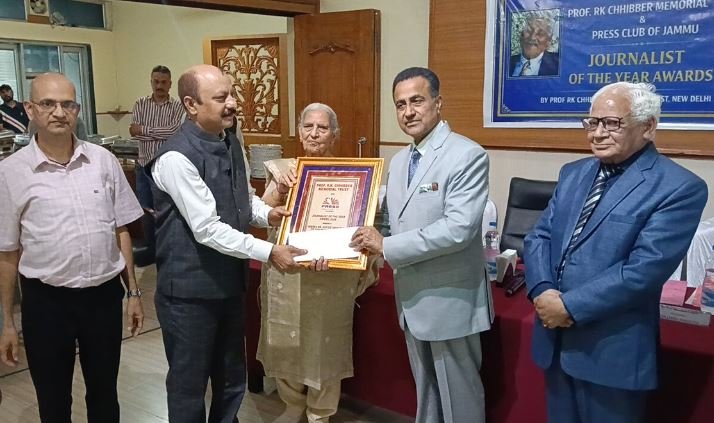
Chief Justice Arun Palli’s reflections on journalism deserve careful attention because they arrive at a time when the profession is facing both immense opportunity and serious strain. In an age defined by immediacy, digital reach, and relentless competition for attention, his reminder that the true value of journalism lies not in speed alone but in verification, balance, and integrity is both timely and necessary. It draws the conversation back to first principles and reminds us that journalism, at its best, is not merely a profession of information. It is a public responsibility rooted in truth, fairness, and service to society.
Democracy depends not only on institutions of power but also on institutions of scrutiny. Journalism occupies a vital place in this framework because it informs citizens, raises questions that others may prefer to avoid, and helps ensure that authority remains answerable to the public. When the chief justice described journalists as the voice of the unheard and the mirror through which society sees itself, he captured the deeper moral purpose of the profession. Journalism does not simply record events. It gives visibility to suffering, highlights neglect, brings local grievances into public view, and often creates the first line of accountability in matters that affect ordinary people. This is what makes ethical journalism so essential in contemporary society. The challenge today is not the absence of information, but its excess. News moves instantly, opinions multiply without pause, and unverified claims can travel faster than facts. In such an environment, the pressure to be first can easily overshadow the duty to be right. That is where Justice Palli’s observations acquire real significance. Speed has value, but speed without verification weakens credibility. Reach has power, but reach without fairness can distort public understanding. The public’s trust in journalism rests not on how quickly it speaks, but on how responsibly it does so. The digital age has undoubtedly expanded the possibilities of communication. It has allowed wider participation, faster dissemination, and more immediate public engagement. Yet it has also made journalism more vulnerable to sensationalism, fragmentation, and erosion of trust. When accuracy is sacrificed for haste, journalism risks losing the very authority that gives it meaning. Public trust, once weakened, is difficult to restore. That is why balance, discipline, and honesty are not old-fashioned ideals. They are the very foundations on which media credibility continues to stand. The younger generation of journalists, in particular, faces a demanding landscape. Technology is changing tools, platforms, and working methods at an extraordinary speed. But while methods evolve, the moral centre of journalism must remain constant. Fairness, ethical restraint, and commitment to truth cannot be treated as optional values. They are what distinguish journalism from noise, reporting from rumor, and public service from performance. In reminding young journalists that fairness remains the enduring constant of real journalism, the Chief Justice spoke not only to individual reporters but also to the future culture of the profession itself. There is also wisdom in connecting journalism with institutional integrity. Democracies do not survive on formal structures alone. They require trust between citizens and public systems. Journalism contributes to that trust when it is fair in criticism, careful with facts, and courageous without becoming reckless. It strengthens democratic discourse not by inflaming every issue, but by placing facts before the public with depth, context, and responsibility. Journalism that is ethical does not weaken institutions by asking difficult questions. It strengthens them by demanding honesty and transparency. The setting of these remarks, at an award ceremony honouring journalistic merit, also carried symbolic importance. Recognizing journalists who have served society through credible reporting is not merely a gesture of appreciation. It is an affirmation that truth-telling, public service, and professional integrity still matter. In a time when the media is often judged by reach and visibility, such recognition restores attention to substance and standards.
Chief Justice Arun Palli’s address, therefore, goes beyond ceremonial praise. It offers a quiet but firm defense of journalism as a noble public duty. It reminds us that the profession’s greatest strength lies not in volume, speed, or spectacle, but in its capacity to inform with honesty, question with fairness, and serve with integrity. If journalism is to remain worthy of public trust in the years ahead, it must continue to protect these values with seriousness and humility. In doing so, it will remain not only a recorder of events but also a guardian of democratic conscience.

