


FIFA’s Ban on Pre-1979 Iranian Flags Stands After Court Rejects Challenge
Legal challenge fails as FIFA defends stadium security rules ahead of Iran’s opening match against New Zealand at the 2026 FIFA World Cup.
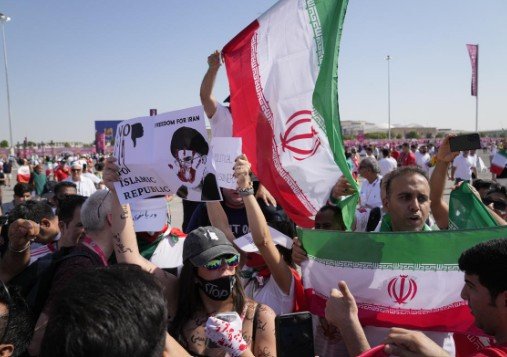
Iran, June 16 : Legal challenge fails as FIFA defends stadium security rules ahead of Iran’s opening match against New Zealand at the 2026 FIFA World Cup.
Focus Keyphrase: Hours before Iran kicked off its 2026 FIFA World Cup campaign against New Zealand in Los Angeles, a court ruling delivered a significant decision in favor of FIFA, allowing the governing body to continue prohibiting supporters from bringing Iran’s pre-revolution flag into tournament venues.
The controversy emerged after FIFA classified the flag as a prohibited item under its stadium code of conduct. The banner, which features a gold lion standing before a rising sun on the traditional green, white and red tricolor, was used during the era of Iran’s monarchy before the 1979 Islamic Revolution. While many members of the Iranian diaspora view the symbol as part of the country’s historical identity, FIFA determined that its display could carry political implications during the global sporting event.
The dispute reached the Los Angeles County Superior Court after the Institute for Voice of Liberty, a non-profit public policy organization, and football supporter Sam Kermanian challenged FIFA’s decision. The plaintiffs argued that fans should be allowed to display the historic emblem while attending World Cup matches.
Given the timing of the case, the court accelerated proceedings and heard arguments on Monday morning, only hours before Iran faced New Zealand at SoFi Stadium. Following the hearing, Judge Curtis A. Kin rejected the request to overturn FIFA’s restriction.
In his ruling, the judge acknowledged the importance of freedom of expression but emphasized that such rights are not unlimited, particularly within privately managed venues operating under established regulations. He noted that tournament organizers have the authority to enforce policies designed to maintain order and safety during major international events.
The court also considered the logistical challenges that would arise if FIFA were forced to modify its regulations at the last moment. According to the ruling, altering a long-standing policy shortly before kickoff could create operational difficulties for thousands of event personnel responsible for implementing security procedures across multiple World Cup venues.
Judge Kin further observed that introducing an exception at a single stadium could create inconsistencies throughout the tournament, potentially complicating enforcement efforts at other locations hosting World Cup matches.
FIFA defended its position by citing its official stadium code of conduct, which prohibits items deemed political, offensive or discriminatory in nature. The regulations are intended to ensure that football venues remain safe and inclusive environments for supporters from around the world.
Tournament organizers maintain that the policy applies broadly to all participating nations and is designed to prevent political disputes from overshadowing sporting competition. FIFA has consistently sought to limit the display of symbols that could generate tension among fan groups or divert attention away from the matches themselves.
The issue gained additional attention because of the complex circumstances surrounding Iran’s participation in the 2026 FIFA World Cup. Ongoing geopolitical tensions involving Iran and the United States have created unique logistical challenges for the Iranian national team throughout the tournament.
Reports indicate that Iran’s squad faced delays in obtaining travel documentation before entering the United States. As a result, the team established a temporary training base in Mexico and arranged travel plans that involve entering the United States primarily on match days.
Despite those difficulties, Iran successfully began its World Cup journey amid intense global scrutiny. The flag controversy added another layer of attention to a tournament already marked by heightened political sensitivity surrounding the nation’s participation.
Supporters on both sides of the debate expressed strong opinions following the court’s decision. Some viewed the ruling as a necessary measure to preserve security and consistency at one of the world’s largest sporting events. Others argued that the historical flag represents cultural heritage rather than a political statement.
The outcome highlights the continuing challenge faced by international sporting organizations as they balance freedom of expression with security concerns and event management responsibilities. As the World Cup progresses, FIFA is expected to maintain strict enforcement of its venue regulations to avoid similar disputes.
For now, the court’s decision ensures that the prohibition remains in place across tournament stadiums, reinforcing FIFA’s authority to regulate what items may be displayed inside match venues. The ruling also sets an important precedent for how organizers may address politically sensitive symbols during future international sporting competitions.
With the legal battle resolved, attention has shifted back to events on the pitch, where Iran hopes to make a strong impression in the group stage despite the off-field challenges that have accompanied its World Cup campaign.

