


India Records 38% Decline in TB Deaths Since 2015, Treatment Success Rate Reaches 94%
WHO's Global Tuberculosis Report 2026 highlights India's progress in reducing tuberculosis mortality, with nationwide screening covering more than 25 crore people and technology driven diagnosis strengthening the country's elimination efforts.
NEW DELHI, Nov 13: India has recorded a significant improvement in its fight against tuberculosis (TB), with deaths caused by the disease declining by 38 per cent since 2015, according to the World Health Organization’s (WHO) Global Tuberculosis Report 2026 released on November 12. The country has also achieved a treatment success rate of 94 per cent among patients suffering from drug-susceptible tuberculosis, reflecting improvements in early diagnosis, access to medicines and patient support.
The latest findings place India’s reduction in TB mortality above the global decline of 35 per cent recorded during the same period. The development marks an important step in the country’s efforts to reduce the disease burden and strengthen its national tuberculosis elimination programme.
According to information released by the Union Ministry of Health and Family Welfare, India’s estimated TB mortality rate declined from 28 deaths per lakh population in 2015 to 18 deaths per lakh population in 2025. The figures indicate progress in identifying infections earlier, improving treatment availability and ensuring that patients receive continued medical assistance.
The report also highlights the growing role of large-scale screening programmes, modern diagnostic facilities and community participation in India’s public health strategy. Authorities have increasingly shifted attention towards identifying infections before patients develop serious symptoms, particularly among vulnerable communities and people living in high-risk areas.
A major component of this effort has been the TB Mukt Bharat Abhiyaan, which has expanded screening activities across the country. Between December 7, 2024, and November 8, 2026, more than 25 crore individuals were brought within the programme’s screening network.
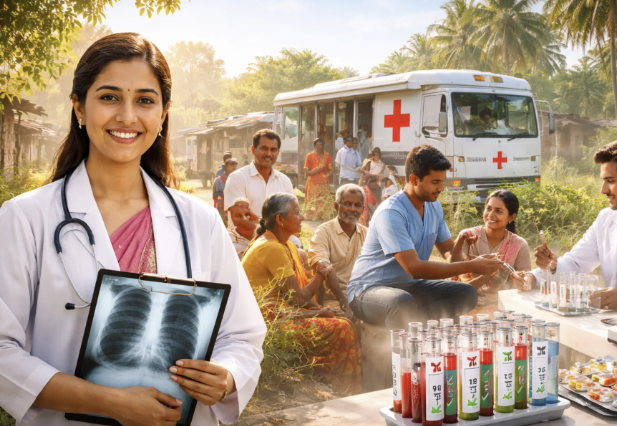
During this period, healthcare teams conducted over 11 crore chest X-rays and more than three crore nucleic acid amplification tests (NAAT), which help detect tuberculosis through molecular diagnostic techniques.
The intensified campaign resulted in the identification of 48.64 lakh new TB cases, including approximately 14.97 lakh asymptomatic patients. The detection of people without noticeable symptoms is particularly important because infections can otherwise remain unidentified until the disease progresses or patients seek medical attention for other complications.
Early identification allows healthcare providers to begin appropriate treatment sooner and take measures to reduce the possibility of further transmission. It also provides an opportunity to reach individuals who may have limited access to hospitals, diagnostic centres or regular medical consultations.
The government initially launched an intensified 100-day screening campaign on December 7, 2024, covering 347 high-priority districts across 33 states and Union Territories. The initiative was subsequently expanded to reach additional vulnerable populations.
A second intensified 100-day campaign began on March 24, 2026, with particular attention to 1.58 lakh high-risk villages and urban wards, congregate settings and communities considered vulnerable to tuberculosis.
The strategy reflects an increasing emphasis on taking healthcare services directly to communities rather than depending entirely on patients visiting hospitals after developing symptoms.
Technology Strengthens Early Detection
Modern diagnostic technology has become an important part of India’s tuberculosis control efforts. Portable digital X-ray equipment supported by artificial intelligence is being used to improve screening, identify suspicious cases and assist healthcare workers in prioritising individuals who require further investigation.
AI-enabled screening tools can help identify abnormalities in chest images, allowing medical professionals to decide whether additional diagnostic tests are necessary. These technologies are particularly useful in locations where specialist medical facilities are limited or where large populations need to be screened within a short period.
The expansion of rapid molecular diagnostic facilities has also improved the country’s capacity to identify tuberculosis infections. NAAT-based testing can provide faster diagnostic information than conventional approaches, helping healthcare providers initiate appropriate treatment without unnecessary delays.
The government has additionally strengthened the use of digital platforms to monitor patients and improve continuity of care. The Ni-kshay digital platform supports patient registration, treatment tracking and programme management, allowing healthcare authorities to follow cases more effectively.
Digital monitoring is important because tuberculosis treatment requires patients to follow prescribed medical regimens over an extended period. Interruptions in treatment can affect recovery and contribute to the development of drug-resistant forms of the disease.
The integration of tuberculosis screening with the identification of other health conditions, including diabetes and undernutrition, has also become an important element of the national programme.
Patients suffering from multiple health conditions may require additional medical attention, nutritional assistance and closer monitoring. Identifying these concerns alongside TB screening can help healthcare providers develop more comprehensive treatment plans.
Nutritional Assistance and Community Participation
Financial and nutritional support has emerged as another important component of India’s approach to tuberculosis management.
Under the Ni-kshay Poshan Yojana, eligible patients receive financial assistance to help meet nutritional requirements during treatment. The initiative recognises that adequate nutrition plays an important role in supporting recovery, particularly among individuals who experience weight loss and weakness during illness.
The Ni-kshay Mitra initiative encourages citizens, organisations, institutions and community representatives to provide nutritional and psychosocial assistance to people undergoing treatment.
Such participation helps address difficulties that patients may face beyond medical expenses, including food insecurity, social isolation and the challenges associated with completing treatment.
The government has also highlighted the involvement of local bodies, Panchayati Raj institutions, civil society organisations, private healthcare providers and community leaders in the national campaign.
According to the Health Ministry, 67,933 panchayats were declared TB-free in 2025. The achievement reflects the importance of local participation in creating awareness, encouraging screening and supporting people affected by the disease.
Another initiative, known as JOSH Teams, is intended to strengthen youth participation in tuberculosis awareness and prevention activities. These teams are being established at block and ward levels, with designated Class-I officers, NCC cadets and MY Bharat volunteers participating in community outreach.
Their responsibilities include spreading awareness, encouraging people to undergo screening and supporting grassroots mobilisation.
Domestic Funding Supports the National Programme
India’s tuberculosis programme has also received substantial support through domestic financial resources. According to the Health Ministry, 96 per cent of the programme’s funding requirements are being met through domestic sources.
Sustained funding is important for maintaining diagnostic facilities, ensuring the availability of medicines, expanding screening programmes and supporting patients throughout their treatment.
The government has indicated that continued investment will focus on early identification, access to quality diagnostics, preventive treatment and nutritional assistance.
The WHO report’s mortality estimates also draw upon multiple sources of information, including the Registrar General of India’s Sample Registration System, community-based verbal autopsy assessments and programme data maintained through the Ni-kshay portal.
The combination of different information sources is intended to strengthen the assessment of tuberculosis-related deaths and provide a more comprehensive picture of the country’s disease burden.
Meanwhile, the Indian Council of Medical Research-National Institute for Research in Tuberculosis conducted a nationally representative TB prevalence survey in 2025. The findings have been shared with WHO and remain under technical discussions, after which the organisation is expected to publish an updated country profile for India.
Challenges Remain Despite Progress
Although the latest figures demonstrate considerable improvement, tuberculosis continues to require sustained attention from healthcare authorities.
The identification of nearly 15 lakh asymptomatic cases through intensified screening underlines the importance of reaching people who may not recognise that they are infected.
Ensuring that every diagnosed patient receives timely treatment, completes the prescribed course and has access to necessary nutritional support remains essential.
Drug-resistant tuberculosis also requires careful medical supervision, appropriate diagnostic facilities and effective treatment management. Public awareness and efforts to reduce the stigma associated with the disease are equally important in encouraging individuals to seek medical assistance.
The government has stated that it will continue strengthening screening, preventive treatment, diagnostic infrastructure and community-based interventions.
The latest WHO findings provide an important assessment of India’s progress while highlighting the need to maintain momentum through scientific innovation, accessible healthcare and sustained public participation.
The reduction in mortality and improvement in treatment outcomes represent significant gains, but achieving the broader objective of eliminating tuberculosis will depend on ensuring that the benefits of healthcare programmes reach every vulnerable community.

